 Preview
 Send
Send Share
Share
 Details

 Download
 Similars
 X-Ray
X-Ray Diaporama
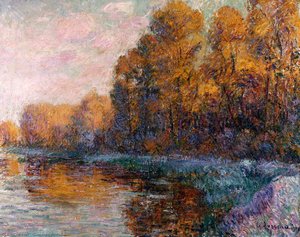
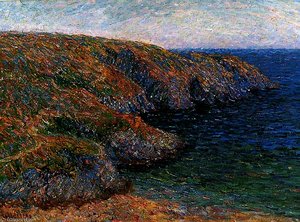
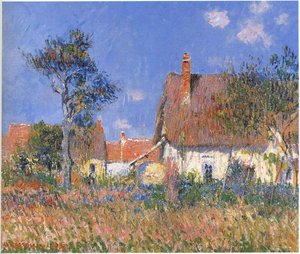
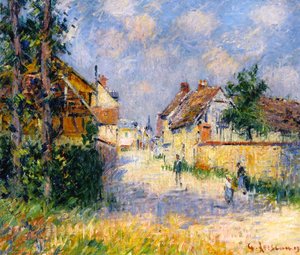
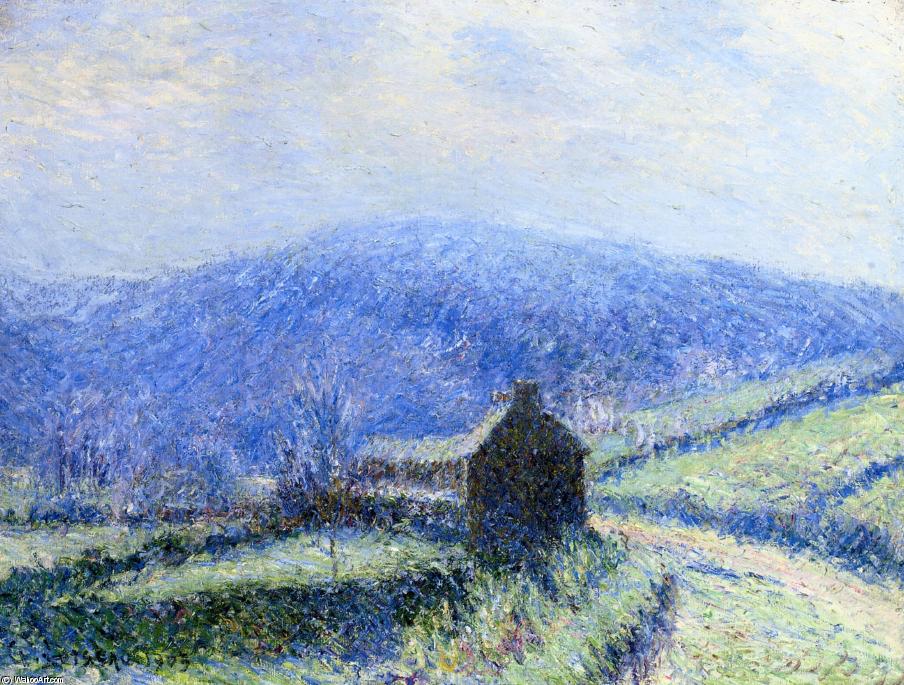
Hoarfrost at Huelgoat, Finistere
 1903
1903 61.0 x 82.0 cm
 Read More
Giclée / Art Print
Museum-quality giclée or canvas print with fast production and flexible finish options. ( Buy Hand Made Painting Buy Image)




































Pick from our preset sizes that match the artwork's original proportions.

You may enter your own dimensions to fit a specific frame or space. If your selected size does not match the original image's proportions, we will either crop the artwork or extend the image with a mirrored or solid-fill edge. A digital mockup will be sent for your approval before production begins.
Please note that the on-screen preview does not reflect the actual cropping or extension. Only the mockup will accurately show the final composition.
While custom sizes are available, we recommend selecting a dimension from the predefined list to preserve the original proportions.
Worldwide Delivery () in 2 weeks instead of standard 4/5 weeks. (2 September)

Free Worldwide Express Shipping

High-Quality Linen Canvas

Full Shipping Insurance

Customs Tax Refund Guarantee

True Color Matching Guarantee

60-Day Return Policy (Defects Only)

100% Money-Back Guarantee

Bulk Discount Offer
 Glass option is only available in size under 110 CM

Hoarfrost at Huelgoat, Finistere
Giclée / Art Print
Reproduction Size
-


Total Price
$ 63
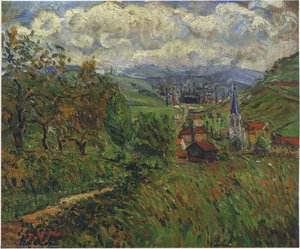
The scene depicts a man standing in the middle of a field with mountains in the background, adding a sense of scale and perspective to the image. The mountains are depicted with great detail, showcasing their majestic beauty. The dirt road that the man stands on is also visible, highlighting the connection between humans and the environment.
Gustave Loiseau was a French painter known for his Post-Impressionist style, which emphasized capturing the emotional and psychological depth of a scene. His use of bold brushstrokes and vivid colors in Hoarfrost at Huelgoat, Finistere creates a sense of movement and energy, drawing the viewer into the tranquil atmosphere of the painting.
For those interested in learning more about Gustave Loiseau and his works, visit ArtsDot's collection of handmade oil painting reproductions. The website also features an impressive collection of artworks from various artists, including John Constable, Claude Monet, and Jean Baptiste Camille Corot.
Some notable works that showcase the artist's skill include:
- Dedham Vale 1 by John Constable, a sublime oil painting that embodies the spirit of Romanticism.
- The Mount Riboudet in Rouen at Spring by Claude Monet, a quintessential example of Impressionism.
- Pool in the Woods by Jean Baptiste Camille Corot, a stunning example of Realism.
Conclusion
Hoarfrost at Huelgoat, Finistere is a masterpiece that showcases Gustave Loiseau's skillful use of color and composition. For art enthusiasts and collectors alike, ArtsDot's collection of handmade oil painting reproductions is a valuable resource for discovering and learning about the works of various artists, including Gustave Loiseau. Visit ArtsDot to explore their extensive collection and learn more about the world of art.Related Artworks







Artist Biography
A Parisian Vision: The Life and Art of Gustave Loiseau
Gustave Loiseau, a name perhaps less immediately recognized than some of his Post-Impressionist contemporaries, nevertheless occupies a significant place in the story of French painting at the turn of the 20th century. Born in Paris on October 3rd, 1865, and passing away there on October 10th, 1935, Loiseau’s life was deeply intertwined with the evolving artistic landscape of his city and the broader currents of modernism. His journey began not within the hallowed halls of an art academy—though he briefly attended the École des arts décoratifs—but amidst the practical world of his parents' butcher shop. This early exposure to everyday Parisian life, coupled with a subsequent apprenticeship with a family friend who was a decorator, would profoundly shape his artistic sensibilities. It instilled in him a keen observation of the city’s rhythms and textures, a fascination that would become central to his oeuvre. A modest inheritance from his grandmother proved pivotal, allowing Loiseau to dedicate himself fully to painting in 1887, though his formal training was cut short by a disagreement with a teacher—a testament to his independent spirit.From Brittany to ‘En Treillis’: The Development of a Unique Style
Loiseau’s artistic development wasn't immediate or straightforward. He initially experimented with Pointillism, the meticulous technique championed by Georges Seurat and Paul Signac, but ultimately found it too restrictive for his vision. A formative experience was his first visit to Pont-Aven in Brittany in 1890. This artist colony, already famed as a haven for those seeking alternatives to academic tradition—most notably Paul Gauguin and Émile Bernard—exposed Loiseau to new ideas about color, form, and the expressive potential of landscape. However, he didn’t simply adopt their styles; instead, he began forging his own path. This led to the development of his signature technique, *en treillis*, or cross-hatching. Unlike the broken brushstrokes of Impressionism or the systematic dots of Pointillism, Loiseau employed a network of fine, interwoven lines to build up form and capture the nuances of light and atmosphere. This created a distinctive textural quality in his paintings, almost a shimmering effect that set him apart. It was a technique born not from theory but from an intuitive understanding of how to translate his perceptions onto canvas.Parisian Streets and Rural Landscapes: Recurring Themes
Loiseau’s subject matter consistently revolved around two primary themes: the bustling streets of Paris and the serene landscapes of the French countryside. His Parisian scenes, such as *Rue de Clignancourt* and *Avenue de Fiedland*, are not grand panoramas but intimate glimpses into everyday life. He captured the energy of the city—the movement of carriages, the flow of pedestrians, the play of light on buildings—with a remarkable sensitivity to detail. Simultaneously, he developed a series of landscapes that often revisited the same motifs – orchards, gardens, fields – at different times of year and under varying weather conditions. These series echo the work of Claude Monet in their exploration of atmospheric effects and fleeting moments, but Loiseau’s *en treillis* technique imbues them with a unique character. He wasn't merely recording what he saw; he was conveying his emotional response to the scene, his sense of its inherent beauty and tranquility. His paintings are imbued with a quiet poetry, a celebration of the ordinary transformed through artistic vision.Recognition and Legacy
Throughout his career, Loiseau exhibited regularly at prestigious venues such as the Salon des Indépendants and the Salon de la Société Nationale, gaining recognition from both critics and collectors. He benefited from the support of Paul Durand-Ruel, a prominent art dealer who championed many of the leading Impressionist and Post-Impressionist artists. While he never achieved the same level of fame as some of his peers, Loiseau’s work found its way into important museum collections, including the Musée Maurice Denis in France. Today, his paintings are increasingly appreciated for their distinctive style, their evocative atmosphere, and their insightful portrayal of French life during a period of rapid change. He stands as a testament to the power of individual vision—an artist who remained true to his own aesthetic principles while engaging with the artistic currents of his time. His legacy lies not in revolutionizing painting but in refining it, offering a uniquely personal and captivating perspective on the world around him.Further Exploration
- Discover more about Gustave Loiseau’s work: Visit ArtsDot.com/@@/gustave-loiseau.
- Explore related artists: Learn about Evert Pieters at ArtsDot.com/@/evert-pieters.
- Delve into Japanese art: See Ito Jakuchu’s bean vine painting at ArtsDot.com/@@/d2vr7s.
- Learn more about the Beaverbrook Art Gallery: ArtsDot.com/@@/a@d3c29v
- Read his Wikipedia entry: https://en.wikipedia.org/wiki/Gustave_Loiseau.
Gustave Loiseau
1865 - 1935 , France
Quick Facts
- Artistic Movement Or Style: Post-Impressionism
- Artists Who Influenced This Artist:
- Paul Gauguin
- Émile Bernard
- Fernand Quignon
- Date Of Birth: October 3, 1865
- Date Of Death: October 10, 1935
- Full Name: Gustave Loiseau
- Nationality: French
- Notable Artworks:
- Rue de Clignancourt
- Avenue de Fiedland
- Overcast Weather...
- Etretat
- Field and Hills
- Place Of Birth: Paris, France