 Preview
 Send
Send Share
Share
 Details

 Download
 Similars
 X-Ray
X-Ray Diaporama
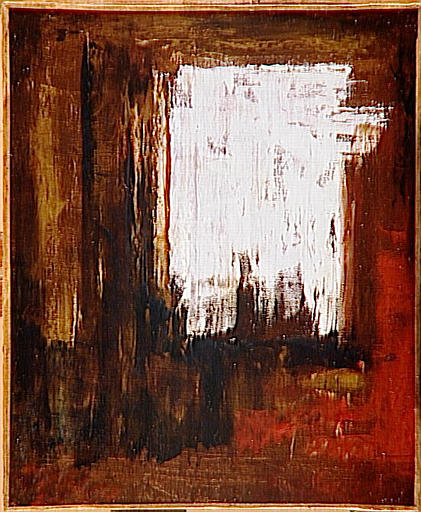
Intérieur. Ebauche


 Read More
Hand Made Oil Reproduction
Hand-painted oil on canvas in your size and frame, made to order by our artists. ( Buy Print Buy Image)




P118B $10

P118H $10

P118W $10

P438Z $10

P508JH $12

P508YH $12

P805H $10

P805Z $10

P919BZ $10

P919G $10

P919XJ $10

P959ZH $10

P968JZ $12

W106C $8

W218G $10

W218JH $8

W218Y $10

W307PJ $10

W316G $10

W316PJ $8

W316Y $10

W398PJ $8

W4111J $10

W500HY $15

W500JH $15

W692G $12

W849H $8

W940BG $15

W953PJ $8




Pick from our preset sizes that match the artwork's original proportions.

You may enter your own dimensions to fit a specific frame or space. If your selected size does not match the original image's proportions, we will either crop the artwork or extend the painting with additional hand-painted elements. A digital mockup will be sent for your approval before production begins.
Please note that the on-screen preview does not reflect the actual cropping or extension. Only the mockup will accurately show the final composition.
While custom sizes are available, we recommend selecting a dimension from the predefined list to preserve the original proportions.
After order, ArtsDot.com team will email client for instructions and provide a mockup preview
Worldwide Delivery () in 3/4 weeks instead of standard 5 weeks. (16 August). No compromise on quality.

Free Worldwide Express Shipping

High-Quality Linen Canvas

Full Shipping Insurance

Customs Tax Refund Guarantee

True Color Matching Guarantee

60-Day Return Policy (Defects Only)

100% Money-Back Guarantee

Bulk Discount Offer
 Glass option is only available in size under 110 CM

Intérieur. Ebauche
Reproduction Medium
Reproduction Size
-


Total Price
$ 263
Artwork Description
A Dream Weaver of Symbolism: The Life and Art of Gustave Moreau
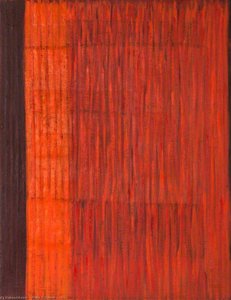
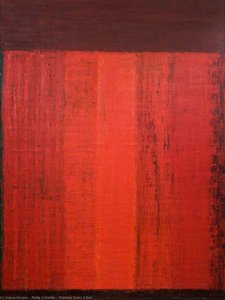
Gustave Moreau, a name etched in the annals of Symbolist painting, stands apart as an artist who dared to confront the boundaries of perception and emotion. Born in Paris in 1826, his formative years were marked by exposure to intellectual ferment—his father, an architect and archivist, instilled within him a profound appreciation for visual culture and scholarly pursuits. Despite initial academic training at the École des Beaux-Arts under François-Édouard Picot, Moreau swiftly rejected the prevailing Realist obsession with observable reality, gravitating instead toward a visionary aesthetic rooted in mythology, religion, and the subconscious mind. This decisive rejection signaled the genesis of his singular artistic vocation—a quest to translate inner experience into tangible form through a meticulously crafted symbolic language. Moreau’s oeuvre is characterized by an arresting blend of meticulous technique and profound conceptual ambition. He favored tempera on canvas, a medium known for its luminosity and durability, employing a layering process that achieved remarkable textural complexity. His brushstrokes were deliberate, imbued with expressive force—often thick impasto—that captured the dynamism inherent in his subjects. Unlike Impressionists who sought to capture fleeting impressions of light, Moreau painstakingly constructed scenes populated by figures drawn from classical mythology and biblical narratives, rendered with an unsettling blend of beauty and horror. These images are not mere representations; they are conduits for accessing deeper psychological truths. The historical context surrounding Moreau’s artistic endeavors illuminates the broader intellectual landscape of late 19th-century France. Symbolism emerged as a reaction against the materialism and scientific rationalism championed by Positivism, offering instead an alternative worldview predicated on intuition, imagination, and spiritual aspiration. Influenced by thinkers like Nietzsche and Wagner—artists who similarly questioned traditional moral codes—Moreau embraced esoteric traditions and occult philosophies, incorporating symbols drawn from alchemy, Kabbalah, and Tarot into his compositions. Recurring motifs—such as serpents, lilies, and eyes—represent fundamental concepts of duality, purity, and divine omniscience, reflecting Moreau’s preoccupation with confronting existential anxieties. Consider “Intérieur,” an evocative sketch for “Le Triomphe d'Alexandre le Grand.” This monumental canvas, conceived as a triumphant celebration of Alexander the Great’s conquest, embodies Moreau’s signature style—a masterful manipulation of color and texture to convey psychological states rather than literal depictions. The stark white wall serves as a foil to the fiery red background, symbolizing passion and conflict amidst grandeur. Sparse brown elements introduce subtle tonal variations, enriching the visual tapestry without disrupting its compositional balance. Moreau's meticulous brushwork captures the ethereal quality of dreamlike vision—a testament to his unwavering commitment to exploring the depths of human consciousness. Furthermore, “Ebauche pour Sapho,” a similarly arresting abstract expressionist piece, exemplifies Moreau’s pioneering exploration of color and texture as expressive tools. The painting abandons representational concerns altogether, prioritizing instead the conveyance of emotion through chromatic intensity and tactile surface irregularities. Like "Intérieur," it speaks to the transformative power of imagination—a realm where symbols transcend literal meaning to evoke profound psychological resonance. This artwork stands as a beacon of Symbolist innovation, demonstrating Moreau’s unwavering belief in art's capacity to illuminate hidden truths and inspire spiritual contemplation. Moreau’s legacy extends far beyond his artistic creations; he profoundly shaped the intellectual discourse surrounding Symbolism, championing its humanist values and rejecting mechanistic determinism. His enduring influence can be discerned in subsequent generations of artists—from Picasso to Matisse—who embraced expressive abstraction as a means of conveying subjective experience. Gustave Moreau remains an artist whose work continues to captivate audiences worldwide—a testament to his unparalleled ability to transform visual imagery into vehicles for accessing the innermost recesses of human psyche and spirit.Related Artworks
Artist Biography
A Dream Weaver of Symbolism: The Life and Art of Gustave Moreau
Gustave Moreau, a name synonymous with the ethereal beauty and enigmatic depths of Symbolist painting, emerged from 19th-century Paris as a singular artistic voice. Born in 1826 into a bourgeois family—his father an architect and archivist—Moreau’s early life was steeped in intellectual curiosity and aesthetic sensibility. From a young age, he displayed a remarkable gift for drawing, nurtured through traditional academic training at the École des Beaux-Arts under figures like François-Édouard Picot. However, Moreau's artistic path would diverge sharply from the prevailing Realist and Impressionist currents of his time. He wasn’t interested in capturing fleeting moments or objective reality; instead, he sought to unlock the hidden realms of myth, religion, and the human psyche through a deeply personal and symbolic visual language. His journey was one of inward exploration, translating subjective emotions and spiritual yearnings onto canvas with an obsessive attention to detail and a vibrant, often opulent palette.The Forge of Imagination: Influences and Artistic Development
Moreau’s artistic development wasn't born in a vacuum. While rejecting the dominant trends of his era, he drew inspiration from diverse sources. The dramatic use of color and exotic subject matter found in the works of Eugène Delacroix resonated deeply with him, igniting a passion for narrative painting imbued with emotional intensity. He also held Renaissance masters like Michelangelo and Leonardo da Vinci in high esteem, admiring their mastery of composition, anatomy, and psychological insight. Yet, Moreau wasn’t merely imitating these artists; he was synthesizing their influences into something entirely new. His travels to Italy in the 1850s proved pivotal, immersing him in the art of antiquity and the Renaissance, providing a wealth of motifs and stylistic cues that would populate his future works. He meticulously copied Old Master paintings, not as an exercise in replication, but as a means of absorbing their techniques and unlocking their secrets. This dedication to craft, combined with his burgeoning interest in mythology and literature, laid the foundation for his unique artistic vision.A World of Symbols: Themes and Techniques
Moreau’s paintings are not simply illustrations of myths or biblical stories; they are complex allegories that invite contemplation and interpretation. He delved into narratives like those of Salome, Orpheus, Jupiter and Semele, and countless others, not to retell them literally, but to explore their underlying psychological and spiritual truths. His canvases teem with symbolic imagery—serpents representing temptation, jewels signifying earthly desires, and figures embodying abstract concepts like grief, loss, or redemption. He masterfully created a dreamlike atmosphere through intricate detail, rich textures, and an often unsettling juxtaposition of light and shadow. Moreau’s technique was characterized by meticulous layering of paint, creating surfaces that shimmer with iridescent colors and evoke a sense of otherworldly beauty. His use of gold leaf further enhanced this effect, lending his works a Byzantine quality that underscored their spiritual dimension. He wasn't concerned with capturing realistic textures or perspectives; instead, he prioritized the expressive power of color and form to convey mood and meaning.Legacy and Influence: The Enduring Power of Symbolism
Though initially met with mixed reactions, Moreau became a central figure in the burgeoning Symbolist movement during the 1890s. Unlike some of his contemporaries who actively sought public attention, he remained somewhat reclusive, preferring to work independently and avoid artistic debates. However, his influence was undeniable. In 1893, he accepted a professorship at the École des Beaux-Arts, where he profoundly impacted generations of artists, including Henri Matisse and Georges Rouault. He encouraged his students to embrace imagination, symbolism, and individual expression, urging them to break free from conventional artistic norms. While Symbolism eventually waned in popularity after Moreau’s death in 1898, his work experienced a significant reevaluation in the latter half of the 20th century. Today, he is widely regarded as one of the most important figures in the movement and a precursor to modern art. The Musée Gustave Moreau, housed in his former studio and home in Paris, stands as a testament to his enduring legacy—a sanctuary where visitors can immerse themselves in the captivating world of this extraordinary artist. His paintings continue to resonate with audiences today, offering glimpses into the hidden depths of the human soul and reminding us of the power of art to transcend the boundaries of reality.Notable Works
- Salome Dancing before Herod: Perhaps his most famous work, this painting exemplifies Moreau’s opulent style and fascination with biblical narratives.
- Jupiter and Semele: A dramatic depiction of the Greek myth, showcasing Moreau's mastery of composition and color.
- Orpheus: Several paintings by Moreau explore the myth of Orpheus, reflecting themes of loss, grief, and artistic inspiration.
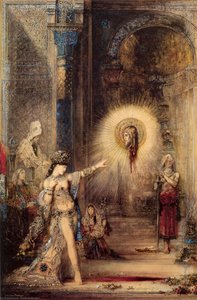
- The Apparition: Demonstrates his skill in creating ethereal and otherworldly scenes.
- Desdemona: A poignant portrayal of Shakespeare's tragic heroine.
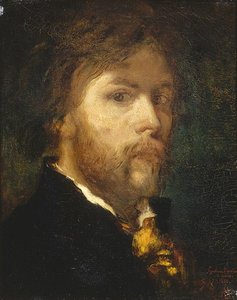
Gustave Moreau
1826 - 1898 , France
Quick Facts
- Artistic Movement Or Style: Symbolism
- Artists Or Movements Influenced By This Artist:
- Henri Matisse
- Georges Rouault
- Artists Who Influenced This Artist:
- Eugène Delacroix
- Michelangelo
- Leonardo da Vinci
- Date Of Birth: April 6, 1826
- Date Of Death: April 18, 1898
- Full Name: Gustave Moreau
- Nationality: French
- Notable Artworks:
- Salome Dancing before Herod
- Jupiter and Semele
- Orpheus
- The Apparition
- Desdemona
- Place Of Birth: Paris, France
Related Articles

Abstract Expressionism's 10 Defining Masterpieces |
Explore 10 defining Abstract Expressionism masterpieces by Pollock, Rothko & de Kooning. Discover the stories behind these iconic paintings and find museum-quality art reproductions to elevate your home decor on .
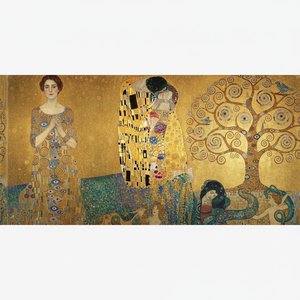
25 Klimt Masterpieces: A Journey Through Iconic Art & Decor
Delve into the world of Gustav Klimt with our top 25 masterpieces! Explore his iconic paintings – 'The Kiss,' 'Portrait of Adele,' and more. Discover museum-quality reproductions & curated decor ideas. Explore the full collection online at ArtsDot.com.

Kandinsky's Masterpieces: 25 Paintings That Define Abstract Art | ArtsDot
Journey through Wassily Kandinsky's 25 most iconic abstract paintings. Explore his revolutionary use of color, form & spiritual expressionism. Find museum-quality Kandinsky reproductions and elevate your home decor with ArtsDot.com. Discover all masterpieces on ArtsDot.com!
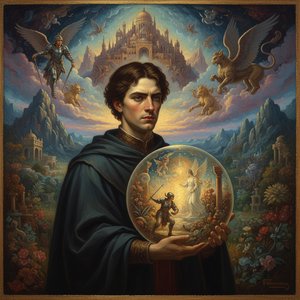
Gustave Moreau: Symbolism's Enigmatic Visionary & Precursors of Modern Fantasy Art
Explore the captivating world of Gustave Moreau, the leading Symbolist painter. Discover his iconic masterpieces, influences, and lasting legacy. Expert analysis for collectors & art enthusiasts.
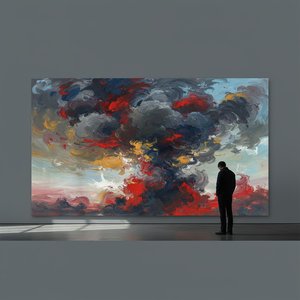
Beyond Representation: Exploring the Emotional Landscape of Abstract Expressionism
Explore the profound emotional world of Abstract Expressionism with ArtsDot. Discover key artists like Pollock & Rothko, learn about collecting, and find museum-quality reproductions to inspire your space.