 Preview
 Send
Send Share
Share
 Details

 Download
 Similars
 X-Ray
X-Ray Diaporama
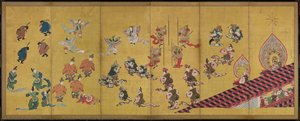
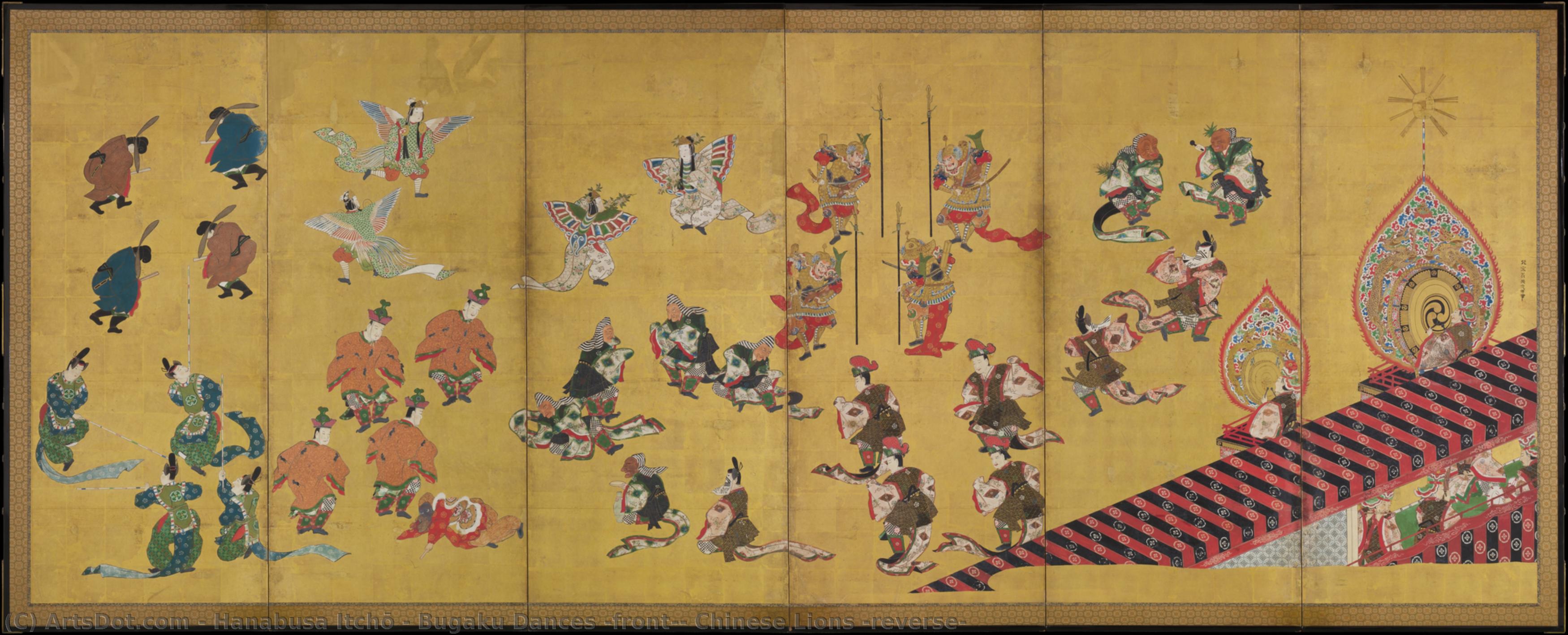
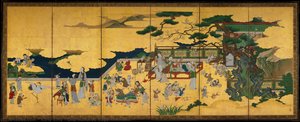
Bugaku Dances (front); Chinese Lions (reverse)
 701
701 165.0cm x 433.0cm
 Read More
Hand Made Oil Reproduction
Hand-painted oil on canvas in your size and frame, made to order by our artists. ( Buy Print Buy Image)




































Pick from our preset sizes that match the artwork's original proportions.

You may enter your own dimensions to fit a specific frame or space. If your selected size does not match the original image's proportions, we will either crop the artwork or extend the painting with additional hand-painted elements. A digital mockup will be sent for your approval before production begins.
Please note that the on-screen preview does not reflect the actual cropping or extension. Only the mockup will accurately show the final composition.
While custom sizes are available, we recommend selecting a dimension from the predefined list to preserve the original proportions.
After order, ArtsDot.com team will email client for instructions and provide a mockup preview
Worldwide Delivery () in 3/4 weeks instead of standard 5 weeks. (18 August). No compromise on quality.

Free Worldwide Express Shipping

High-Quality Linen Canvas

Full Shipping Insurance

Customs Tax Refund Guarantee

True Color Matching Guarantee

60-Day Return Policy (Defects Only)

100% Money-Back Guarantee

Bulk Discount Offer
 Glass option is only available in size under 110 CM

Bugaku Dances (front); Chinese Lions (reverse)
Reproduction Medium
Reproduction Size
-


Total Price
$ 263
Artwork Description
Related Artworks
Artist Biography
The Maverick of the Edo Brush: The Life and Legacy of Hanabusa Itchō
In the vibrant, shifting landscape of Edo-period Japan, few figures possessed the rebellious spirit and multifaceted brilliance of Hanabusa Itchō. Born in Osaka in 1652 as Taga Shinkō, the son of a physician, Itchō’s journey was one of profound transformation—from a disciplined student of tradition to a celebrated iconoclast of the literati movement. His early years were defined by rigorous training under the esteemed Kanō Yasunobu, where he mastered the meticulous techniques and sacred iconography of the Kanō school. Yet, beneath this veneer of academic perfection, a more expressive soul was stirring. Itchō found the rigid formalism of his masters stifling, feeling a deep-seated need to move beyond mere technical precision toward an art form that could breathe with the spontaneity of human emotion and the fleeting beauty of everyday life.
This rejection of orthodoxy led to the birth of the Hanabusa school, a style that would forever alter the trajectory of Japanese painting. By embracing the bunjin, or literati, aesthetic, Itchō prioritized the capture of impressions over the strict adherence to established canons. His work became a bridge between the structured past and an expressive future, characterized by a remarkable versatility that saw him move seamlessly between delicate calligraphy, evocative haiku poetry, and bold, dynamic painting. This intellectual depth was further enriched by his profound connection to the literary world; mentored by the legendary haiku master Matsuo Bashō and collaborating with poets like Kikaku Encro, Itchō’s visual art was never isolated from the rhythmic pulse of Japanese verse.
A Symphony of Ink, Gold, and Humor
The true genius of Itchō lay in his ability to inhabit multiple artistic worlds simultaneously. While he could produce religious works of profound solemnity, such as his early depictions of Jizō Bosatsu, he was equally celebrated for his keen, often humorous observations of urban life in Edo. His genre paintings possessed a wit and a vitality that resonated with the burgeoning culture of the era, capturing the textures of the streets and the subtle nuances of human interaction. This duality—the ability to be both a master of sacred tradition and a chronicler of the mundane—is what makes his oeuvre so captivating to the modern eye.
Nowhere is this technical mastery more evident than in his large-scale commissions, such as his magnificent pair of screens featuring Chinese Lions (Karajishi). In these works, one can witness the artist at the height of his powers. Across a vast expanse of gold, nine lions engage in a playful, swirling dance of dark ink and grayish tones. The brushwork is nothing short of electric, utilizing jagged curves and sweeping tails to create a sense of perpetual motion. Even when working within more traditional modes, such as the depiction of Bugaku court dances on his screens, Itchō infused the meticulous detail with a sense of life that transcends the static nature of the medium.
Exile, Resilience, and Historical Significance
Itchō’s path was not without its tribulations. His penchant for satire and his refusal to bow to social hierarchies led to a period of exile in 1698, following a controversial parody involving a shōgun's concubine. Yet, rather than silencing his creativity, this period of hardship seemed to refine his spirit. Upon his return to the artistic fold in 1709, his work took on an even more profound depth, marked by a seasoned mastery that commanded respect across all social strata, from the elite samurai class to the common citizens of Edo.
The historical significance of Hanabusa Itchō extends far beyond his individual paintings. He stands as a pivotal figure who helped dismantle the monopoly of the Kanō school, paving the way for a more personal, expressive, and intellectually engaged form of Japanese art. His legacy is found in:
- The Synthesis of Arts: The seamless integration of painting, calligraphy, and haiku poetry that defined the bunjin spirit.
- Stylistic Innovation: The transition from rigid, formalist traditions to a more spontaneous and observational approach to subject matter.
- Cultural Documentation: His role as a brilliant observer of the Genroku period, capturing the humor, energy, and evolving social fabric of Edo Japan.
Today, when we look upon the swirling ink of his lions or the delicate strokes of his calligraphy, we are not just viewing art; we are witnessing the enduring triumph of an artist who dared to break the mold to find his own truth.

hanabusa itchō
1652 - 1724 , Japan
Quick Facts
- Artistic Movement Or Style: Literati painting; Kanō style blending
- Artists Or Movements Influenced By This Artist: ['Bashō']
- Artists Who Influenced This Artist: ['Kanō Yasunobu']
- Date Of Birth: Osaka, Japan (1652)
- Date Of Death: February 7, 1724
- Full Name: Hanabusa Itchō
- Nationality: Japanese
- Notable Artworks:
- Jizō Bosatsu
- Bugaku Dances (front); Chinese Lions (reverse)
- Taking Shelter from the Rain
- Place Of Birth: Osaka