

 Preview
 Send
Send Share
Share
 Details

 Download
 Similars
 X-Ray
X-Ray Diaporama
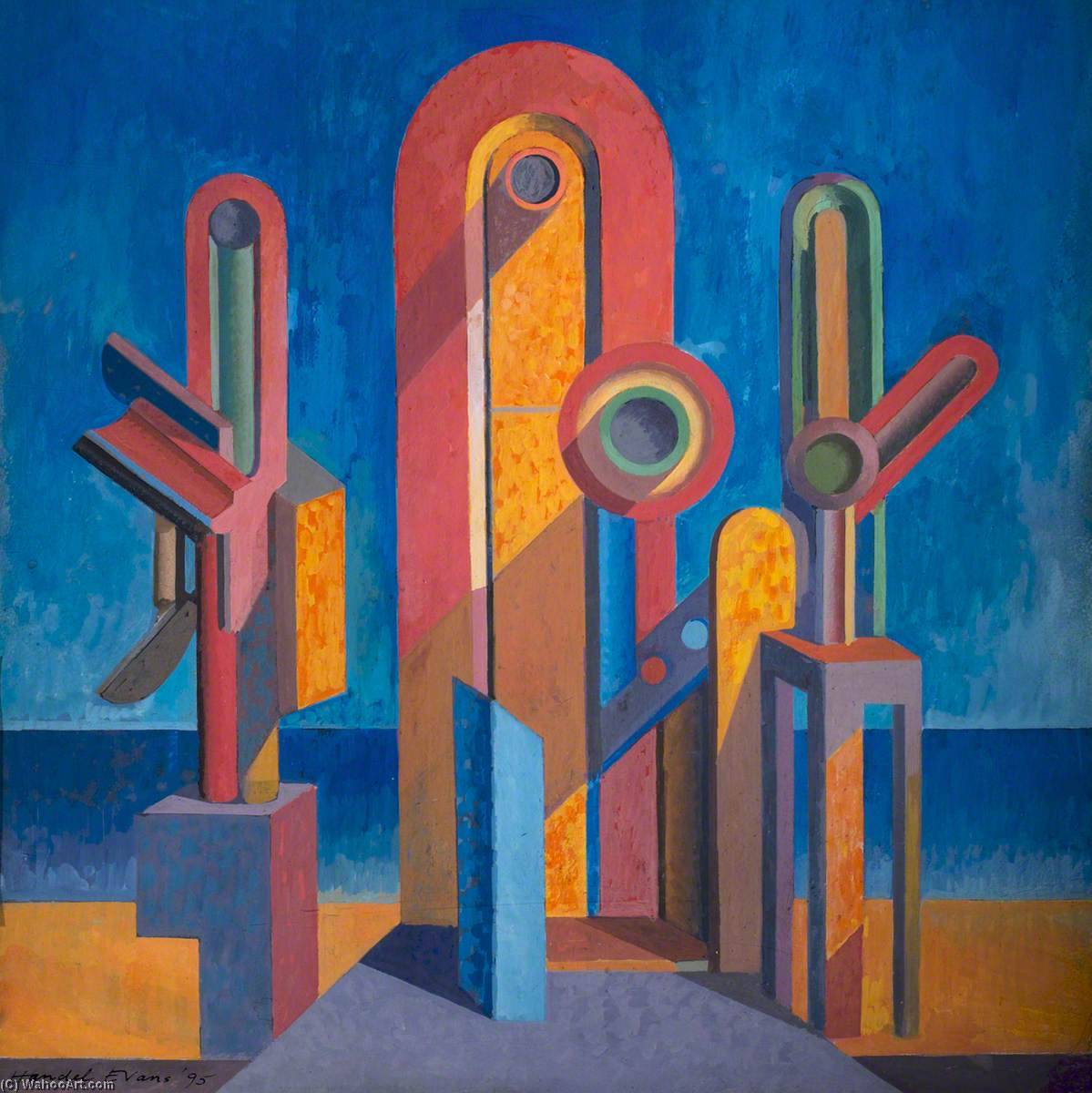
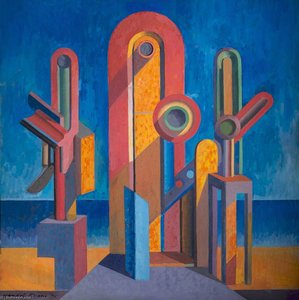
Integrated II The Employees Series No.94
 Painting
- Contemporary Art
 1995
1995- Contemporary
 54.0 x 54.0 cm
 Aberystwyth University School of Art Museum And Galleries
 Read More
Purchase a high-resolution, enhanced digital image, far superior to the online preview.
Each file is meticulously prepared by our in-house specialists using advanced tools and expert manual retouching. We ensure every image has exceptional clarity, precise color accuracy, and fine detail.
The final file is delivered via email within 72 hours, optimized for immediate use in professional, editorial, and print environments. This is the same quality trusted by top-tier design studios, publishers, and galleries.
Digital Image
Download a high-resolution file for personal display, printing, and creative projects. ( Buy Print Buy Hand Made Painting)
Included in Every Digital Image Order
Expert Digital Delivery, Guaranteed
When you choose ArtsDot.com, you're not just getting an image - you're receiving a professionally enhanced digital artwork, crafted with precision and backed by a satisfaction guarantee. Here's everything that comes with your order, automatically:

Fast Email Delivery
Your high-resolution digital image file will be emailed to you within 72 hours of ordering - ready for immediate use.

AI-Enhanced Digital File
Your artwork is professionally optimized using advanced AI tools and manual editing, ensuring maximum detail, clarity, and color accuracy.

Free Lifetime Re-Delivery
Accidentally deleted or lost your file? No worries - we'll resend it to you anytime, free of charge.

No Import Fees - Ever
Enjoy your artwork instantly with zero customs, duties, or delivery fees - digital downloads are always tax-free.

Color Accuracy Guarantee
We ensure your digital image reflects the original colors as closely as possible using professional tools and color management.

60-Day Satisfaction Guarantee
If you're not satisfied with your digital image, we'll revise it or refund 100% within 60 days - no questions asked.

100% Money-Back Guarantee
Not satisfied? Get a full refund within 60 days of receiving your digital file - no questions asked.

Bulk Order Discounts
Buy 3 images, save 10% - Buy 5, save 15% - Buy 10+, save 20%. Great for creative projects, galleries, and agencies.
Collectible Description
A Symphony of Form and Color
In the vibrant landscape of contemporary abstraction, Integrated II The Employees Series No.94 stands as a testament to the playful yet profound exploration of shape and chromatic harmony. Created in 1995 by the visionary artist Handel Cromwell Evans, this piece invites the viewer into a whimsical world where sculpture and painting converge. At first glance, the eye is met with an exuberant parade of colorful forms that resemble a collection of avant-garde toys or abstract sculptures. These figures, rendered in a bold palette of primary blues, reds, yellows, greens, and oranges, are arranged across the canvas in a carefully choreographed dance of geometry. The composition is masterfully balanced, with main sculptural elements anchoring the left and center, while smaller, delicate figures drift toward the right, creating a sense of rhythmic movement that guides the viewer through this miniature, colorful universe.
The technique employed by Evans in this work evokes a tactile richness that transcends the flat surface of the canvas. Through a masterful use of color saturation and deliberate placement, the artist achieves a three-dimensional illusion, making each shape feel as though it possesses its own weight and presence. The interplay between light and shadow within these colorful forms adds a layer of depth, transforming what could be a simple arrangement into a complex architectural study. This approach to form—where the boundaries between two-dimensional painting and three-dimensional sculpture blur—is a hallmark of Evans's unique contribution to late 20th-century art, offering a visual experience that is both intellectually stimulating and visually soothing.
Symbolism and Emotional Resonance
Beyond its striking aesthetic appeal, Integrated II The Employees Series No.94 carries an underlying emotional narrative. The title itself suggests a theme of interconnectedness, hinting at the way individual, disparate elements—much like employees within a larger system—can come together to form a cohesive and vibrant whole. There is a profound sense of community and structural harmony depicted in the arrangement of these colorful characters. Each shape, despite its unique size and orientation, plays a vital role in the overall equilibrium of the piece. This can be interpreted as a metaphor for social cohesion or the intricate workings of a complex organization, where every small part contributes to the grandeur of the collective.
For the collector or interior designer, this artwork offers more than just a splash of color; it provides an emotional anchor for a space. The painting radiates a sense of optimism and creative energy, making it an ideal centerpiece for modern living environments, sophisticated galleries, or professional studios seeking to inspire innovation. Its ability to evoke joy through its bright palette, while maintaining a sophisticated structural integrity, allows it to integrate seamlessly into diverse decor styles—from minimalist contemporary to eclectic maximalism. To possess a reproduction of this work is to invite a permanent sense of wonder and a celebration of the beautiful complexity found in the integration of all things.
Related Artworks



Artist Biography
George Frideric Handel: A Baroque Titan of Sound and Vision
George Frideric Handel, a name synonymous with grandeur and timeless melody, was far more than just a composer. He was a theatrical genius, an innovator in orchestral writing, and a master of the oratorio – a figure who profoundly shaped the landscape of Western music. Born into a musical family in Halle, Germany, in 1685, Handel’s life was a testament to relentless ambition, artistic evolution, and a deep-seated connection to the dramatic arts. His journey from a promising young organist to an internationally renowned composer is a captivating story interwoven with political intrigue, personal tragedy, and unparalleled creative achievement.
Handel's early musical training was rigorous and comprehensive. He studied at the prestigious Thomasschule in Halle, where he honed his skills on the organ and harpsichord. His father, a barber-surgeon and musician, instilled in him a love for music that would define his entire life. However, it wasn’t solely through formal instruction that Handel developed; he was a prodigious self-taught musician, absorbing musical knowledge from countless performances and by meticulously studying the scores of his predecessors. This dedication to both structured learning and independent exploration laid the foundation for his distinctive compositional style.
A pivotal moment in Handel's career arrived with his relocation to Italy in 1732, at the invitation of impresario Antonio Salieri. This move marked a dramatic shift in his musical language, moving away from the predominantly Italianate styles he had previously encountered and embracing the vibrant, expressive qualities of the Baroque era. In Venice, Handel composed operas such as *Rinaldo* and *Giulio Cesare*, showcasing his growing mastery of vocal writing, orchestration, and dramatic pacing. These works established him as a leading operatic composer, attracting audiences across Europe with their spectacular staging and compelling narratives.
The Messiah: A Testament to Faith and Innovation
Handel’s most enduring legacy undoubtedly rests upon *Messiah*, an oratorio completed in 1741. Initially conceived as a single movement for Easter, it evolved into a monumental work encompassing prophecies, lamentations, and triumphant declarations of redemption. The sheer scale of *Messiah* – nearly three hours long – was unprecedented for its time, and its innovative use of choruses, recitatives, and arias captivated audiences across the British Isles and beyond. The oratorio’s popularity soared in subsequent centuries, becoming inextricably linked with Christmas celebrations and solidifying Handel's place as one of history’s most beloved composers.
Beyond its religious significance, *Messiah* represents a remarkable feat of musical craftsmanship. Handel masterfully blended Hebrew texts with Italian operatic conventions, creating a work that was both deeply spiritual and intensely dramatic. The orchestration is particularly noteworthy, employing a vast array of instruments – trumpets, timpani, oboes, horns, strings – to evoke a sense of grandeur and emotional intensity. The use of the choruses, in particular, created a powerful communal experience for listeners, uniting them in a shared expression of faith and hope.
A Life Shaped by Travel and Patronage
Handel’s career was marked by extensive travel throughout Europe, often at the invitation of royal courts. He served as Kapellmeister (music director) to the rulers of Hanover, Eisenach, and Detmold, each offering him patronage and opportunities to showcase his talents. These appointments provided him with valuable experience in managing orchestras, composing for specific venues, and navigating the complex world of courtly music. His time in London proved particularly fruitful, establishing him as a leading figure in the city’s musical scene.
Despite achieving considerable success, Handel faced personal tragedies throughout his life. His first wife, Anna Maria Weber, died in 1729, leaving him with deep sorrow and a profound sense of loss. His son, Julius, tragically drowned in 1759, further compounding his grief. These hardships undoubtedly influenced the emotional depth and intensity of his later works.
Legacy and Influence
George Frideric Handel died in London in 1759, leaving behind a vast and influential body of work. His contributions to opera, oratorio, orchestral music, and choral writing continue to resonate with audiences today. His dramatic flair, masterful orchestration, and profound understanding of human emotion have inspired generations of composers – from Mozart and Beethoven to Mendelssohn and Brahms. Handel’s legacy extends far beyond the realm of music; he remains a symbol of artistic ambition, creative innovation, and the enduring power of sound to move and uplift the human spirit.
handel cromwell evans
1932 - 1999
Quick Facts
- Artistic Movement Or Style: Cubist/Fauvist
- Artists Or Movements Influenced By This Artist:
- Futurism
- Surrealism
- Artists Who Influenced This Artist:
- George Frideric Handel
- Clifford H. Lewis
- Date Of Birth: 1932-04-03
- Date Of Death: 1999-01-05
- Full Name: Handel Cromwell Evans
- Nationality: Welsh
- Notable Artworks:
- Table Top VIII
- Interpenetrations
- Caribbean Village
- Place Of Birth: Pontypridd, Wales

