

 Preview
 Send
Send Share
Share
 Details

 Download
 Similars
 X-Ray
X-Ray Diaporama
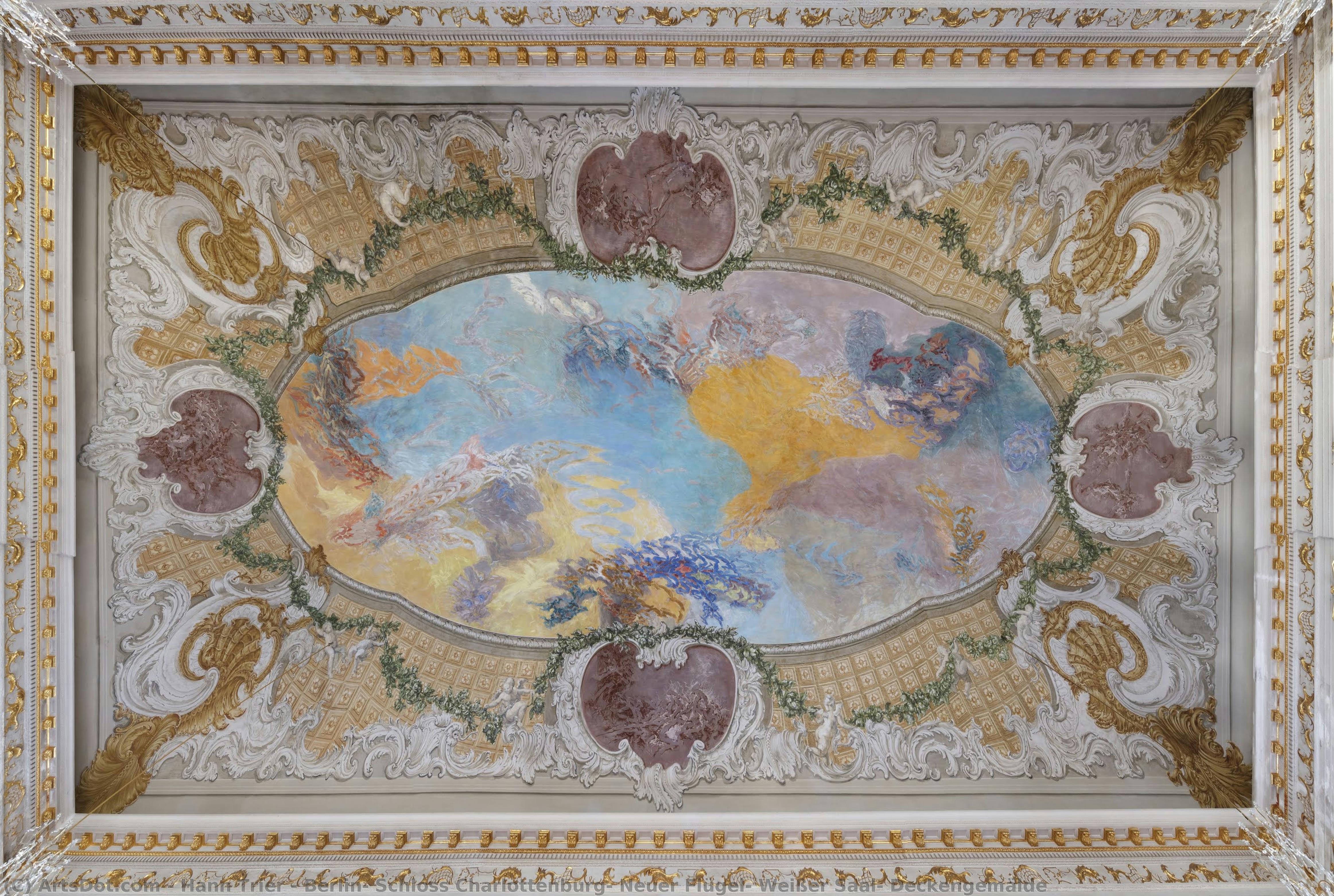
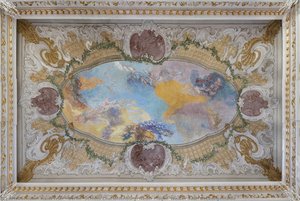
Berlin, Schloss Charlottenburg, Neuer Flügel, Weißer Saal, Deckengemälde


 Read More
Purchase a high-resolution, enhanced digital image, far superior to the online preview.
Each file is meticulously prepared by our in-house specialists using advanced tools and expert manual retouching. We ensure every image has exceptional clarity, precise color accuracy, and fine detail.
The final file is delivered via email within 72 hours, optimized for immediate use in professional, editorial, and print environments. This is the same quality trusted by top-tier design studios, publishers, and galleries.
Digital Image
Download a high-resolution file for personal display, printing, and creative projects. ( Buy Print Buy Hand Made Painting)
Included in Every Digital Image Order
Expert Digital Delivery, Guaranteed
When you choose ArtsDot.com, you're not just getting an image - you're receiving a professionally enhanced digital artwork, crafted with precision and backed by a satisfaction guarantee. Here's everything that comes with your order, automatically:

Fast Email Delivery
Your high-resolution digital image file will be emailed to you within 72 hours of ordering - ready for immediate use.

AI-Enhanced Digital File
Your artwork is professionally optimized using advanced AI tools and manual editing, ensuring maximum detail, clarity, and color accuracy.

Free Lifetime Re-Delivery
Accidentally deleted or lost your file? No worries - we'll resend it to you anytime, free of charge.

No Import Fees - Ever
Enjoy your artwork instantly with zero customs, duties, or delivery fees - digital downloads are always tax-free.

Color Accuracy Guarantee
We ensure your digital image reflects the original colors as closely as possible using professional tools and color management.

60-Day Satisfaction Guarantee
If you're not satisfied with your digital image, we'll revise it or refund 100% within 60 days - no questions asked.

100% Money-Back Guarantee
Not satisfied? Get a full refund within 60 days of receiving your digital file - no questions asked.

Bulk Order Discounts
Buy 3 images, save 10% - Buy 5, save 15% - Buy 10+, save 20%. Great for creative projects, galleries, and agencies.
Related Artworks
Artist Biography
Hann Trier: A Life Painted Across Europe
Hann Trier (1915-1999), a name perhaps less familiar than some of his contemporaries, represents a pivotal figure in mid-20th century German art – an artist deeply rooted in the tumultuous aftermath of World War II and profoundly shaped by its intellectual currents. Born in Düsseldorf, Germany, to a family with strong artistic connections (his brother was an art historian), Trier’s life unfolded as a remarkable journey through Europe, marked by both military service and groundbreaking artistic experimentation. His legacy isn't defined by singular masterpieces in the traditional sense, but rather by his ambitious scale, his engagement with social and political ideas, and his pivotal role within the vibrant intellectual circles of post-war Germany.
Trier’s early years were spent in Cologne, a city steeped in artistic tradition. He began his formal training at the Düsseldorf Arts School, *Werk*, in 1934, absorbing the regional influences of Neue Sachlichkeit and the burgeoning Expressionist spirit. However, the Second World War dramatically altered the course of his life. Serving as a technical artist within the Wehrmacht from 1941 to 1944, primarily in Berlin, provided him with a starkly different perspective than the idealized narratives often promoted during the conflict. This experience, coupled with the devastation he witnessed, undoubtedly fueled a critical and questioning approach to art and society that would characterize much of his later work.
Following the war, Trier established a studio in Burg, near Bonn, returning to painting with renewed urgency. It was here, in 1947, that he became a founding member of the *Donnerstag-Gesellschaft* – the ‘Thursday Group’. This collective, comprised of artists including Joseph Beuys and other prominent figures, sought to foster dialogue and collaboration through regular meetings, exhibitions, and events held at Alfter Castle. The Thursday Group represented a significant shift in German artistic practice, moving beyond individualistic expression towards a more socially engaged and intellectually driven approach. Trier’s participation in this group was crucial for shaping the intellectual landscape of post-war Germany, fostering an environment where art could be seen as a tool for social critique and transformation.
The Charlotteburg Palace Ceiling: A Monumental Undertaking
Perhaps the most enduring testament to Trier's artistic ambition is his monumental ceiling painting at Charlottenburg Palace in Berlin. Commissioned in 1967, this vast undertaking – a direct response to the damage sustained during the war – demanded not only technical mastery but also a profound understanding of history and symbolism. Trier’s approach was far from traditional fresco; he employed a complex layering technique using oil paints on canvas panels, meticulously assembled to create an illusion of seamless continuity across the enormous surface. The ceiling depicts a swirling vortex of figures, symbols, and historical references, reflecting Trier's interest in mythology, religion, and the complexities of human experience.
The project spanned nearly two decades, with the first section completed in 1972 and the final segment finished around 1980. The sheer scale of the undertaking – a visual embodiment of Germany’s attempt to grapple with its past – cemented Trier's reputation as one of the most significant artists working in Europe at the time. It was a bold statement, both aesthetically and politically, demonstrating a willingness to engage with monumental themes and challenging conventional notions of artistic representation.
Exploring International Influences & Artistic Evolution
Following his work in Berlin, Trier embarked on a period of extensive travel and study, seeking inspiration and new approaches. From 1952 to 1955, he lived and worked in Medellín, Colombia, immersing himself in the vibrant culture and artistic traditions of Latin America. This experience profoundly influenced his style, introducing him to new color palettes and compositional techniques. Subsequently, he studied in Mexico and New York, absorbing the energy and experimentation of Abstract Expressionism. These international experiences broadened his artistic horizons, contributing to a more eclectic and dynamic approach to painting.
His time as a guest lecturer at the Hamburg Academy of Fine Art (1955) marked a significant step in his career, solidifying his position as an influential figure within the German art world. He became Professor and later Director of the Berlin University’s Fine Art Academy from 1957 until 1980, mentoring generations of young artists and shaping the direction of contemporary German painting. During this period, Trier continued to exhibit widely, including at the first, second, and third Documenta exhibitions in Kassel – events that played a crucial role in establishing international recognition for German avant-garde art.
Legacy & Historical Significance
Hann Trier’s work transcends simple categorization. While often associated with Abstract Expressionism due to his large scale and expressive brushwork, his paintings are also deeply rooted in European history and intellectual tradition. His engagement with the *Donnerstag-Gesellschaft* highlights his commitment to social critique and artistic collaboration. The Charlottenburg Palace ceiling remains a powerful symbol of Germany’s attempt to reconcile its past with its future, while his broader body of work reflects a lifelong exploration of human experience, mythology, and the complexities of the 20th century. Though not always widely celebrated during his lifetime, Hann Trier's contribution to German art history is now increasingly recognized as significant – an artist who dared to paint on a grand scale, both literally and metaphorically, leaving behind a legacy of ambition, intellectual rigor, and enduring visual power.
Hann Trier
1915 - 1999 , Germany
Quick Facts
- Artistic Movement Or Style: Abstract Expressionism
- Date Of Birth: August 1, 1915
- Date Of Death: June 14, 1999
- Full Name: Hann Trier
- Nationality: German
- Notable Artworks: ['Charlottenburg Palace ceiling']
- Place Of Birth: Düsseldorf, Germany

