

 Preview
 Send
Send Share
Share
 Details

 Download
 Similars
 X-Ray
X-Ray Diaporama
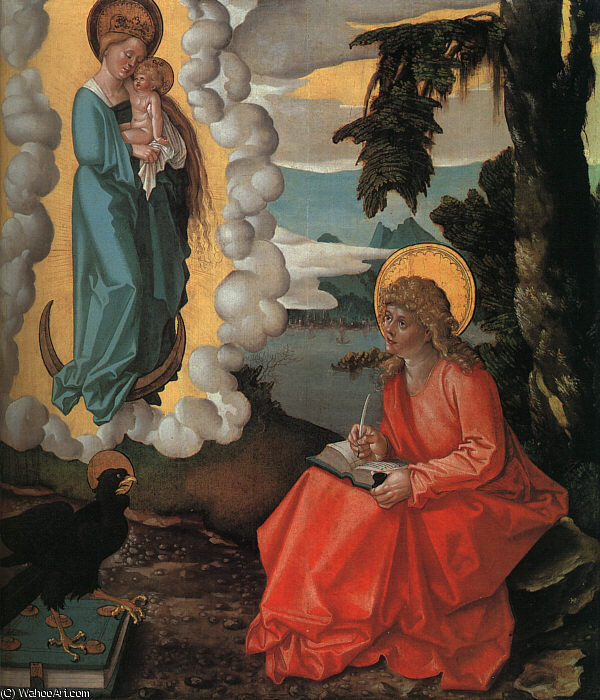
Grien Saint John on Patmos, tempera and oil on


 Read More
Purchase a high-resolution, enhanced digital image, far superior to the online preview.
Each file is meticulously prepared by our in-house specialists using advanced tools and expert manual retouching. We ensure every image has exceptional clarity, precise color accuracy, and fine detail.
The final file is delivered via email within 72 hours, optimized for immediate use in professional, editorial, and print environments. This is the same quality trusted by top-tier design studios, publishers, and galleries.
Digital Image
Download a high-resolution file for personal display, printing, and creative projects. ( Buy Print Buy Hand Made Painting)
Included in Every Digital Image Order
Expert Digital Delivery, Guaranteed
When you choose ArtsDot.com, you're not just getting an image - you're receiving a professionally enhanced digital artwork, crafted with precision and backed by a satisfaction guarantee. Here's everything that comes with your order, automatically:

Fast Email Delivery
Your high-resolution digital image file will be emailed to you within 72 hours of ordering - ready for immediate use.

AI-Enhanced Digital File
Your artwork is professionally optimized using advanced AI tools and manual editing, ensuring maximum detail, clarity, and color accuracy.

Free Lifetime Re-Delivery
Accidentally deleted or lost your file? No worries - we'll resend it to you anytime, free of charge.

No Import Fees - Ever
Enjoy your artwork instantly with zero customs, duties, or delivery fees - digital downloads are always tax-free.

Color Accuracy Guarantee
We ensure your digital image reflects the original colors as closely as possible using professional tools and color management.

60-Day Satisfaction Guarantee
If you're not satisfied with your digital image, we'll revise it or refund 100% within 60 days - no questions asked.

100% Money-Back Guarantee
Not satisfied? Get a full refund within 60 days of receiving your digital file - no questions asked.

Bulk Order Discounts
Buy 3 images, save 10% - Buy 5, save 15% - Buy 10+, save 20%. Great for creative projects, galleries, and agencies.
Collectible Description
A Visionary Revelation: Hans Baldung's "Saint John on Patmos"
This captivating painting, “Saint John on Patmos,” created by Hans Baldung in 1511, transports viewers to a serene yet profoundly spiritual woodland setting. The scene depicts Saint John the Baptist, traditionally associated with the author of the Book of Revelation, seated amidst lush foliage, diligently writing or reading from an open book. Above him, ethereal figures representing Mary and Jesus appear as hovering angels, bathed in a soft, otherworldly light. Two birds add subtle life to the composition – one perched near the lower left corner, and another towards the upper right, contributing to the overall sense of tranquility and contemplation. Executed using tempera and oil on canvas, this work exemplifies Baldung’s mastery of detail and his ability to infuse religious narratives with a palpable emotional depth.Style & Technique: Renaissance Expressionism
Baldung's artistic style is often characterized as "Renaissance Expressionism." While rooted in the principles of the Northern Renaissance, he departs from strict naturalism, employing elongated figures and dramatic poses to convey heightened emotion and spiritual intensity. The meticulous detail evident in the rendering of foliage, fabrics, and facial expressions demonstrates Baldung’s technical skill, honed during his apprenticeship with Albrecht Dürer. The use of tempera alongside oil allows for a luminous quality, enhancing the ethereal atmosphere surrounding the angelic figures. Notice how Baldung utilizes light and shadow to create depth and draw attention to Saint John's focused gaze – a key element in conveying the scene’s contemplative nature.Historical Context & Symbolism
Created during the early 16th century, "Saint John on Patmos" reflects the growing religious fervor of the Reformation era. The depiction of Saint John, the author of Revelation, resonates with the period's emphasis on individual faith and biblical interpretation. The symbolism within the painting is rich:- The Book: Represents divine revelation and the transmission of God’s word.
- Mary & Jesus (as Angels): Symbolize divine guidance and inspiration for Saint John’s writing.
- The Forest Setting: Can be interpreted as a metaphor for solitude, contemplation, and spiritual retreat.
- The Birds: Often symbolize the soul or messengers of God.
Emotional Impact & Artistic Legacy
"Saint John on Patmos" evokes a sense of quiet reverence and profound introspection. The painting’s composition invites viewers to share in Saint John's solitary act of writing, prompting reflection on the power of faith and the importance of spiritual contemplation. Baldung’s unique style – blending Renaissance precision with expressive emotion – distinguishes him as a significant figure within German art history. His influence can be seen in subsequent generations of artists who sought to imbue religious subjects with psychological depth and dramatic intensity. Owning a reproduction of this masterpiece allows you to bring the timeless beauty and spiritual resonance of Baldung’s vision into your home or office, sparking conversation and inspiring contemplation for years to come.Related Artworks
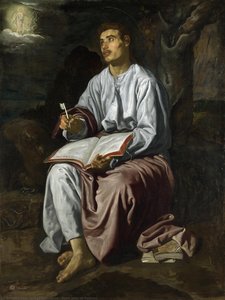
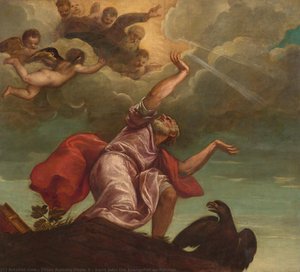
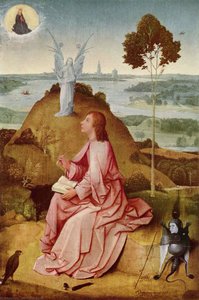
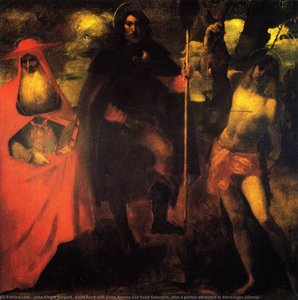
Artist Biography
A Swabian Enigma: The Life and Early Influences of Hans Baldung Grien
Born around 1485 in the Free Imperial City of Schwäbisch Gmünd, nestled within the rolling hills of Bavaria, Hans Baldung—forever distinguished as Hans Baldung Grien due to his penchant for wearing green attire—emerged from an unexpectedly scholarly lineage. Unlike many Renaissance artists who followed established family crafts, Baldung was the first male in generations not destined for university studies. His father, Johann Baldung, a respected jurist serving the Bishopric of Strasbourg, envisioned a similar path for his son. Yet, young Hans chose the brush and burin, embarking on an artistic journey that would set him apart as one of the most distinctive and enigmatic figures of the German Renaissance. This decision wasn’t a rejection of his upbringing, but rather a redirection of intellectual curiosity—a characteristic that permeated his entire oeuvre. His early training commenced around 1500 in the Upper Rhineland with an artist from Strasbourg, laying the groundwork for his technical skills before he sought out more prominent masters to hone his craft. This initial period instilled within him a foundation of draftsmanship and composition, preparing him for the rigorous artistic environment that awaited him in Nuremberg.
Under Dürer’s Wing and Forging an Individual Style
The pivotal moment in Baldung's development arrived in 1503 when he became a workshop apprentice to Albrecht Dürer in Nuremberg. This period proved profoundly formative, exposing him to the meticulous detail, intellectual rigor, and innovative printmaking techniques that defined Dürer’s style. The two artists developed a close relationship; Baldung even managed Dürer's workshop during his master’s sojourn to Venice. However, while deeply influenced by Dürer—evident in early works showcasing precise draftsmanship and Northern realism—Baldung quickly began to forge his own artistic identity. He absorbed the lessons of the Renaissance masters but infused them with a uniquely German sensibility, characterized by expressive color, imaginative compositions, and an increasingly unsettling psychological depth. This divergence from Dürer’s more classical approach would become a hallmark of Baldung's mature style. His time in Venice, overseeing Dürer’s affairs, also exposed him to the burgeoning Italian Renaissance art scene, broadening his artistic horizons and subtly influencing his palette and compositional choices. He returned from Italy with a heightened sense of color and a willingness to experiment with spatial arrangements that set him apart from his contemporaries.
A Master of Many Mediums: Themes and Techniques
Hans Baldung Grien was an artist of remarkable versatility, proficient in painting, printmaking—particularly woodcuts and engravings—drawing, tapestry design, and even stained glass work. His paintings often feature small-scale works brimming with puzzling allegories and mythological narratives, rendered with a vibrant palette and a distinctive sense of spatial ambiguity. He excelled at portraiture, capturing the likenesses of his patrons with both realism and psychological insight. However, it is perhaps for his woodcuts that Baldung is most widely recognized today. These prints are characterized by their dramatic compositions, intricate detail, and often macabre subject matter. A recurring theme throughout his work is a fascination with witchcraft, death, and the supernatural—a reflection of the anxieties and beliefs prevalent in 16th-century Germany. His depictions of witches are particularly striking, portraying them not as stereotypical hags but as complex, even alluring figures, embodying both fear and fascination. The Bewitched Groom, for example, is a chillingly evocative work that encapsulates this preoccupation with the darker side of human experience. Baldung’s technique in woodcut was masterful; he exploited the medium's capacity for stark contrasts and intricate detail to create images that were both visually arresting and psychologically unsettling.
Reformation Currents and Lasting Legacy
Baldung’s career unfolded during a period of immense religious and political upheaval, marked by the rise of the Protestant Reformation. While not overtly aligned with any particular faction, his work often reflects the changing spiritual landscape of Germany. His monumental high altar for the city of Münster, completed in 1531, is a testament to this engagement, showcasing support for the reformation movement through its iconography and stylistic choices. In 1545, Baldung died in Strasbourg, leaving behind a body of work that continues to captivate and intrigue viewers today. His influence can be seen in the works of later German artists, and his unique blend of Renaissance technique, Northern expressionism, and allegorical complexity secures his place as a significant figure in art history. He remains an artist whose work invites contemplation, challenging us to confront the darker aspects of human nature and the mysteries of the unseen world. His exploration of themes like witchcraft and mortality continues to resonate with contemporary audiences, making him a timeless and compelling figure in the pantheon of Renaissance masters.
Museums and Collections
Baldung’s works can be found in prominent museums across Europe and North America:
- Gemäldegalerie Alte Meister, Dresden, Germany: This renowned museum houses a significant collection of European paintings from the 15th to the 18th centuries, providing valuable context for understanding Baldung’s artistic milieu.
- National Gallery of Art, Washington D.C.: The NGA holds several important woodcuts and drawings by Baldung, offering insights into his printmaking techniques and artistic process.
- The J. Paul Getty Museum, Los Angeles: Features works that showcase the breadth of Baldung’s talent.
- Kunstmuseum Basel, Switzerland: A museum with a rich collection spanning various periods, offering a broader understanding of Renaissance art in Europe.
These institutions provide opportunities to experience firsthand the captivating artistry and enduring legacy of Hans Baldung Grien.
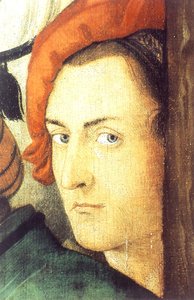
Hans Baldung
1485 - 1545 , Germany
Quick Facts
- Artistic Movement Or Style: Renaissance, Mannerism
- Artists Or Movements Influenced By This Artist: Later German artists
- Artists Who Influenced This Artist: ['Albrecht Dürer']
- Date Of Birth: c. 1485
- Date Of Death: 1545
- Full Name: Hans Baldung Grien
- Nationality: German
- Notable Artworks:
- Bewitched Groom
- Allegory of Death & Beauty
- Place Of Birth: Schwäbisch Gmünd, Germany

