 Preview
 Send
Send Share
Share
 Details

 Download
 Similars
 X-Ray
X-Ray Diaporama
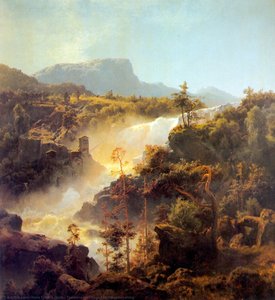
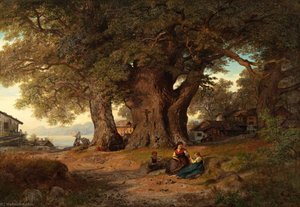
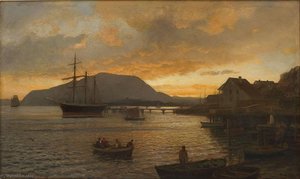
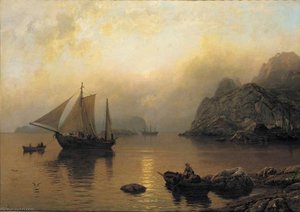
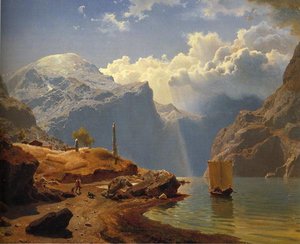
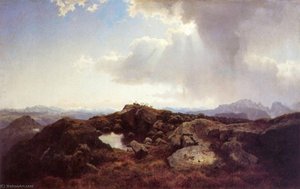
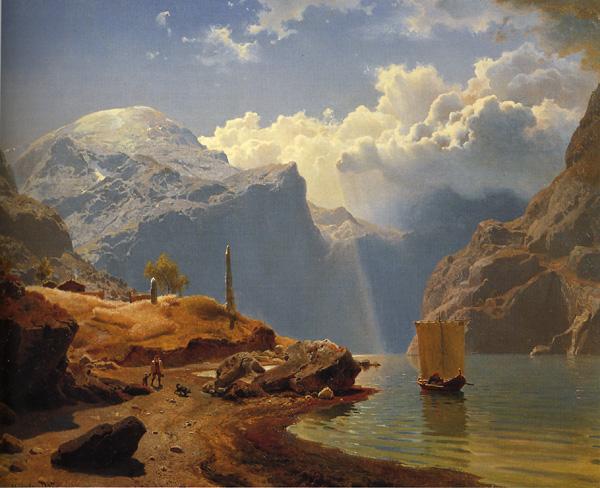
Norwegian Fra Hardanger


 Read More
Giclée / Art Print
Museum-quality giclée or canvas print with fast production and flexible finish options. ( Buy Hand Made Painting Buy Image)




































Pick from our preset sizes that match the artwork's original proportions.

You may enter your own dimensions to fit a specific frame or space. If your selected size does not match the original image's proportions, we will either crop the artwork or extend the image with a mirrored or solid-fill edge. A digital mockup will be sent for your approval before production begins.
Please note that the on-screen preview does not reflect the actual cropping or extension. Only the mockup will accurately show the final composition.
While custom sizes are available, we recommend selecting a dimension from the predefined list to preserve the original proportions.
Worldwide Delivery () in 2 weeks instead of standard 4/5 weeks. (17 August)

Free Worldwide Express Shipping

High-Quality Linen Canvas

Full Shipping Insurance

Customs Tax Refund Guarantee

True Color Matching Guarantee

60-Day Return Policy (Defects Only)

100% Money-Back Guarantee

Bulk Discount Offer
 Glass option is only available in size under 110 CM

Norwegian Fra Hardanger
Giclée / Art Print
Reproduction Size
-


Total Price
$ 63
Related Artworks
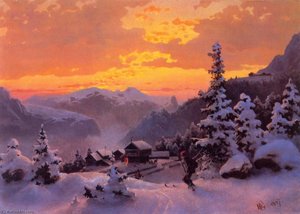
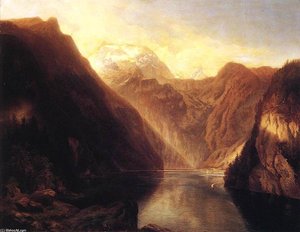
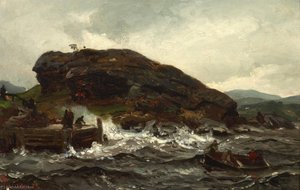
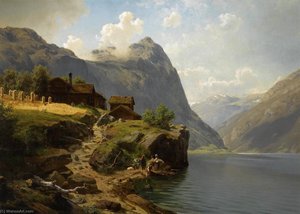
Artist Biography
A Norwegian Visionary: The Life and Art of Hans Fredrik Gude
Born in Christiania (present-day Oslo) in 1825, Hans Fredrik Gude emerged as a pivotal figure in the blossoming of Norwegian National Romanticism. His lineage – his father, Ove Gude, was a respected lawyer and politician, and his mother, Marie Elisabeth Brandt, fostered an early appreciation for artistic expression – provided a nurturing environment for his burgeoning talent. From the tender age of twelve, young Hans received foundational training under Johannes Flintoe, a landscape painter who instilled in him the fundamentals of drawing and painting. This initial exposure ignited a lifelong passion that would see Gude not only capture the breathtaking beauty of Norway’s landscapes but also help define a national artistic identity. His formal education continued at the Royal School of Drawing in Christiania, where he honed his skills and began to explore the possibilities of landscape as a vehicle for emotional resonance.Düsseldorf and the Shaping of a Style
At just sixteen years old, Gude embarked on a transformative journey to Düsseldorf, Germany, enrolling at the prestigious Düsseldorf Academy in 1841. This marked a crucial turning point in his artistic development. Under the tutelage of Johann Wilhelm Schirmer, a leading figure in landscape painting, Gude absorbed the principles of meticulous detail, realistic representation, and romantic interpretations of nature that characterized the Düsseldorf School. He became deeply immersed in this influential circle, refining his technique and solidifying his artistic vision. It was during this period that he forged a remarkable collaborative partnership with Adolph Tidemand, whose skill in figure painting beautifully complemented Gude’s mastery of landscape. Their most celebrated joint effort, “Bridal Procession on the Hardangerfjord” (1848), became an iconic representation of Norwegian life and scenery, capturing the spirit of national pride and romantic idealism. While initially adhering to the Düsseldorf School's emphasis on precise detail, Gude gradually began to evolve his style, driven by a desire for more faithful depictions of nature and a growing sensitivity to atmospheric effects.A Professor’s Influence: Karlsruhe, Berlin, and *En Plein Air*
By the early 1850s, Hans Fredrik Gude had established himself as a leading landscape painter in Norway, his works gaining recognition for their evocative power and technical skill. This reputation led to prestigious appointments that would further shape his legacy. In 1863, he accepted a professorship at the Academy of Art in Karlsruhe, Germany, where he shared his knowledge and passion with generations of aspiring artists. Later, from 1880 to 1901, he held a similar position at the Berlin Academy of Art, continuing to exert a profound influence on the artistic landscape. Gude was a fervent advocate for *en plein air* painting – working outdoors directly from nature – and encouraged his students to embrace this practice as a means of achieving greater authenticity and capturing the fleeting nuances of light and atmosphere. He also experimented with watercolors and gouache later in life, seeking new ways to express his artistic vision and maintain a sense of freshness and innovation.Landscapes of Norway: A Lasting Legacy
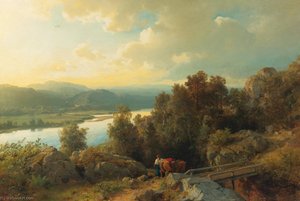
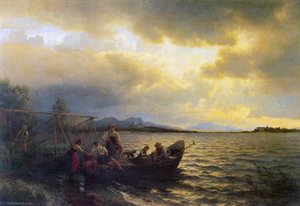
Gude’s oeuvre is defined by idyllic, sun-drenched Norwegian landscapes that seamlessly blend romantic sensibility with realistic observation. He possessed an extraordinary ability to capture the rugged beauty of his homeland – its majestic fjords, towering mountains, and dense forests – imbuing each scene with a sense of awe and tranquility. While initially known for these sweeping vistas, Gude expanded his repertoire around 1860 to include captivating seascapes and coastal subjects, adding another dimension to his artistic exploration. Notable paintings such as “View from Balestrand” (1845), “Fra Chiemsee” (1868), and “Hjemvendende hvalfangerskip i en norsk havn” (“Whaling Ship Returning to a Norwegian Port”) (1869) exemplify his meticulous attention to detail, atmospheric perspective, and masterful use of light. His artistic style is characterized by a remarkable ability to convey the changing moods of nature, evoking feelings of serenity, drama, and sublime beauty.A National Icon
Hans Fredrik Gude’s contribution to Norwegian art extends far beyond his individual paintings. He stands as a central figure in Norwegian National Romanticism, playing a crucial role in the development of a distinct national artistic identity. Through his teaching positions, he mentored three generations of artists, shaping their aesthetic sensibilities and fostering a deep appreciation for Norway’s natural heritage. Gude received numerous accolades throughout his career, including medals, honorary memberships in various art academies, and the Grand Cross of the Order of St. Olav, recognizing his significant contributions to the cultural life of Norway. His family also contributed to the artistic world; he was the father of painter Nils Gude, and his daughter Sigrid married German sculptor Otto Lessing. Though he passed away in Berlin in 1903, Hans Fredrik Gude’s legacy endures as a testament to his artistic vision, his dedication to teaching, and his profound love for the landscapes that inspired him. He remains a celebrated icon of Norwegian art, whose works continue to captivate audiences with their timeless beauty and evocative power.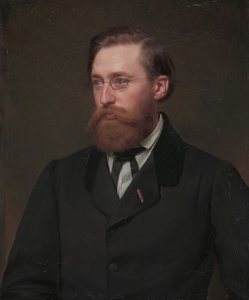
Hans Fredrik Gude
1825 - 1903 , Sweden
Quick Facts
- Artistic Movement Or Style: Romanticism
- Artists Or Movements Influenced By This Artist: ['Norwegian National Romanticism']
- Artists Who Influenced This Artist:
- Johann Schirmer
- Andreas Achenbach
- Date Of Birth: March 13, 1825
- Date Of Death: August 17, 1903
- Full Name: Hans Fredrik Gude
- Nationality: Norwegian
- Notable Artworks:
- Bridal Procession...
- View from Balestrand
- Hjemvendende hvalfangerskip
- Fra Chiemsee
- Place Of Birth: Oslo, Norway
Related Articles

Romantic Landscapes: 10 Masterpieces for Your Home | ArtsDot
Journey through 10 Romantic landscape masterpieces by Friedrich, Turner & Cole. Explore emotional art, sublime nature scenes & iconic 19th-century paintings. Find museum-quality reproductions for your home at ArtsDot.com – discover the full collection online!
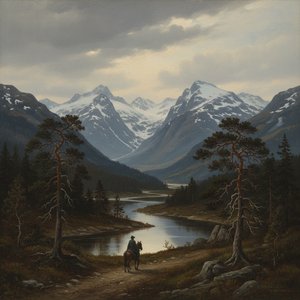
Johan Christian Dahl: Pioneering Norwegian Romantic Landscape Painting
Explore the life & art of Johan Christian Dahl, Norway's first great Romantic painter. Discover his iconic landscapes, cultural impact, and lasting legacy with ArtsDot.

Beyond the Horizon: 10 Landscape Masterpieces for Your Home Decor
Journey through 10 breathtaking landscape paintings by Monet, Van Gogh & more! Explore iconic artworks, artistic techniques & find inspiration for your home decor. Museum-quality reproductions at ArtsDot.com. Discover all masterpieces on ArtsDot.com

Evocations of Place: A Historical Journey Through Landscape Art
Explore the rich history of landscape art with ArtsDot. Discover renowned artists, movements like Impressionism & Romanticism, and expert guidance for collecting timeless pieces. Find your perfect serene escape today!

John Constable's Masterpieces: Explore 25 Iconic Landscapes for Your Home
Journey through John Constable's 25 most celebrated landscapes. Explore Romanticism, Dedham Vale & his masterful use of light in iconic paintings like 'Hay Wain'. Find museum-quality art reproductions and elevate your home decor on ArtsDot.com.