 Preview
 Send
Send Share
Share
 Details

 Download
 Similars
 X-Ray
X-Ray Diaporama
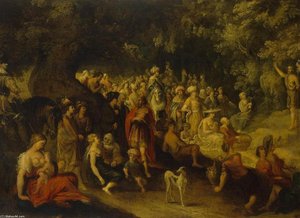
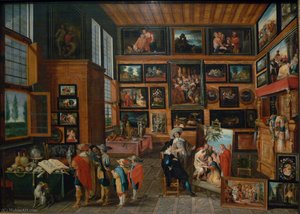
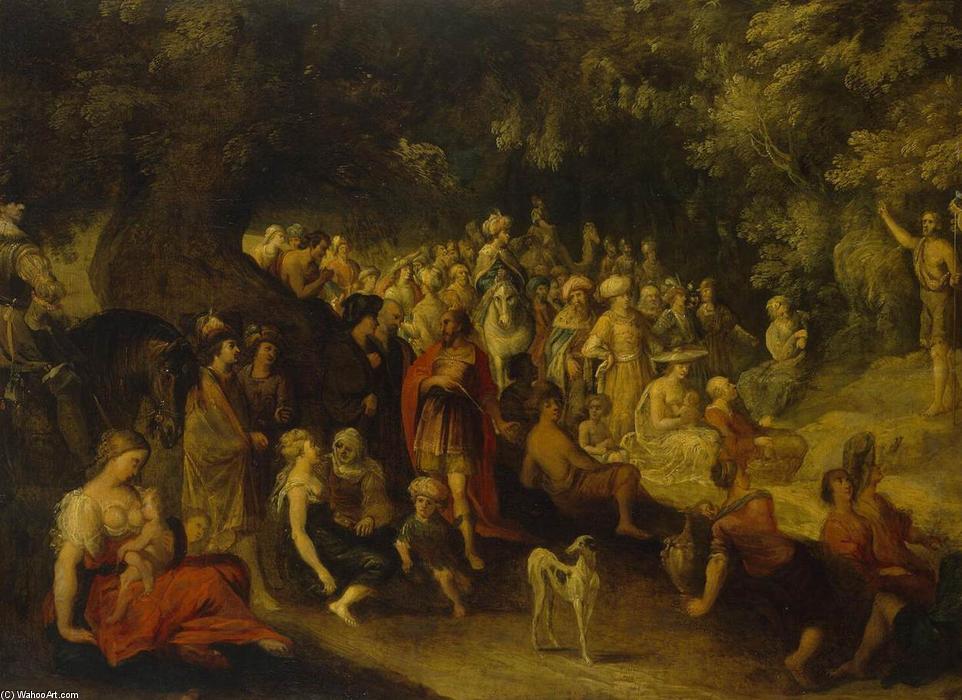
Sermon of St John the Baptist
 Oil On Panel
- Baroque
 1620
1620- Early Modern
 73.0 x 95.0 cm
 Hermitage Museum
 Read More
Giclée / Art Print
Museum-quality giclée or canvas print with fast production and flexible finish options. ( Buy Hand Made Painting Buy Image)




P118B $10

P118H $10

P118W $10

P438Z $10

P508JH $12

P508YH $12

P805H $10

P805Z $10

P919BZ $10

P919G $10

P919XJ $10

P959ZH $10

P968JZ $12

W106C $8

W218G $10

W218JH $8

W218Y $10

W307PJ $10

W316G $10

W316PJ $8

W316Y $10

W398PJ $8

W4111J $10

W500HY $15

W500JH $15

W692G $12

W849H $8

W940BG $15

W953PJ $8




Pick from our preset sizes that match the artwork's original proportions.

You may enter your own dimensions to fit a specific frame or space. If your selected size does not match the original image's proportions, we will either crop the artwork or extend the image with a mirrored or solid-fill edge. A digital mockup will be sent for your approval before production begins.
Please note that the on-screen preview does not reflect the actual cropping or extension. Only the mockup will accurately show the final composition.
While custom sizes are available, we recommend selecting a dimension from the predefined list to preserve the original proportions.
Worldwide Delivery () in 2 weeks instead of standard 4/5 weeks. (27 August)

Free Worldwide Express Shipping

High-Quality Linen Canvas

Full Shipping Insurance

Customs Tax Refund Guarantee

True Color Matching Guarantee

60-Day Return Policy (Defects Only)

100% Money-Back Guarantee

Bulk Discount Offer
 Glass option is only available in size under 110 CM

Sermon of St John the Baptist
Giclée / Art Print
Reproduction Size
-


Total Price
$ 63
Collectible Description
A Divine Gathering in the Flemish Baroque
In the heart of the seventeenth century, the Antwerp school of painting reached a zenith of emotional storytelling and dramatic composition, a period perfectly encapsulated by Hans III Jordaens’s Sermon of St John the Baptist. This masterful oil on panel invites the viewer into a moment of profound spiritual stillness amidst a bustling world. The scene unfolds with a captivating sense of movement, as a diverse assembly of souls gathers to witness the powerful oratory of the Baptist. Through Jordaens’s skilled hand, we are not merely observers of a historical event, but participants in a sacred congregation, feeling the weight of the silence and the intensity of the shared devotion.
The composition is a masterclass in Baroque arrangement, utilizing a layered depth that draws the eye from the immediate foreground into the heart of the crowd. Jordaebns populates this landscape with at least fourteen distinct figures, each rendered with a meticulous attention to character and posture. Some lean forward in rapt attention, their faces etched with the gravity of the message, while others linger in the periphery, creating a rhythmic ebb and flow of human presence. The inclusion of a solitary dog near the center adds a touch of earthly realism, grounding this divine narrative in the tangible, everyday world of the Flemish countryside.
Technique, Light, and the Mastery of Hans III Jordaens
To behold this work is to appreciate the technical brilliance of a true Flemish Master. Jordaens employs a sophisticated use of light and shadow—the chiaroscuro characteristic of the era—to sculpt the figures and imbue them with three-dimensional vitality. The light seems to emanate from the very essence of the sermon itself, illuminating the faces of the faithful and casting soft, atmospheric shadows that lend a sense of mystery to the background. His brushwork, though precise enough to capture the textures of fabric and the subtle expressions of skin, retains a fluid energy that prevents the scene from feeling static.
For the discerning collector or interior designer, this piece offers more than just historical value; it provides a profound aesthetic anchor. The rich, earthy palette and the dramatic interplay of light make it an ideal centerpiece for spaces that demand character and intellectual depth. Whether placed in a grand library or a sophisticated contemporary salon, the Sermon of St John the Baptist serves as a window into a lost era of piety and artistic excellence, offering a timeless elegance that transcends modern trends.
Symbolism and Emotional Resonance
Beyond its visual splendor, the painting is steeped in the symbolic language of the 1620s. The act of preaching serves as a metaphor for the dissemination of truth and the awakening of the soul. Every element, from the attentive gaze of the crowd to the rugged landscape, reinforces the theme of spiritual preparation. Jordaens captures that fleeting, transcendent moment where the earthly and the divine intersect, leaving the viewer with a lingering sense of awe.
Owning a high-quality reproduction of this work allows one to bring this atmosphere of contemplative peace into the home. It is an invitation to slow down, to reflect, and to surround oneself with the enduring beauty of the Baroque tradition. This painting is not merely a depiction of a sermon; it is an enduring testament to the power of faith, the artistry of the human hand, and the eternal search for meaning.
Related Artworks
![Life Of St John The Evangelist - [03] - Ascension Of The Evangelist — Giotto Di Bondone, Proto-renaissance Painting](/media/artworks/images-thumb/ab/15/ab151a8ad105b1ef78444cd367849cb4.jpg)
Artist Biography
The Soul of Antwerp: The Life and Legacy of Hans III Jordaens
In the vibrant, bustling heart of seventeenth-century Antwerp, a period defined by the dramatic flourishes of the Baroque, the name Hans III Jordaens emerges as a profound voice of spiritual and narrative depth. While history occasionally casts him in the shadow of his more famous contemporaries or even his kin, Jordaens carved out a singular space within the Flemish tradition. His life, spanning from approximately 1590 to 1643, was deeply rooted in the artistic soil of Belgium, a place where the interplay of light and shadow served as a metaphor for the human condition. Born into an environment steeped in creativity, his very existence was intertwined with the guild traditions and the religious fervor that fueled the Antwerp school of painting.
The foundations of Jordaens’s mastery were laid long before he ever touched a brush to panel. He was a product of familial apprenticeship, receiving his earliest and most vital training under the watchful eye of his father, Hans Jordaens II. This lineage provided him with more than just technical instruction; it offered an immersion into the classical principles and the burgeoning Baroque dynamism that were reshaping European art. Growing up in an era where the echoes of Rubens and the spiritual gravity of Saint Paul's Cathedral permeated the air, Jordaens developed a profound sensitivity to the way light could sculpt form and how a single gesture could convey the weight of a divine revelation.
A Mastery of Light and Narrative Emotion
To encounter a work by Hans III Jordaens is to enter a world where the boundaries between the earthly and the divine become beautifully blurred. His technique was defined by a sophisticated command of chiaroscuro, the dramatic tension created by the struggle between brilliant illumination and encroaching darkness. He did not merely use light to reveal subjects; he used it to breathe life into them. In his hands, a beam of light falling across a face in a crowded biblical scene becomes a vessel for grace, while the deep, velvety shadows provide the necessary mystery to ground his historical allegories.
His repertoire was as diverse as the human experience itself, ranging from intricate interiors and meticulously rendered animals to sweeping historical scenes. He possessed a rare ability to populate his canvases with staffage—figures that serve not just as decoration, but as emotional anchors for the narrative. Whether he was depicting the intense spiritual stillness of a sermon or the harrowing tension of an exodus, Jordaens focused on the psychological nuances of his subjects. His figures are rarely static; they lean into the light with rapt attention, recoil in fear, or linger in the periphery with quiet contemplation, creating a rhythmic, breathing composition that invites the viewer to participate in the sacred drama.
Historical Significance and Artistic Enduring Spirit
The significance of Hans III Jordaens lies in his ability to synthesize the meticulous realism of the Flemish tradition with the emotional theatricality of the Baroque era. While some scholars note that his works are occasionally conflated with those of other painters bearing similar names, the distinctiveness of his hand remains visible in the subtle textures of fabric and the profound accuracy of human expression. He was an artist who understood that the true power of painting lies in its ability to capture the ephemeral—a fleeting glance, a sudden movement, or the heavy silence following a powerful word.
As we reflect on his contributions to the Antwerp school, several key elements of his legacy stand out:
- Technical Innovation: His sophisticated use of light and shadow to create three-dimensional vitality and atmospheric depth.
- Narrative Depth: The seamless integration of biblical and mythological themes with a palpable sense of human emotion and psychological realism.
- Cultural Connection: His role in maintaining the high standards of the Flemish Baroque, contributing to the era's reputation for unparalleled detail and storytelling.
Though the centuries have passed since he walked the streets of Antwerp, the works of Hans III Jordaens continue to resonate. They serve as a window into a time when art was a bridge between the tangible world and the infinite, reminding us that through the careful application of pigment and light, the most profound truths of the human spirit can be made eternal.
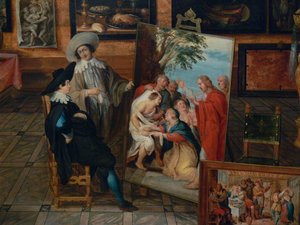
Hans III Jordaens
1590 - 1643 , Belgium
Quick Facts
- Artistic Movement Or Style: Baroque
- Artists Who Influenced This Artist: ['Hans Jordaens II']
- Date Of Birth: 1590
- Date Of Death: 1643
- Full Name: Hans III Jordaens
- Nationality: Flemish
- Notable Artworks:
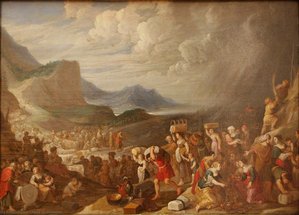
- Crossing of Red Sea
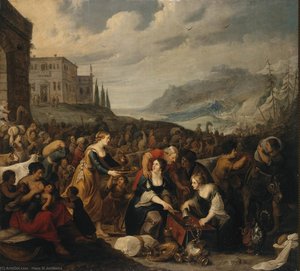
- The Israelites after Crossing the Red Sea
- Sermon of St John the Baptist
- Place Of Birth: Antwerp, Belgium
Related Articles

John Constable's Masterpieces: Explore 25 Iconic Landscapes for Your Home
Journey through John Constable's 25 most celebrated landscapes. Explore Romanticism, Dedham Vale & his masterful use of light in iconic paintings like 'Hay Wain'. Find museum-quality art reproductions and elevate your home decor on ArtsDot.com.

John Singer Sargent's 25 Masterpieces: Portraits & Beyond | ArtsDot
Explore 25 iconic John Singer Sargent paintings – from dazzling portraits to Impressionist landscapes. Discover the stories behind Madame X, El Jaleo & more! Find museum-quality art reproductions and elevate your home decor with ArtsDot.com.

The Dramatic Flourish: Exploring the Baroque Movement's Enduring Legacy in Art History
Explore the dramatic world of Baroque art! Discover iconic artists like Caravaggio & Rubens, defining techniques, and its lasting impact on art history. Expert insights for collectors & enthusiasts at ArtsDot.

The Visceral Stage: Exploring Dramatic Narratives & Emotional Intensity in Baroque Art
Explore the dramatic world of Baroque art! Discover iconic masters like Caravaggio & Rembrandt, their techniques, and the movement's lasting impact. Expert insights for collectors & enthusiasts at ArtsDot.
The Dramatic Flourish: Exploring Themes of Power, Faith & Emotion in Baroque Artworks
Explore the dramatic world of Baroque art! Discover masters like Zurbarán & the powerful influence of religious zeal on painting techniques. Expert insights for collectors and enthusiasts.