 Preview
 Send
Send Share
Share
 Details

 Download
 Similars
 X-Ray
X-Ray Diaporama
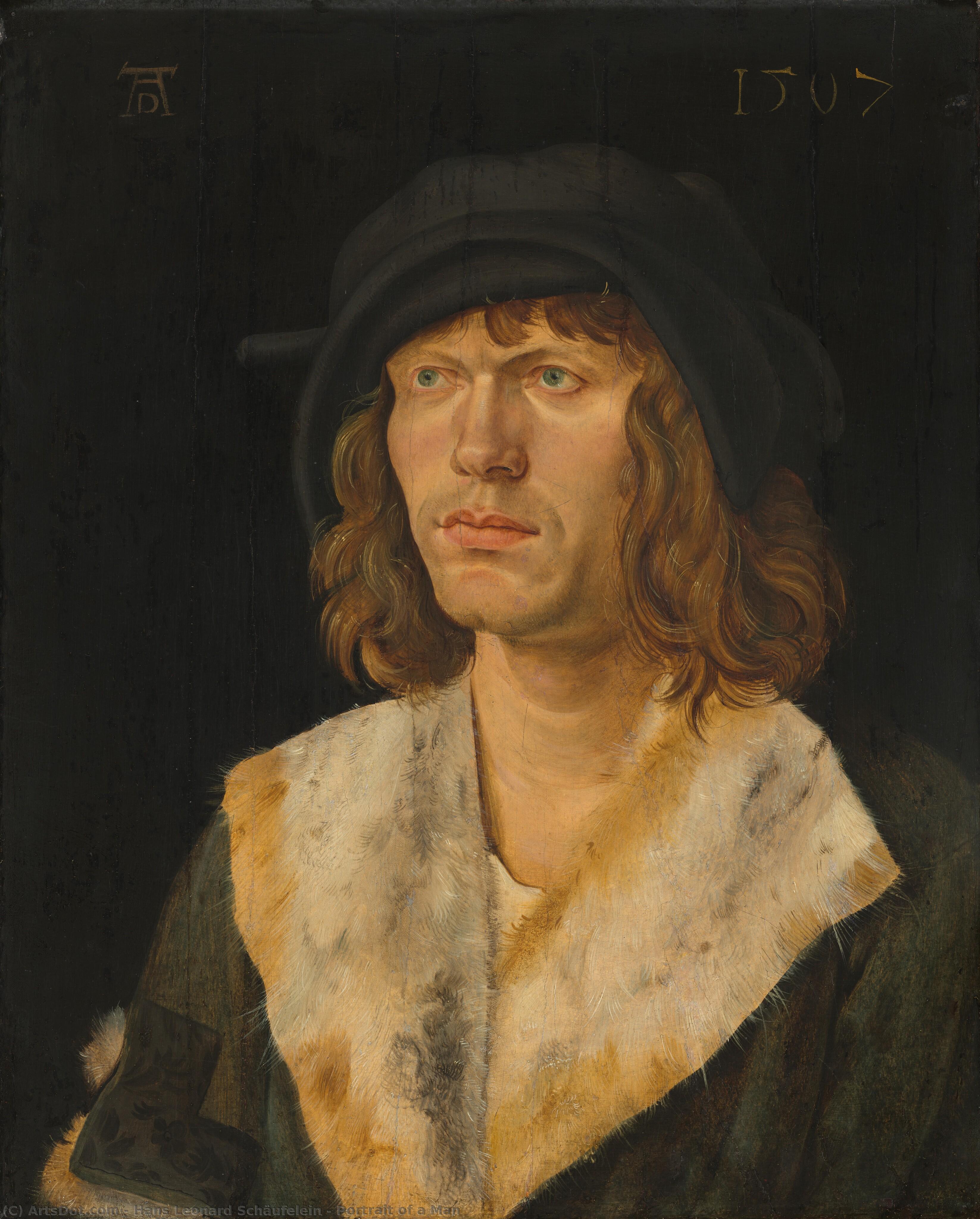
Portrait of a Man
 1507
1507 54.0 x 47.0 cm
 Read More
Hand Made Oil Reproduction
Hand-painted oil on canvas in your size and frame, made to order by our artists. ( Buy Print Buy Image)




































Pick from our preset sizes that match the artwork's original proportions.

You may enter your own dimensions to fit a specific frame or space. If your selected size does not match the original image's proportions, we will either crop the artwork or extend the painting with additional hand-painted elements. A digital mockup will be sent for your approval before production begins.
Please note that the on-screen preview does not reflect the actual cropping or extension. Only the mockup will accurately show the final composition.
While custom sizes are available, we recommend selecting a dimension from the predefined list to preserve the original proportions.
After order, ArtsDot.com team will email client for instructions and provide a mockup preview
Worldwide Delivery () in 3/4 weeks instead of standard 5 weeks. (25 August). No compromise on quality.

Free Worldwide Express Shipping

High-Quality Linen Canvas

Full Shipping Insurance

Customs Tax Refund Guarantee

True Color Matching Guarantee

60-Day Return Policy (Defects Only)

100% Money-Back Guarantee

Bulk Discount Offer
 Glass option is only available in size under 110 CM

Portrait of a Man
Reproduction Medium
Reproduction Size
-


Total Price
$ 263
Related Artworks







Artist Biography
Early Life and Apprenticeship in the Renaissance Heartland
Hans Leonard Schäufelein, a name perhaps less instantly recognizable than his contemporaries Dürer or Holbein, nevertheless occupies a significant position within the vibrant artistic landscape of early 16th-century Germany. Born around 1480, likely in Nuremberg—the bustling center of commerce and artistic innovation—Schäufelein’s formative years were steeped in the burgeoning spirit of the Renaissance. While concrete details regarding his earliest training remain elusive, it is widely accepted that he apprenticed under Wilhelm Wohlgemut, a prominent painter and woodcut designer whose workshop was a hub for both religious commissions and secular illustrations. This foundational education instilled in Schäufelein not only technical proficiency but also an understanding of the demands of a diverse clientele—a skill that would prove crucial throughout his career. The Nuremberg of this period was a crucible where Gothic traditions were gradually yielding to the influence of Italian Renaissance ideals, and Wohlgemut’s workshop served as a conduit for these evolving aesthetic principles. It was within this environment that Schäufelein began to develop his distinctive style, characterized by graceful lines, meticulous detail, and an increasingly sophisticated understanding of perspective.Collaboration with Dürer and the Augsburg Period
Around 1503, Schäufelein entered the workshop of Albrecht Dürer, a watershed moment in his artistic development. Though the precise nature of their collaboration remains debated, it is clear that Dürer’s influence was profound. Schäufelein assisted with various projects, including designs for altarpieces and woodcuts, absorbing Dürer's mastery of anatomy, composition, and expressive realism. The *Ober Sankt Veiter Altar*, commissioned around 1506, stands as a testament to this period—though conceived by Dürer, its execution involved Schäufelein’s considerable skill. Following his time with Dürer, Schäufelein moved to Augsburg, another important artistic center, where he joined the workshop of Hans Holbein the Elder. This brief but significant sojourn exposed him to a different aesthetic sensibility – one that emphasized clarity, precision, and a more restrained emotional palette. The influence of both masters—Dürer’s intellectual rigor and Holbein’s meticulous realism—would become defining characteristics of Schäufelein's mature work.Imperial Commissions and the Art of Woodcut
The early 16th century witnessed a surge in demand for elaborate woodcuts, fueled by the patronage of Emperor Maximilian I. Schäufelein quickly established himself as a leading designer in this medium, contributing significantly to several ambitious projects, most notably the *Weisskunig* and the *Theuerdank*. These monumental works—intended to glorify Maximilian’s reign and lineage—required not only artistic skill but also an understanding of complex iconography and narrative structure. Schäufelein's woodcuts for these commissions demonstrate his ability to translate intricate designs into compelling visual narratives, capturing both the grandeur of imperial power and the subtleties of human emotion. Beyond these large-scale projects, he produced a wealth of single-sheet woodcuts depicting religious scenes, allegorical subjects, and portraits, showcasing his versatility and technical prowess. His mastery of woodcut extended beyond mere design; he understood the inherent limitations and possibilities of the medium, exploiting its unique qualities to create images that were both visually striking and emotionally resonant.Nuremberg City Painter and Late Style
In 1515, Schäufelein was appointed city painter of Nördlingen, a position he held for much of the remainder of his life. This appointment provided him with a stable income and allowed him to focus on panel paintings and mural cycles. His most significant work from this period is the cycle depicting the “Story of Judith” for the town hall of Nördlingen—a series of frescoes that showcase his evolving style. While still retaining elements of his earlier training, Schäufelein’s late works exhibit a greater emphasis on narrative clarity, emotional depth, and a more refined use of color. He continued to produce altarpieces and portraits, demonstrating a remarkable ability to adapt his style to the specific needs of his patrons. His work often blends elements of German Renaissance realism with a touch of Italianate grace, creating images that are both visually compelling and emotionally engaging.Legacy and Historical Significance
Hans Leonard Schäufelein’s contribution to the early German Renaissance is often overshadowed by the towering figures of Dürer and Holbein, yet his influence was considerable. He played a crucial role in disseminating Renaissance ideals throughout Southern Germany, bridging the gap between the Gothic traditions of Nuremberg and the emerging artistic trends of Italy. His mastery of woodcut design, combined with his skill as a painter and muralist, made him one of the most sought-after artists of his time. While he may not have possessed Dürer’s intellectual depth or Holbein’s psychological acuity, Schäufelein’s work is characterized by its grace, clarity, and emotional resonance—qualities that continue to captivate viewers today. His paintings and woodcuts offer a valuable glimpse into the artistic and cultural landscape of early 16th-century Germany, revealing a world in transition—a world where tradition and innovation coexisted, shaping the course of Western art for centuries to come.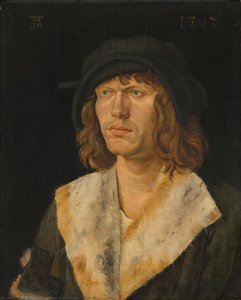
Quick Facts
- Artistic Movement Or Style: Renaissance, woodcuts
- Artists Who Influenced This Artist: ['Albrecht Dürer']
- Date Of Birth: c. 1480
- Date Of Death: c. 1539/1540
- Full Name: Hans Leonard Schäufelein
- Nationality: German
- Notable Artworks:
- Portrait of a Man
- Christ Crowned with Thorns
- Place Of Birth: Nuremberg, Germany