 Preview
 Send
Send Share
Share
 Details

 Download
 Similars
 X-Ray
X-Ray Diaporama
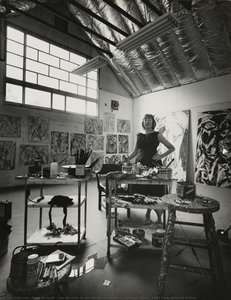
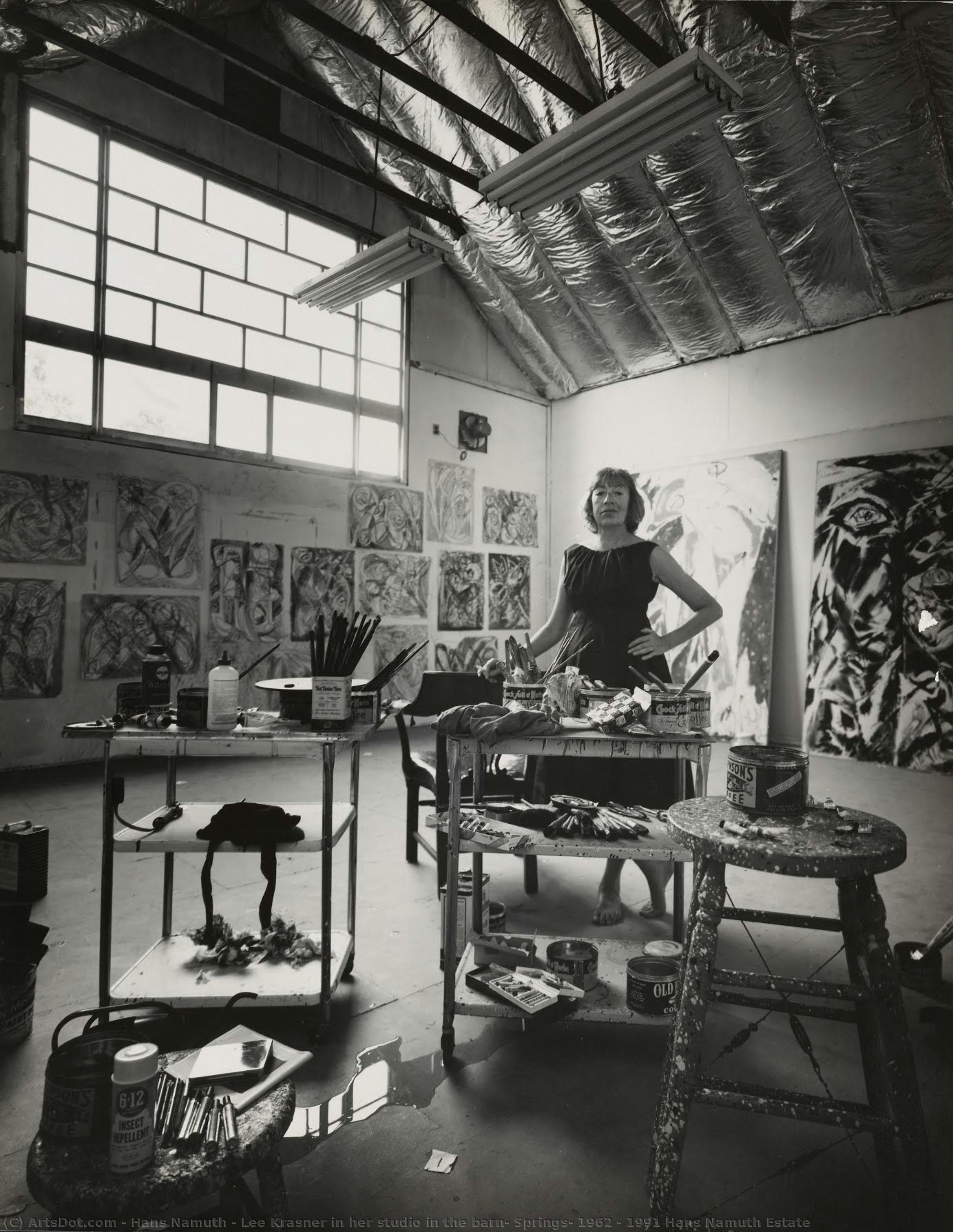
Lee Krasner in her studio in the barn, Springs, 1962 © 1991 Hans Namuth Estate
 Read More
Giclée / Art Print
Museum-quality giclée or canvas print with fast production and flexible finish options. ( Buy Hand Made Painting Buy Image)




































Pick from our preset sizes that match the artwork's original proportions.

You may enter your own dimensions to fit a specific frame or space. If your selected size does not match the original image's proportions, we will either crop the artwork or extend the image with a mirrored or solid-fill edge. A digital mockup will be sent for your approval before production begins.
Please note that the on-screen preview does not reflect the actual cropping or extension. Only the mockup will accurately show the final composition.
While custom sizes are available, we recommend selecting a dimension from the predefined list to preserve the original proportions.
Worldwide Delivery () in 2 weeks instead of standard 4/5 weeks. (25 August)

Free Worldwide Express Shipping

High-Quality Linen Canvas

Full Shipping Insurance

Customs Tax Refund Guarantee

True Color Matching Guarantee

60-Day Return Policy (Defects Only)

100% Money-Back Guarantee

Bulk Discount Offer
 Glass option is only available in size under 110 CM

Lee Krasner in her studio in the barn, Springs, 1962 © 1991 Hans Namuth Estate
Giclée / Art Print
Reproduction Size
-


Total Price
$ 63
Collectible Description
Related Artworks






Artist Biography
Hans Namuth: Documenting the Creative Process
Hans Namuth (1915-1990) was a German-born photographer renowned for his intimate and insightful portraiture of leading artists during the mid-20th century. His work transcended simple documentation, capturing not only the subjects themselves but also the dynamic relationship between artist, artwork, and studio environment. Born in Berlin, Germany, Namuth’s life took a significant turn when he fled Nazi Germany in 1939, eventually settling in New York City.
Early Life and Development as a Photographer
Namuth's early artistic development was shaped by his experiences fleeing Europe. He initially worked as a textile designer before fully committing to photography. His initial work focused on fashion photography, but he soon gravitated towards portraiture, recognizing the potential for deeper exploration of character and creativity. A pivotal moment came when he began photographing artists in their studios, a practice that would define his career. Namuth’s approach was unique; rather than staged poses, he sought to capture artists at work, immersed in their creative process. This involved observing, anticipating moments, and documenting the often-chaotic reality of artistic creation.
Major Achievements: Capturing Abstract Expressionism
Namuth's most significant contribution lies in his documentation of the Abstract Expressionist movement. He photographed iconic figures such as Jackson Pollock, Willem de Kooning, Robert Rauschenberg, Mark Rothko, Clyfford Still, and others. His photographs of Pollock, particularly those depicting him drip-painting, are arguably his most famous works. These images became synonymous with Pollock's revolutionary technique and helped to popularize Abstract Expressionism. Beyond Pollock, Namuth’s portraits of other artists provided invaluable insights into their working methods, personalities, and the environments that fostered their creativity. He also photographed architects like Frank Lloyd Wright, Philip Johnson, and Louis Kahn, expanding his scope beyond painting.
Style and Influences
Namuth's photographic style was characterized by its naturalism and observational approach. He avoided artificial lighting or elaborate staging, preferring to work with available light in the artists’ studios. His photographs possess a sense of immediacy and authenticity, reflecting his desire to capture genuine moments rather than contrived representations. While influenced by documentary photography traditions, Namuth distinguished himself through his focus on the psychological dimension of artistic creation. He was interested in exploring the self-consciousness of his subjects and the complex interplay between artist and observer. His work demonstrates an understanding of how the act of being photographed could influence an artist's behavior and creative process.
Historical Significance
Hans Namuth’s legacy rests on his ability to provide a visual record of a pivotal moment in art history – the rise of Abstract Expressionism. His photographs are not merely portraits; they are documents that illuminate the creative processes of some of the most important artists of the 20th century. They offer invaluable insights into the working methods, personalities, and environments that shaped their groundbreaking work. Namuth’s contribution extends beyond art history; his work also explores themes of identity, self-representation, and the relationship between artist and audience, making him a significant figure in photographic portraiture.

Hans Namuth
1915 - 1990 , Germany
Quick Facts
- Artistic Movement Or Style: Portraiture
- Date Of Birth: 1915
- Date Of Death: 1990
- Full Name: Hans Namuth
- Nationality: German
- Notable Artworks: ['Lee Krasner in her studio']
- Place Of Birth: Berlin, Germany