

 Preview
 Send
Send Share
Share
 Details

 Download
 Similars
 X-Ray
X-Ray Diaporama
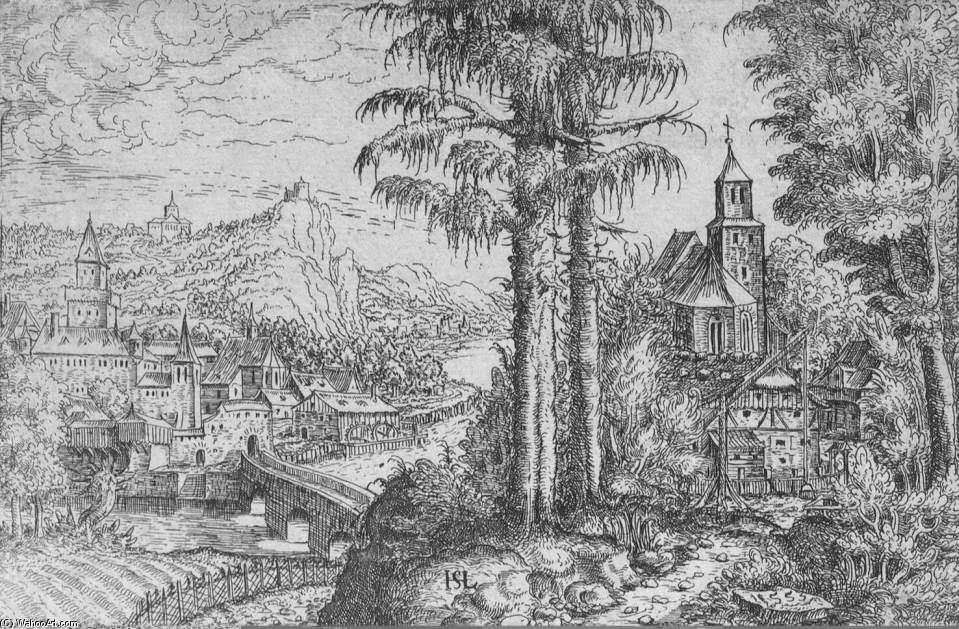
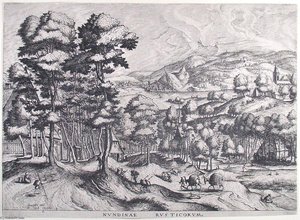
View of a Town along the River with a Church on the Right Bank
 1533
1533 112.0 x 170.0 cm
 Hermitage Museum
 Read More
Purchase a high-resolution, enhanced digital image, far superior to the online preview.
Each file is meticulously prepared by our in-house specialists using advanced tools and expert manual retouching. We ensure every image has exceptional clarity, precise color accuracy, and fine detail.
The final file is delivered via email within 72 hours, optimized for immediate use in professional, editorial, and print environments. This is the same quality trusted by top-tier design studios, publishers, and galleries.
Digital Image
Download a high-resolution file for personal display, printing, and creative projects. ( Buy Print Buy Hand Made Painting)
Included in Every Digital Image Order
Expert Digital Delivery, Guaranteed
When you choose ArtsDot.com, you're not just getting an image - you're receiving a professionally enhanced digital artwork, crafted with precision and backed by a satisfaction guarantee. Here's everything that comes with your order, automatically:

Fast Email Delivery
Your high-resolution digital image file will be emailed to you within 72 hours of ordering - ready for immediate use.

AI-Enhanced Digital File
Your artwork is professionally optimized using advanced AI tools and manual editing, ensuring maximum detail, clarity, and color accuracy.

Free Lifetime Re-Delivery
Accidentally deleted or lost your file? No worries - we'll resend it to you anytime, free of charge.

No Import Fees - Ever
Enjoy your artwork instantly with zero customs, duties, or delivery fees - digital downloads are always tax-free.

Color Accuracy Guarantee
We ensure your digital image reflects the original colors as closely as possible using professional tools and color management.

60-Day Satisfaction Guarantee
If you're not satisfied with your digital image, we'll revise it or refund 100% within 60 days - no questions asked.

100% Money-Back Guarantee
Not satisfied? Get a full refund within 60 days of receiving your digital file - no questions asked.

Bulk Order Discounts
Buy 3 images, save 10% - Buy 5, save 15% - Buy 10+, save 20%. Great for creative projects, galleries, and agencies.
Related Artworks

Artist Biography
The Etched Legacy of Hans Sebald Lautensack
In the vibrant, intellectually churning atmosphere of the German Renaissance, few artists captured the delicate interplay between the physical world and spiritual depth as intimately as Hans Sebald Lautensack. Often identified in historical records as Hanns Lautensack, this master etcher and draughtsman emerged from the storied traditions of Bamberg to leave an indelible mark on the visual language of the sixteenth century. His life, though marked by the migrations common to the era's itinerant craftsmen, was defined by a profound connection to the burgeoning humanist movements of Nuremberg and Vienna. Born into a family of significant artistic pedigree—the son of the painter and organist Paul Lautensack—he inherited not just a technical foundation, but a deep-seated reverence for the expressive power of line and light.
The artistry of Lautensack is best understood through his pioneering use of etching, a medium that allowed for a level of spontaneity and fine detail far beyond the rigid constraints of traditional woodcuts. His work serves as a bridge between the medieval preoccupation with symbolic landscapes and the Renaissance obsession with mathematical perspective. Through his needle, the wilder, more chaotic vistas of the North began to settle into structured, breathable spaces. He possessed a rare ability to manipulate tonal gradations, using the subtle textures of etched lines to simulate the hazy atmosphere of distant horizons or the sharp, dramatic shadows cast by architectural ruins. This mastery of atmospheric depth transformed his prints from mere illustrations into immersive windows onto a reconstructed reality.
A Journey Through Nuremberg and Vienna
The trajectory of Lautensack’s career was shaped by the shifting political and religious landscapes of the Holy Roman Empire. His early years in Nuremberg placed him at the heart of Europe's most significant printing hub, surrounded by the shadows of giants like Albrecht Dürer. It was here that his style matured, absorbing the precision of German draughtsmanship while beginning to experiment with the more fluid, expressive qualities of etching. His work from this period often reflects a meticulous attention to detail, where every leaf and stone is rendered with a clarity that suggests both scientific observation and spiritual contemplation.
As his reputation grew, so too did the geographical reach of his influence. By 1556, Lautensack had moved toward Vienna, a transition that brought him into the orbit of the imperial court. It is whispered in historical accounts that he may have been summoned by Emperor Ferdinand I to document the Emperor's magnificent collection of ancient coins, a task requiring unparalleled precision and an eye for classical form. This period in Vienna represents a fascinating evolution in his oeuvre, as his compositions began to reflect a more cosmopolitan sensibility, blending the ruggedness of his German roots with the refined elegance of the imperial aesthetic. His etchings from this era often bear his distinctive monogram, H. S. L., serving as a signature of a craftsman at the height of his powers.
Artistic Significance and Lasting Impression
While history occasionally struggles to disentangle the identities of the various Lautensack brothers—including his goldsmith brother Heinrich—the singular brilliance of Hans Sebald’s printmaking remains unmistakable. His contribution to the Northern Renaissance was not merely in the subject matter he chose, but in the way he taught the viewer to see space and light. He moved the genre of landscape away from the purely decorative toward a more profound exploration of perspective and optical truth.
The enduring legacy of his work can be summarized through several key artistic achievements:
- Mastery of Medium: His sophisticated use of etching allowed for a nuanced range of textures that anticipated the later developments of the Baroque period.
- Pioneering Perspective: He successfully integrated mathematical principles of vanishing points into landscape compositions, creating unprecedented illusions of depth.
- Symbolic Realism: He maintained the spiritual weight of the German tradition, imbuing even his most realistic vistas with a sense of divine order and quiet majesty.
Today, when we look upon the intricate lines of a Lautensack print, we are not merely looking at a relic of the sixteenth century; we are witnessing the moment when the landscape became a vessel for the human soul, captured through the precise and poetic movement of an etcher's hand.
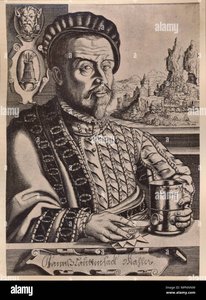
hans sebald lautensack
1520 - 1565 , Germany
Quick Facts
- Artistic Movement Or Style: German Renaissance Art
- Artists Or Movements Influenced By This Artist: ['Gerard David']
- Artists Who Influenced This Artist: ['Heinrich Lautensack']
- Date Of Birth: circa 1520
- Date Of Death: circa 1565
- Full Name: Hans Sebald Lautensack
- Nationality: German
- Notable Artworks: ['View of a Town along the River with a Church on the Right Bank']
- Place Of Birth: Bamberg, Germany

