 Preview
 Send
Send Share
Share
 Details

 Download
 Similars
 X-Ray
X-Ray Diaporama
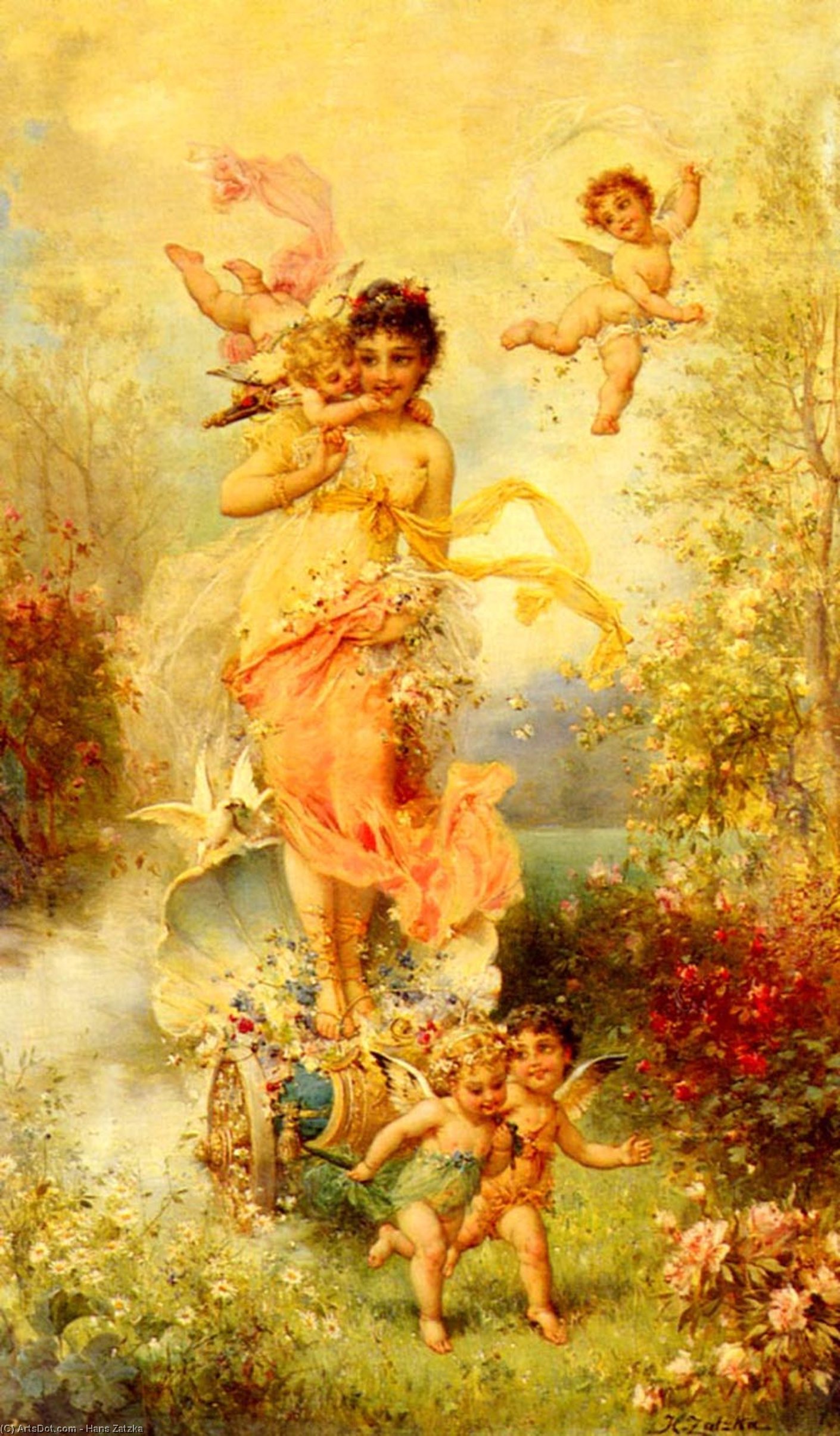
The goddess of spring
 Read More
Hand Made Oil Reproduction
Hand-painted oil on canvas in your size and frame, made to order by our artists. ( Buy Print Buy Image)




































Pick from our preset sizes that match the artwork's original proportions.

You may enter your own dimensions to fit a specific frame or space. If your selected size does not match the original image's proportions, we will either crop the artwork or extend the painting with additional hand-painted elements. A digital mockup will be sent for your approval before production begins.
Please note that the on-screen preview does not reflect the actual cropping or extension. Only the mockup will accurately show the final composition.
While custom sizes are available, we recommend selecting a dimension from the predefined list to preserve the original proportions.
After order, ArtsDot.com team will email client for instructions and provide a mockup preview
Worldwide Delivery () in 3/4 weeks instead of standard 5 weeks. (24 August). No compromise on quality.

Free Worldwide Express Shipping

High-Quality Linen Canvas

Full Shipping Insurance

Customs Tax Refund Guarantee

True Color Matching Guarantee

60-Day Return Policy (Defects Only)

100% Money-Back Guarantee

Bulk Discount Offer
 Glass option is only available in size under 110 CM

The goddess of spring
Reproduction Medium
Reproduction Size
-


Total Price
$ 263
Related Artworks
Artist Biography
The Dream Weaver of Vienna: The Enchanted World of Hans Zatzka
In the heart of late 19th-century Vienna, a city vibrating with the energy of the fin de siècle, there emerged an artist capable of blurring the line between reality and reverie. Hans Zatzka (1859–1945) was not merely a painter of scenes, but a weaver of dreams. Born to a construction worker father and an actress mother, Zatzka’s early life in Austria provided him with a foundation of classical discipline and a deep-seated appreciation for the dramatic. His formal education at the Akademie der Bildenden Künste under masters such as Christian Griepenkerl and Karl Wurzinger instilled in him a technical prowess that would later allow him to navigate seamlessly between the rigid demands of religious iconography and the fluid, ethereal realms of fantasy.
Zatzka’s early career was marked by a profound dedication to the sacred. As a gifted fresco artist, he adorned the ceilings of churches and public institutions across Austria with luminous biblical narratives and saints. These works, characterized by their monumental scale and spiritual gravity, demonstrated his ability to command space and evoke awe. Yet, beneath this pious exterior lay an artist increasingly drawn to the mythological and the whimsical. His travels through Italy and his exposure to the opulent styles of predecessors like Hans Makart began to pull his brush toward more sensuous and allegorical subjects, setting the stage for his most enduring legacy.
A Symphony of Myth and Melody
What truly distinguishes Zatzka from his academic contemporaries is his profound connection to the Wagnerian spirit. He found a kindred soul in the dramatic intensity of Richard Wagner’s operas, translating the sweeping emotional landscapes of music into visual poetry. His canvases became stages where nymphs, cupids, and ethereal women danced amidst landscapes that felt plucked from a Grimm fairy tale. This fascination with the supernatural allowed him to create what were often termed "bedroom pictures"—intimate, evocative works designed for the private spaces of European homes. These paintings, often in a specialized "towel format" to suit lower ceilings, became the height of decor in the 1920s.
The symbolism within his work is as layered as the textures of his brushstrokes. Zatzka utilized:
- Ethereal Female Figures: Representing both the divine and the earthly, often embodying grace, longing, or mystery.
- Mythological Creatures: Such as nymphs and elves, which served to transport the viewer into a state of pure imagination.
- Luminous Landscapes: Dreamlike settings that acted as emotional resonators for the figures inhabiting them.
The Art of the Pseudonym and Lasting Legacy
One of the most fascinating chapters in Zatzka’s biography is his ingenious, if somewhat deceptive, use of pseudonyms. To navigate the complex web of contractual obligations and to expand his market reach without triggering penalties for overproduction, he painted under various names, including Joseph Bernard, H. Zabateri, and Pierre de Ronsard. This practice created a fascinating historical puzzle; for decades, art historians struggled with the misattribution of his works, often confusing his "Joseph Bernard" paintings with those of the famous French sculptor. This layer of mystery only adds to the allure of his prolific output, which spanned over six decades.
Ultimately, Hans Zatzka’s significance lies in his ability to bridge the gap between high academic art and popular romanticism. While his religious frescoes remain a testament to his skill as a classical painter, it is his mastery of the fantastic that ensures his immortality. His works, which once graced the most fashionable European homes as postcards and oil prints, continue to captivate modern audiences, offering a nostalgic escape into a world where magic is palpable and every landscape holds a secret. He remains a singular figure—an artist who looked at the structured world of Vienna and chose instead to paint the infinite possibilities of the human imagination.
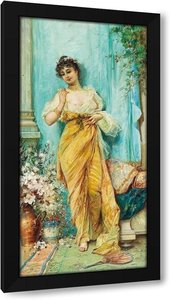
Hans Zatzka
1859 - 1945 , Austria
Quick Facts
- Artistic Movement Or Style: Fantasy Painter
- Artists Or Movements Influenced By This Artist: ['European Postcards']
- Artists Who Influenced This Artist: ['Richard Wagner']
- Date Of Birth: March 8, 1859
- Date Of Death: 1945
- Full Name: Hans Zatzka
- Nationality: Austrian
- Notable Artworks:
- The Goddess of Spring
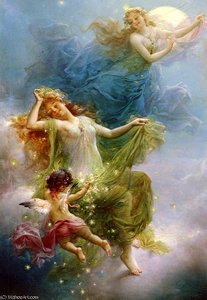
- In the Night Sky
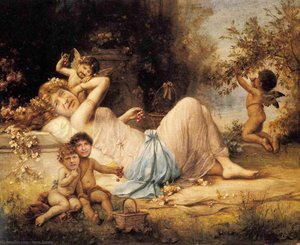
- Venus and Her Attendants
- Place Of Birth: Vienna, Austria