

 Preview
 Send
Send Share
Share
 Details

 Download
 Similars
 X-Ray
X-Ray Diaporama
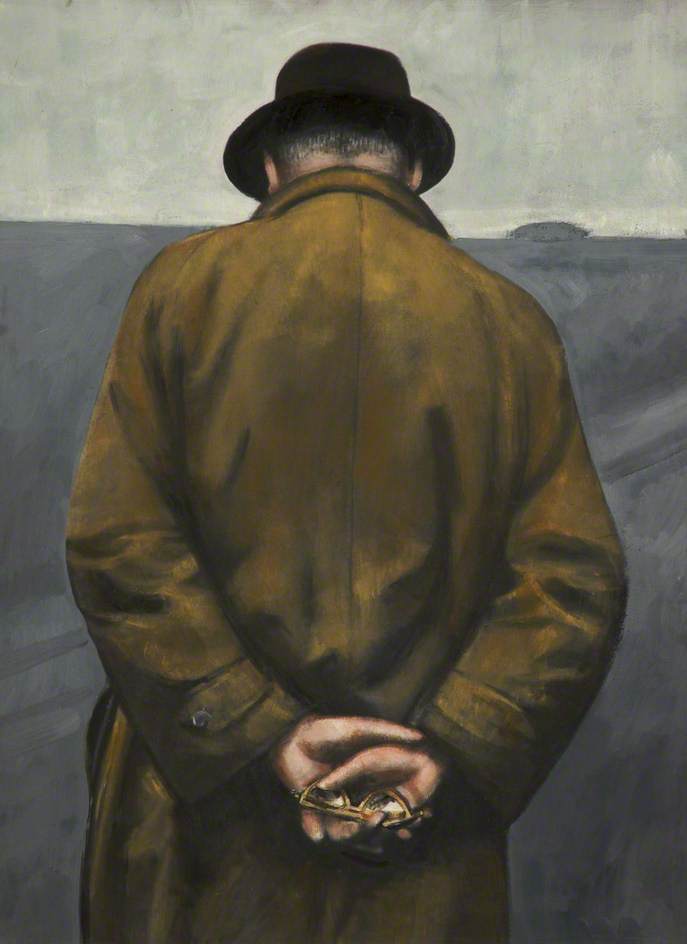
Lowry Walking on Swinton Moss
 100.0 x 75.0 cm
 Salford Museum - Art Gallery
 Read More
Purchase a high-resolution, enhanced digital image, far superior to the online preview.
Each file is meticulously prepared by our in-house specialists using advanced tools and expert manual retouching. We ensure every image has exceptional clarity, precise color accuracy, and fine detail.
The final file is delivered via email within 72 hours, optimized for immediate use in professional, editorial, and print environments. This is the same quality trusted by top-tier design studios, publishers, and galleries.
Digital Image
Download a high-resolution file for personal display, printing, and creative projects. ( Buy Print Buy Hand Made Painting)
Included in Every Digital Image Order
Expert Digital Delivery, Guaranteed
When you choose ArtsDot.com, you're not just getting an image - you're receiving a professionally enhanced digital artwork, crafted with precision and backed by a satisfaction guarantee. Here's everything that comes with your order, automatically:

Fast Email Delivery
Your high-resolution digital image file will be emailed to you within 72 hours of ordering - ready for immediate use.

AI-Enhanced Digital File
Your artwork is professionally optimized using advanced AI tools and manual editing, ensuring maximum detail, clarity, and color accuracy.

Free Lifetime Re-Delivery
Accidentally deleted or lost your file? No worries - we'll resend it to you anytime, free of charge.

No Import Fees - Ever
Enjoy your artwork instantly with zero customs, duties, or delivery fees - digital downloads are always tax-free.

Color Accuracy Guarantee
We ensure your digital image reflects the original colors as closely as possible using professional tools and color management.

60-Day Satisfaction Guarantee
If you're not satisfied with your digital image, we'll revise it or refund 100% within 60 days - no questions asked.

100% Money-Back Guarantee
Not satisfied? Get a full refund within 60 days of receiving your digital file - no questions asked.

Bulk Order Discounts
Buy 3 images, save 10% - Buy 5, save 15% - Buy 10+, save 20%. Great for creative projects, galleries, and agencies.
Related Artworks
Artist Biography
Early Life and Influences – A Caribbean Foundation
Emmanuel Radnitzky, who would become known as Man Ray, was born in Philadelphia’s South Warminster neighborhood on August 27, 1890, the eldest child of Russian Jewish immigrants, Melach “Max” Radnitzky, a tailor, and Manya “Minnie” Radnitzky. His family's story is deeply intertwined with the immigrant experience – a tale of resilience, entrepreneurial spirit, and a quiet determination to build a new life in America. The Radnitzkys’ modest home at 372 Debevoise Street became a hub of activity, filled with the sounds of sewing machines and the aroma of freshly baked goods, reflecting his mother's skills as a seamstress and dressmaker. This early environment instilled within him an appreciation for craftsmanship, pattern, and the tactile qualities of materials – elements that would later profoundly influence his artistic explorations. Crucially, it was his father’s tailoring business that provided a foundational understanding of construction, form, and the relationship between line and space, concepts he would subtly yet powerfully incorporate into his groundbreaking photographic work. The antisemitism prevalent in America at the time also shaped his identity, leading him to adopt “Man Ray” as his artistic name – a deliberate distancing from his familial roots and a declaration of independence. His childhood was further enriched by the vibrant cultural landscape of Brooklyn, exposing him to diverse communities and perspectives that would later inform his cosmopolitan outlook.- Family Background: Russian Jewish immigrants
- Early Environment: A tailor’s shop and a mother's dressmaking business fostered an appreciation for craft and design.
- Identity Formation: The adoption of “Man Ray” as a deliberate act of separation and artistic assertion.
The Early Years in London – Art School and the Rise of Modernism
In 1912, at the age of twenty-two, Man Ray embarked on a transformative journey to London, driven by a desire for artistic exploration and a yearning to immerse himself in the burgeoning European avant-garde. He arrived with limited resources but an unwavering commitment to his craft, quickly establishing himself within the city’s vibrant art scene. His time at Regents Street Polytechnic, Chelsea School of Art, and the City and Guilds of London Art School provided him with a rigorous grounding in traditional techniques while simultaneously exposing him to the radical ideas circulating amongst fellow students like David Hockney and Derek Boshier. It was during this period that he encountered Francis Bacon, whose expressive brushstrokes and unsettling imagery profoundly impacted his own artistic sensibilities. The Royal College of Art proved to be a pivotal institution, where he honed his skills in painting while also engaging with the burgeoning field of photography. The influence of the Slade School of Art, under the guidance of its director, was particularly significant, providing him with access to an extensive collection of prints and fostering a deeper understanding of art history. Crucially, his friendship with Keith Critchlow introduced him to the world of experimental photography, sparking a lifelong fascination with manipulating light and creating surreal effects.- Move to London: Driven by artistic ambition and a desire for exposure to European modernism.
- Artistic Training: Formal education at Regents Street Polytechnic, Chelsea School of Art, and the City and Guilds of London Art School.
- Key Influences: Francis Bacon’s expressive style and Keith Critchlow's experimental photography.
Photographic Innovation – Rayographs and Beyond
Man Ray’s contribution to photography is nothing short of revolutionary. He didn’t simply document reality; he actively deconstructed it, manipulating light, shadow, and texture to create images that defied conventional representation. His pioneering work with *rayographs*—photograms created by placing objects on a photographic plate and exposing them to light without a camera—demonstrated his mastery of negative space and his ability to evoke mood and atmosphere through purely optical means. These seemingly simple compositions were imbued with layers of meaning, often exploring themes of sexuality, identity, and the subconscious. He also developed innovative techniques for manipulating photographs, employing solarization (a process that reverses tones) and other experimental methods to achieve surreal effects. His portraits, particularly those of Lee Miller, are characterized by their stark beauty and psychological depth, capturing a sense of vulnerability and intimacy rarely seen in portraiture of the time. Ray’s work wasn't confined to photography; he embraced film as well, creating short, evocative films that further explored his fascination with light, movement, and the human form.- Rayographs: Pioneering use of photograms to create abstract images.
- Experimental Techniques: Mastery of solarization and other photographic manipulations.
- Portraiture: Striking portraits characterized by psychological depth and intimacy.
Legacy and Influence – A Surrealist Pioneer
Man Ray’s impact on 20th-century art is undeniable. He was a key figure in both the Dada and Surrealist movements, though he resisted rigid categorization, preferring to operate at the margins of these artistic circles. His work challenged conventional notions of representation, pushing the boundaries of photography and painting alike. His exploration of themes such as sexuality, identity, and the subconscious resonated deeply with artists and audiences alike, contributing significantly to the development of Surrealism’s interest in dreams, fantasy, and the irrational. Beyond his technical innovations, Man Ray's influence extends to his approach to artmaking – a willingness to experiment, to challenge conventions, and to embrace ambiguity. He left behind a vast body of work that continues to inspire artists today, demonstrating the power of visual language to evoke emotion, provoke thought, and transform our perception of reality. His legacy is not simply one of artistic achievement but also of intellectual curiosity and fearless experimentation.- Movement Affiliations: Key figure in Dada and Surrealism (though he resisted rigid categorization).
- Themes Explored: Sexuality, identity, the subconscious, dreams, and fantasy.
- Lasting Influence: A pioneer of photographic innovation and a champion of artistic experimentation.
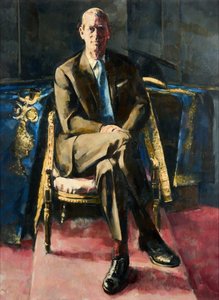
harold riley
1934 - 1976 , United Kingdom
Quick Facts
- Artistic Movement Or Style:
- Dada
- Surrealism
- Artists Or Movements Influenced By This Artist:
- Lee Miller
- Man Ray
- Artists Who Influenced This Artist: ['Francis Bacon']
- Date Of Birth: August 27, 1890
- Date Of Death: November 18, 1976
- Full Name: Emmanuel Radnitzky”
- Nationality: American
- Notable Artworks:
- Mirror
- Ghost of Vermeer
- Place Of Birth: Philadelphia, USA

