 Preview
 Send
Send Share
Share
 Details

 Download
 Similars
 X-Ray
X-Ray Diaporama
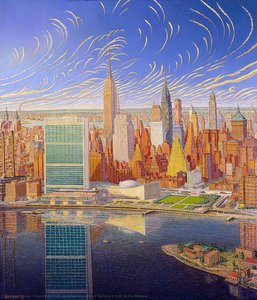
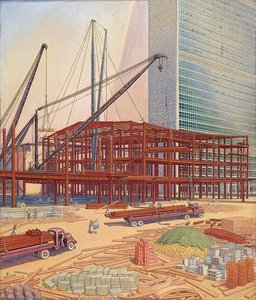
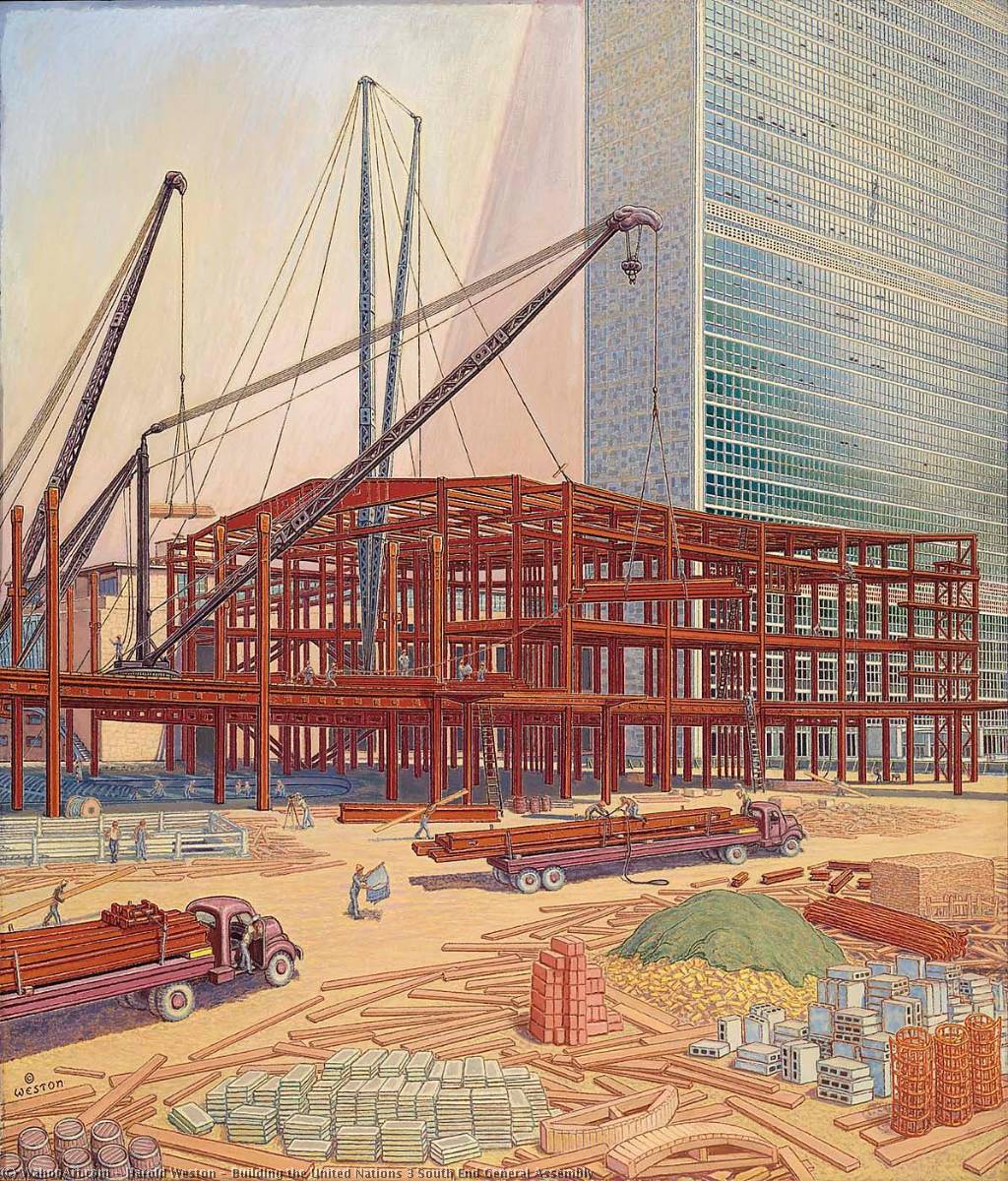
Building the United Nations 3 South End General Assembly
 1951
1951 107.0 x 92.0 cm
 Read More
Hand Made Oil Reproduction
Hand-painted oil on canvas in your size and frame, made to order by our artists. ( Buy Print Buy Image)




































Pick from our preset sizes that match the artwork's original proportions.

You may enter your own dimensions to fit a specific frame or space. If your selected size does not match the original image's proportions, we will either crop the artwork or extend the painting with additional hand-painted elements. A digital mockup will be sent for your approval before production begins.
Please note that the on-screen preview does not reflect the actual cropping or extension. Only the mockup will accurately show the final composition.
While custom sizes are available, we recommend selecting a dimension from the predefined list to preserve the original proportions.
After order, ArtsDot.com team will email client for instructions and provide a mockup preview
Worldwide Delivery () in 3/4 weeks instead of standard 5 weeks. (23 August). No compromise on quality.

Free Worldwide Express Shipping

High-Quality Linen Canvas

Full Shipping Insurance

Customs Tax Refund Guarantee

True Color Matching Guarantee

60-Day Return Policy (Defects Only)

100% Money-Back Guarantee

Bulk Discount Offer
 Glass option is only available in size under 110 CM

Building the United Nations 3 South End General Assembly
Reproduction Medium
Reproduction Size
-


Total Price
$ 263
Related Artworks









Artist Biography
The Soul of the Landscape: The Artistic Journey of Harold Weston
Harold Weston stands as a singular figure in American modernist painting, distinguished by an unwavering commitment to capturing both the visceral immediacy of emotion and the grandeur of monumental landscapes. Born on February 14, 1894, in Merion, Pennsylvania, Weston embarked on an artistic journey that traversed diverse stylistic territories—moving with fluid grace from fervent expressionism reflecting the anxieties of his era to a meticulous realism, and eventually toward the profound depths of abstraction. His life was not merely a pursuit of aesthetic beauty but a testament to the transformative power of art, as he balanced his creative output with humanitarian food relief work during World War II and a tireless advocacy for arts funding that would ultimately help shape the cultural landscape of the United States.
The foundations of Weston’s vision were laid in the luminous traditions of Impressionism and Luminism. In his formative years, he absorbed the delicate interplay of light and atmosphere championed by artists such as Frank Weston Benson, a kindred spirit who similarly sought to convey the essence of the American wilderness through masterful brushwork. This early exposure instilled in him a lifelong appreciation for tonal harmony and atmospheric perspective. However, the burgeoning Expressionist movement of the 1920s acted as a powerful catalyst for his creative evolution. The psychological intensity found in works like Edvard Munch's The Scream resonated deeply within him, prompting Weston to adopt bolder color palettes and more emotionally charged compositions that sought to convey internal psychological depth alongside external visual beauty.
From the Adirondacks to the Global Stage
While his stylistic range was vast, much of Weston’s spiritual and creative anchor could be found in the Adirondack Mountains, where he resided for many years. The rugged terrain and seasonal shifts provided a perennial muse, allowing him to explore the intersection of nature and emotion. His work during this period often oscillated between the raw energy of expressionism and a more grounded realism, capturing the quiet dignity of the natural world. This ability to document both the monumental and the minute earned him recognition from prestigious collectors, including Duncan Phillips, whose collection now houses some of Weston's most significant contributions to American modernism.
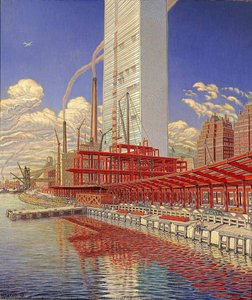
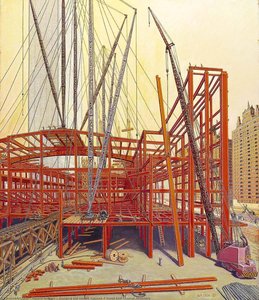
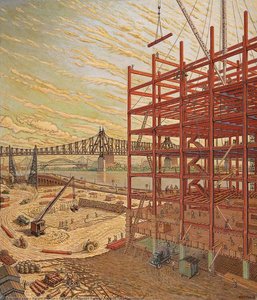
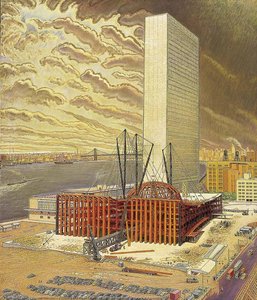
Beyond the solitary beauty of the mountains, Weston’s brush reached toward the epic scale of human history. One of his most enduring legacies lies in his monumental murals commemorating the construction of the United Nations Headquarters in New York City. Commissioned by UNESCO, these ambitious projects demanded an unprecedented level of technical skill and a vision capable of capturing the pulse of a changing world. In works such as Building the United Nations: U.N. in the Making, Weston masterfully integrated the iconic New York skyline—featuring landmarks like the Empire State Building—with the dynamic energy of urban development. Through these canvases, he served as a historical documentarian, capturing the intersection of architecture, global politics, and human progress.
A Legacy of Advocacy and Artistry
The significance of Harold Weston extends far beyond the borders of his canvases. He was a man who believed that art was a fundamental pillar of society, a belief that translated into significant political and social action. His passionate advocacy for arts funding played a crucial role in the passage of the National Endowment for the Arts and Humanities Act of 1965, ensuring that future generations of creators would have the support necessary to flourish. This commitment to the survival of culture mirrored his humanitarian efforts during the hardships of World War II, reflecting a character deeply rooted in service and empathy.
As we reflect on the life of Harold Weston, we see an artist who refused to be confined by a single movement or method. His career was a continuous dialogue between:
- Expressionism: The use of color and form to evoke the raw, often turbulent, human psyche.
- Realism: A meticulous dedication to documenting the architectural and natural wonders of his time.
- Abstraction: An exploration of the fundamental elements of composition and light.
- Humanitarianism: The integration of artistic vision with a profound sense of social responsibility.
Through his mastery of oil on canvas and his monumental murals, Weston left behind a body of work that remains as vital today as it was during the mid-20th century. He remains a bridge between the classical appreciation of nature and the modern complexities of the human experience, leaving an indelible mark on the history of American art.
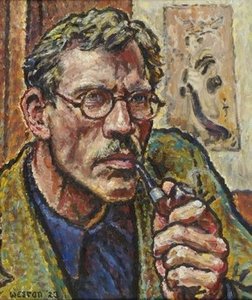
harold weston
1894 - 1972
Quick Facts
- Artistic Movement Or Style: Modernist, Expressionism, Realism
- Artists Or Movements Influenced By This Artist: ['American Luminism']
- Artists Who Influenced This Artist: ['Frank Weston Benson']
- Date Of Birth: 1894
- Date Of Death: 1972
- Full Name: Harold Weston
- Nationality: American
- Notable Artworks:
- Giant Winter Evening
- Building the United Nations 6 U.N. in the Making
- Building the United Nations 4 North End General Assembly