 Preview
 Send
Send Share
Share
 Details

 Download
 Similars
 X-Ray
X-Ray Diaporama
 Stats
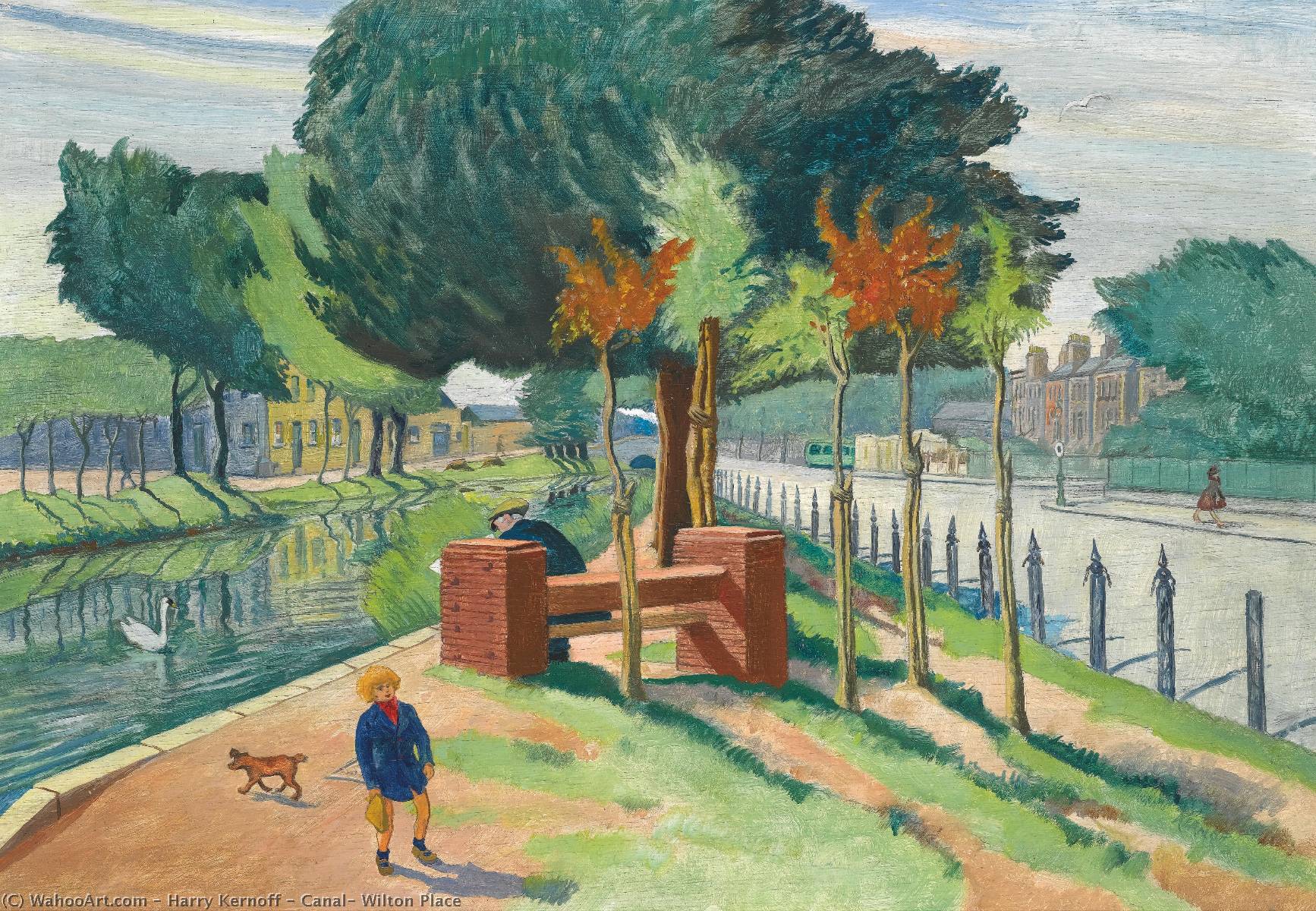
StatsCanal, Wilton Place
 Read More
Hand Made Oil Reproduction
Hand-painted oil on canvas in your size and frame, made to order by our artists. ( Switch to Print Switch to Digital Image)




































Pick from our preset sizes that match the artwork's original proportions.

You may enter your own dimensions to fit a specific frame or space. If your selected size does not match the original image's proportions, we will either crop the artwork or extend the painting with additional hand-painted elements. A digital mockup will be sent for your approval before production begins.
Please note that the on-screen preview does not reflect the actual cropping or extension. Only the mockup will accurately show the final composition.
While custom sizes are available, we recommend selecting a dimension from the predefined list to preserve the original proportions.
After order, ArtsDot.com team will email client for instructions and provide a mockup preview
Worldwide Delivery () in 3/4 weeks instead of standard 5 weeks. (8 September). No compromise on quality.

Free Worldwide Express Shipping

High-Quality Linen Canvas

Full Shipping Insurance

Customs Tax Refund Guarantee

True Color Matching Guarantee

100-Day Return Policy (Defects Only)

100% Money-Back Guarantee

Bulk Discount Offer
 Glass option is only available in size under 110 CM

Canal, Wilton Place
Reproduction Medium
Reproduction Size
-


Total Price
$ 263
Related Artworks









Artist Biography
The Chronicler of Dublin’s Soul
To wander through the canvases of Harry Kernoff is to walk the cobblestone streets of a bygone Dublin, feeling the damp mist of the Liffey and hearing the muffled laughter from corner pubs. Born in London in 1900 to Russian Jewish parents, Kernoff brought a unique, outsider’s sensitivity to the heart of Ireland. His early years were defined by the tactile reality of craftsmanship; before he ever held a fine brush, he was an apprentice cabinet maker, working alongside his father. This foundational intimacy with wood, texture, and form would later manifest in his meticulous attention to detail and his ability to capture the very grain of urban life. When his family moved to Dublin in 1914, the city became not just his home, but his most profound muse.
Kernoff’s artistic evolution was nurtured within the hallowed halls of the Dublin Metropolitan School of Art, where he transitioned from a night student to a celebrated scholar. The year 1923 marked a transformative milestone when he won the prestigious Taylor Scholarship, an achievement that allowed him to immerse himself fully in his studies under the watchful eyes of masters such as Sean Keating and Harry Clarke. These mentors instilled in him a reverence for the Irish landscape and a keen eye for the human condition. His early works, most notably the poignant Dublin Kitchen, began to reveal a profound empathy for the working class, documenting the quiet struggles and resilient spirits of those navigating the hardships of the Great Depression.
A Tapestry of Portraits and Stagecraft
While Kernoff is celebrated for his sweeping streetscapes, his artistry was equally defined by an extraordinary ability to capture the essence of the individual. His studio on Stamer Street became a sanctuary for the intellectual and theatrical elite of Ireland. With a preference for completing portraits in a single, concentrated sitting, he possessed a rare gift for stripping away pretension to reveal the true character of his subjects. Through his brush, the faces of literary giants like James Joyce, W.B. Yeats, and Sean O’Casey were immortalized, bridging the gap between the visual arts and the golden age of Irish literature.
This creative vitality extended far beyond the easel and into the dramatic shadows of the theatre. Kernoff was a vital architect of the Dublin stage, lending his vision to set design and costume for legendary productions. His collaborations with luminaries such as Hilton Edwards allowed him to manipulate light, space, and texture to tell stories that resonated deeply with audiences. Whether he was executing the decorative designs for the Little Theatre or crafting the visual atmosphere for a Sean O’Casey play, Kernoff’s work was always characterized by a seamless integration of fine art and functional storytelling.
Legacy of an Irish Master
The significance of Harry Kernoff lies in his role as a visual historian. He did not merely paint Dublin; he archived its heartbeat. His repertoire was remarkably diverse, ranging from delicate woodcut illustrations to robust landscapes and evocative genre paintings. His membership in the Royal Hibernian Academy, achieved fully in 1936, cemented his status within the upper echelons of the Irish art establishment, yet he never lost his connection to the street-level realities of the city he loved.
Kernoff’s influence reached far beyond the borders of Ireland, as he proudly represented his nation at international stages such as the New York World’s Fair in 1939. His exhibitions across Europe and North America introduced a global audience to the nuanced beauty of Irish urban life. Today, we remember him not just as a painter, but as a chronicler—a man who used color and line to ensure that the faces, the pubs, and the very spirit of twentieth-century Dublin would never fade into the shadows of history.

Quick Facts
- Artistic Movement Or Style: Genre painting
- Artists Or Movements Influenced By This Artist: ['Russian Avant-garde']
- Artists Who Influenced This Artist:
- Seán Keating
- Patrick Tuohy
- Harry Clarke
- Date Of Birth: 9 January 1900
- Date Of Death: 25 December 1974
- Full Name: Harry Aaron Kernoff
- Nationality: Irish
- Notable Artworks:
- Dublin kitchen
- A bird never flew on one wing
- Place Of Birth: London, England