 Preview
 Send
Send Share
Share
 Details

 Download
 Similars
 X-Ray
X-Ray Diaporama
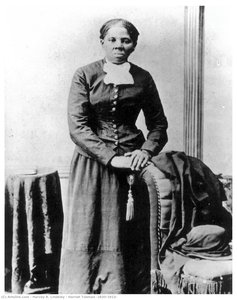
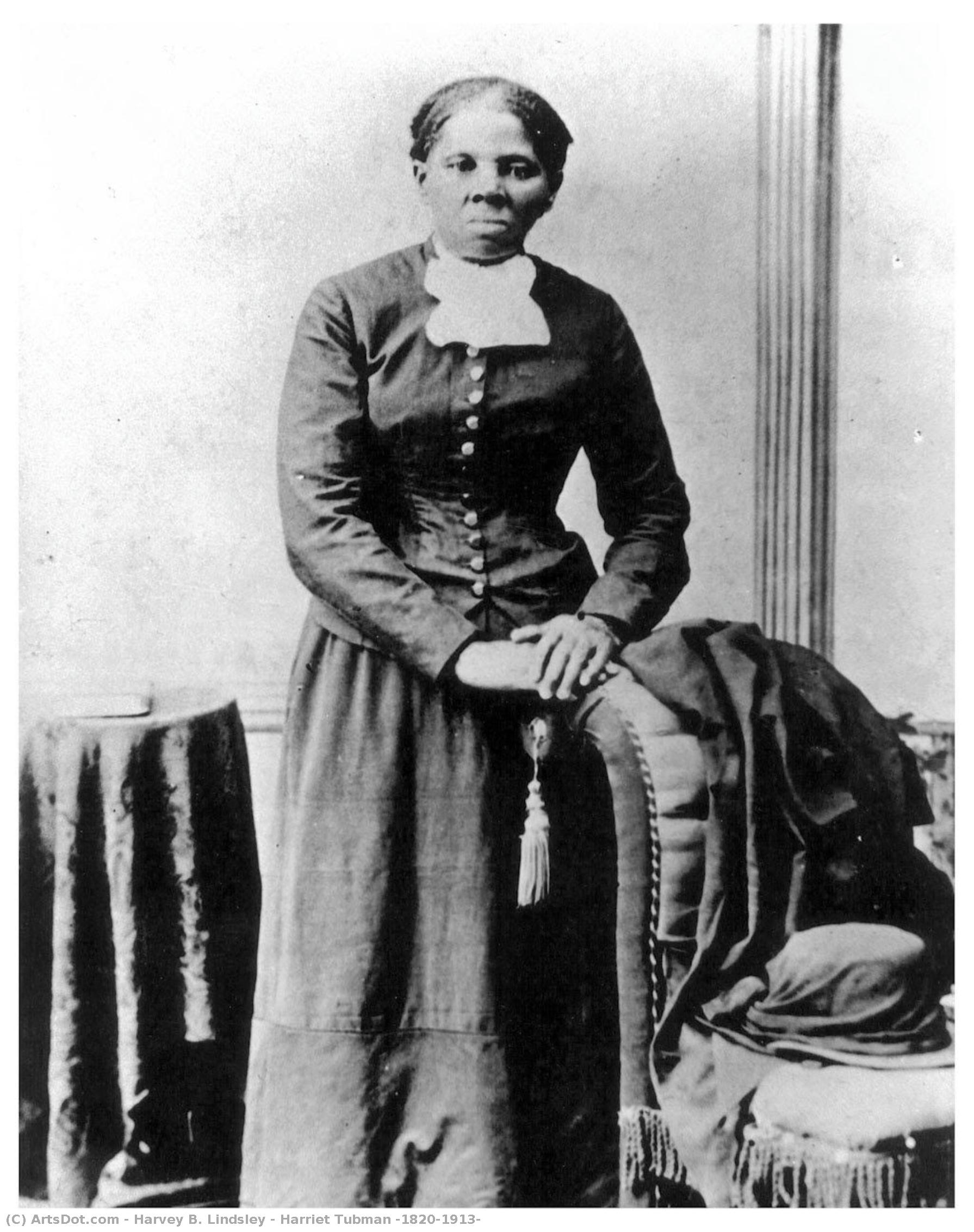
Harriet Tubman (1820-1913)

 Read More
Hand Made Oil Reproduction
Hand-painted oil on canvas in your size and frame, made to order by our artists. ( Buy Print Buy Image)




































Pick from our preset sizes that match the artwork's original proportions.

You may enter your own dimensions to fit a specific frame or space. If your selected size does not match the original image's proportions, we will either crop the artwork or extend the painting with additional hand-painted elements. A digital mockup will be sent for your approval before production begins.
Please note that the on-screen preview does not reflect the actual cropping or extension. Only the mockup will accurately show the final composition.
While custom sizes are available, we recommend selecting a dimension from the predefined list to preserve the original proportions.
After order, ArtsDot.com team will email client for instructions and provide a mockup preview
Worldwide Delivery () in 3/4 weeks instead of standard 5 weeks. (23 August). No compromise on quality.

Free Worldwide Express Shipping

High-Quality Linen Canvas

Full Shipping Insurance

Customs Tax Refund Guarantee

True Color Matching Guarantee

60-Day Return Policy (Defects Only)

100% Money-Back Guarantee

Bulk Discount Offer
 Glass option is only available in size under 110 CM

Harriet Tubman (1820-1913)
Reproduction Medium
Reproduction Size
-


Total Price
$ 263
Artwork Description
Related Artworks





Artist Biography
Harvey B. Lindsley: A Photographer of History and the Human Mind
Harvey B. Lindsley (1922-2004) remains a singularly compelling figure in American photography, an artist whose career spanned both iconic portraiture and groundbreaking neurological research. Born in Providence, Rhode Island, Lindsley’s life was one of remarkable duality – he captured the essence of historical figures with a keen eye for detail and human emotion, while simultaneously contributing significantly to our understanding of the brain itself. His legacy isn't confined to a single genre; it resides in the powerful combination of artistic vision and scientific inquiry that defined his approach to image-making.
Lindsley’s most celebrated work undoubtedly centers around his portrait of Harriet Tubman, taken sometime in the late 1800s. This photograph, now a cornerstone of the National Museum of African American History and Culture's collection (and readily accessible through their online search – accessible via the NMAAHC website), transcends a simple likeness. It’s a study in dignity, resilience, and quiet strength. The composition – Tubman's direct gaze, her weathered face, and the subtle folds of her clothing – speaks volumes about her life as a conductor on the Underground Railroad, a woman who risked everything to liberate others. The photograph’s enduring power lies not just in its technical merit but also in its ability to connect us directly with this pivotal figure in American history.
However, Lindsley's contributions extend far beyond portraiture. During World War II, he joined the U.S. Army and was assigned to a neurological research unit. This experience led him to collaborate with Horace Winchell (Tid) Magoun and Giuseppe Moruzzi, pioneering researchers in the field of brain function. Together, they became instrumental in developing and utilizing electroencephalography (EEG), a technique for recording electrical activity in the brain. Lindsley’s photographic skills proved invaluable in this research – he meticulously documented the EEG recordings, creating visual representations of complex neurological processes that were crucial to their findings. His work demonstrated how EEG could be used to study the reticular activating system, a network of neurons vital for regulating arousal and attention. This contribution earned him recognition as a potential Nobel laureate in Physiology, highlighting the breadth and depth of his scientific impact.
The Development of a Dual Career
Lindsley’s career wasn't simply a division between photography and neuroscience; it was an integrated pursuit shaped by his intellectual curiosity. He approached both fields with the same meticulous attention to detail, seeking to understand the underlying mechanisms that governed human experience – whether captured through a lens or revealed through scientific investigation. His early exposure to photography in Providence, coupled with a burgeoning interest in psychology and neurology, laid the foundation for this unique dual career.
He initially studied at Brown University, focusing on psychology before dedicating himself fully to photography. This interdisciplinary background proved invaluable as he transitioned into neurological research. His photographic eye translated seamlessly into the documentation of complex scientific data, allowing him to create visual narratives that illuminated the intricacies of brain function. This wasn’t a shift; it was an evolution of his artistic sensibilities applied to a new domain.
Technique and Style
Lindsley's photographic style is characterized by its quiet dignity and understated elegance. He favored natural light, often shooting outdoors or in well-lit studios, allowing the subjects’ personalities to shine through. His portraits are rarely posed; he encouraged his subjects to relax and engage naturally, resulting in images that feel remarkably candid and authentic. He was a master of composition, using simple yet effective techniques to draw attention to key elements within the frame – particularly the eyes, which often convey a profound sense of wisdom and experience.
While details about his specific equipment are scarce, it’s believed he utilized large-format cameras, allowing him to capture incredible detail and sharpness. His ability to control light and shadow, combined with his keen eye for capturing subtle expressions, is what truly sets his work apart. He wasn't interested in flashy effects or dramatic manipulation; instead, he sought to reveal the inherent beauty and complexity of his subjects.
Legacy and Historical Significance
Harvey B. Lindsley’s legacy extends beyond a single photograph or a scientific discovery. He represents a rare convergence of artistic talent and intellectual rigor – an individual who used both photography and neuroscience to explore fundamental questions about the human condition. His portrait of Harriet Tubman remains a powerful symbol of freedom, resilience, and the enduring spirit of the American abolitionist movement.
Furthermore, his contributions to EEG research paved the way for countless advancements in our understanding of brain function. His work continues to inform neurological studies today, demonstrating the lasting impact of his scientific endeavors. Lindsley’s life serves as a testament to the power of interdisciplinary thinking and the enduring value of pursuing one's intellectual passions – a legacy that deserves continued recognition.

harvey b. lindsley
1922 - 2004 , United States of America
Quick Facts
- Artistic Movement Or Style: Photography
- Date Of Birth: 1922
- Date Of Death: 2004
- Full Name: Harvey B. Lindsley
- Nationality: American
- Notable Artworks: ['Harriet Tubman photo']
- Place Of Birth: Providence, USA