 Preview
 Send
Send Share
Share
 Details

 Download
 Similars
 X-Ray
X-Ray Diaporama
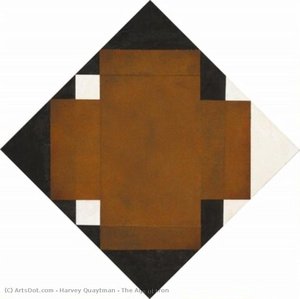
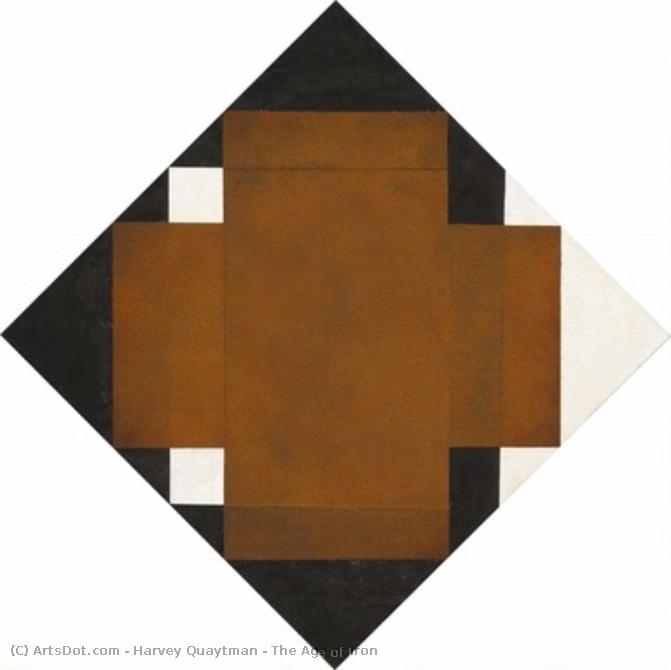
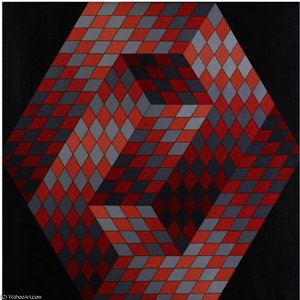
The Age of Iron
 1986
1986 101.0 x 101.0 cm
 Read More
Hand Made Oil Reproduction
Hand-painted oil on canvas in your size and frame, made to order by our artists. ( Buy Print Buy Image)




































Pick from our preset sizes that match the artwork's original proportions.

You may enter your own dimensions to fit a specific frame or space. If your selected size does not match the original image's proportions, we will either crop the artwork or extend the painting with additional hand-painted elements. A digital mockup will be sent for your approval before production begins.
Please note that the on-screen preview does not reflect the actual cropping or extension. Only the mockup will accurately show the final composition.
While custom sizes are available, we recommend selecting a dimension from the predefined list to preserve the original proportions.
After order, ArtsDot.com team will email client for instructions and provide a mockup preview
Worldwide Delivery () in 3/4 weeks instead of standard 5 weeks. (22 August). No compromise on quality.

Free Worldwide Express Shipping

High-Quality Linen Canvas

Full Shipping Insurance

Customs Tax Refund Guarantee

True Color Matching Guarantee

60-Day Return Policy (Defects Only)

100% Money-Back Guarantee

Bulk Discount Offer
 Glass option is only available in size under 110 CM

The Age of Iron
Reproduction Medium
Reproduction Size
-


Total Price
$ 263
Related Artworks




Artist Biography
The Architect of Silence: The Life and Legacy of Harvey Quaytman
In the vast, often turbulent landscape of American abstraction, few voices resonate with the profound stillness and structural authority of Harvey Quaytman. Born in Far Rockaway, Queens, in 1937, Quaytman emerged as a master of the geometric idiom, a painter who could command the viewer's attention not through chaotic movement, but through an uncompromising dedication to the elemental. His journey was one of rigorous refinement, moving from the early influences of his New York roots toward a sophisticated visual language that sought to strip away the unnecessary, leaving behind only the essential tension between line, color, and surface.
Quaytman’s artistic DNA was deeply intertwined with the radical legacies of Kazimir Malevich and Piet Mondrian. He looked toward these pioneers not merely for their subject matter—which was non-existent—but for their spiritual pursuit of a pure, unadulterated reality. To Quaytman, the intersection of a vertical and horizontal line was more than a formal exercise; it was an exploration of the fundamental architecture of perception. His formative training at the Boston Museum School and Tufts University provided him with the technical foundation to translate these lofty philosophical ambitions into tangible, physical presence. During his years in Boston, he moved within a circle of significant modernist thinkers, honing a sculptural sensibility that would later inform the heavy, tactile quality of his canvases.
A Mastery of Form and Materiality
As his career progressed, Quaytman’s work evolved into a breathtaking display of monochromatic power. He became renowned for large-scale canvases that utilized layered compositions to create a sense of depth within a seemingly flat plane. His technique was far from simple; it involved a complex interplay of acrylic, pigment, and even metallic or synthetic polymers, applied in ways that captured subtle shifts in light and tone. These were not merely paintings but objects of intense physical weight. The edges of his forms were often hard and decisive, yet the surfaces themselves possessed a textured, almost geological complexity that invited close, meditative inspection.
The brilliance of Quaytman lay in his ability to balance formal rigor with an unexpected sensuality. While his work is categorized under geometric abstraction, there is a rhythmic, pulsing quality to his use of color—often deep, saturated tones that seem to vibrate against one another. He mastered the art of the monochrome, proving that a single hue, when layered and manipulated, could contain an entire universe of nuance. His compositions often featured intersecting bands of light and shadow, creating a visual tension that felt both ancient and modern, as if he were uncovering a primordial geometry hidden beneath the surface of the everyday world.
Recognition and Enduring Significance
The trajectory of Quaytman’s career was marked by significant institutional validation, cementing his place in the canon of 20th-century American art. His achievements include:
- Prestigious Fellowships: The receipt of multiple Guggenheim Fellowships (1979 and 1985) and CAPS Grants, which allowed him the freedom to pursue his increasingly ambitious large-scale projects.
- National Recognition: His election as a Member of the National Academy of Design in 1993, a testament to his standing among his peers.
- Global Presence: A career spanning over sixty solo exhibitions across major art capitals including New York, London, Paris, and Berlin.
- Museum Collections: His works are now preserved in the world's most esteemed institutions, such as the Museum of Modern Art (MoMA), the Whitney Museum of American Art, and the Tate Gallery.
Though Harvey Quaytman passed away in 2002, his influence continues to ripple through the contemporary art world. He remains a pivotal figure for anyone studying the evolution of minimalism and hard-edge painting. By rejecting the illusionistic deceptions of traditional painting, he forced the viewer to confront the reality of the medium itself—the canvas, the pigment, and the light. His legacy is found in every work that seeks truth through simplicity, reminding us that within the most disciplined boundaries, there exists an infinite capacity for wonder.
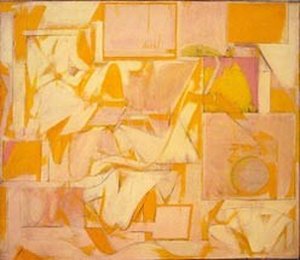
Harvey Quaytman
1937 - 2002 , United States of America
Quick Facts
- Artistic Movement Or Style: Geometric abstraction
- Artists Or Movements Influenced By This Artist: ['Minimalist art']
- Artists Who Influenced This Artist:
- Malevich
- Mondrian
- Date Of Birth: April 20, 1937
- Date Of Death: April 8, 2002
- Full Name: Harvey Quaytman
- Nationality: American
- Notable Artworks:
- The Age of Iron
- Chapter 29: Haqaq
- Place Of Birth: Far Rockaway, United States