 Preview
 Send
Send Share
Share
 Details

 Download
 Similars
 X-Ray
X-Ray Diaporama
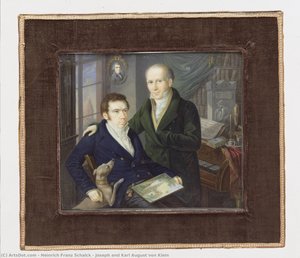
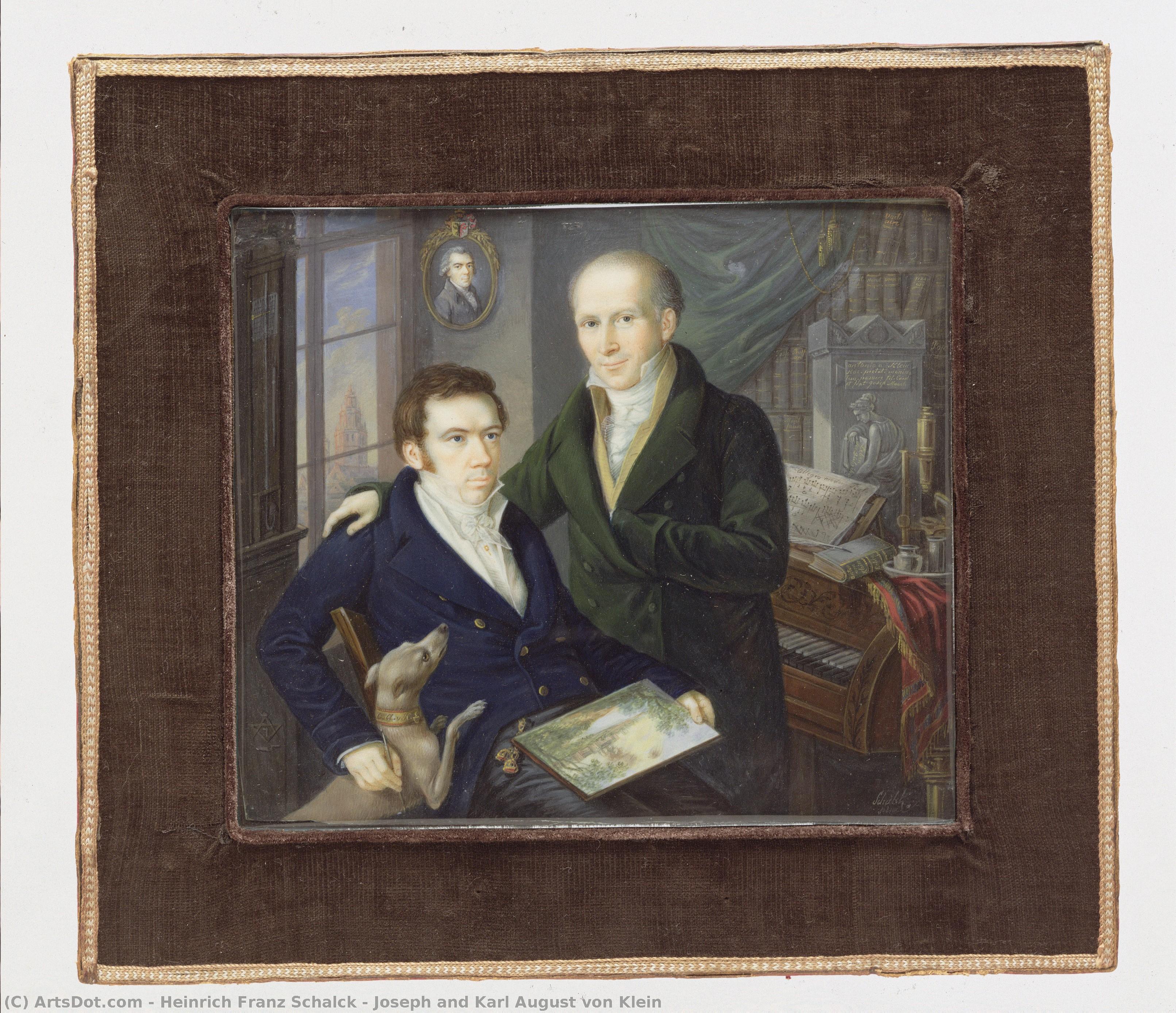
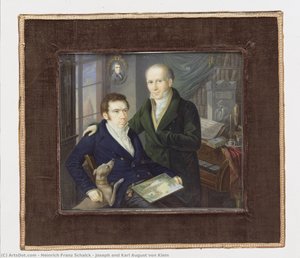
Joseph and Karl August von Klein
 1810
1810 12.0 x 13.0 cm
 Read More
Hand Made Oil Reproduction
Hand-painted oil on canvas in your size and frame, made to order by our artists. ( Buy Print Buy Image)




































Pick from our preset sizes that match the artwork's original proportions.

You may enter your own dimensions to fit a specific frame or space. If your selected size does not match the original image's proportions, we will either crop the artwork or extend the painting with additional hand-painted elements. A digital mockup will be sent for your approval before production begins.
Please note that the on-screen preview does not reflect the actual cropping or extension. Only the mockup will accurately show the final composition.
While custom sizes are available, we recommend selecting a dimension from the predefined list to preserve the original proportions.
After order, ArtsDot.com team will email client for instructions and provide a mockup preview
Worldwide Delivery () in 3/4 weeks instead of standard 5 weeks. (6 September). No compromise on quality.

Free Worldwide Express Shipping

High-Quality Linen Canvas

Full Shipping Insurance

Customs Tax Refund Guarantee

True Color Matching Guarantee

60-Day Return Policy (Defects Only)

100% Money-Back Guarantee

Bulk Discount Offer
 Glass option is only available in size under 110 CM

Joseph and Karl August von Klein
Reproduction Medium
Reproduction Size
-


Total Price
$ 263
Related Artworks



Artist Biography
The Delicate Art of Miniature Portraiture and Political Engagement
Heinrich Franz Schalck (1791 – 1832) remains a captivating figure in the annals of nineteenth-century German art, representing a unique intersection of meticulous craftsmanship and profound social involvement. Born in Berlin, Schalck’s life was shaped by an unusual and cosmopolitan heritage; his father, a stateless ethnic Russian officer, provided him with a broad, international perspective from his earliest years. This sense of worldly awareness was further enriched by a privileged upbringing, as he was adopted into the influential Schalck family at the age of eight. Through his maternal grandfather, who held a significant position within the vast Stinnes industrial empire in Saint Petersburg, Schalck was exposed to the highest echelons of European society and the burgeoning spirit of industrial ambition. This early immersion in both the elegance of high culture and the rigor of enterprise would later define the dual nature of his legacy.
His formal artistic journey began in the vibrant studios of Berlin, where he sought mastery under the guidance of the era's most prominent instructors. Schalck did not merely seek to paint; he sought to command the technical complexities of printmaking and miniature work. He became a virtuoso of etching and mezzotint, techniques that required an almost surgical precision. His true fame, however, was etched into the very surface of ivory. In the delicate realm of miniature portraiture, Schalck achieved a level of luminosity and depth that few could replicate. By painstakingly transferring painted images onto thin sheets of ivory through intricate etching processes and applying multiple layers of translucent varnish, he created portraits that seemed to breathe with an inner light. These works were celebrated for their ability to capture the most fleeting of human expressions, offering viewers an intimate, almost tactile connection to the subjects portrayed.
A Legacy of Precision and Social Complexity
Beyond the quiet, focused atmosphere of his studio, Schalck’s life was marked by a surprising degree of political engagement. He was not a recluse lost in his pigments; rather, his artistic pursuits were deeply intertwined with the intellectual and political currents shaping the German landscape of his time. His involvement in influential organizations suggests an artist who viewed his role within the broader tapestry of society, using his position to engage with the shifting ideologies of the nineteenth century. This duality—the ability to focus on the microscopic detail of a single strand of hair in a portrait while simultaneously navigating the macroscopic shifts of political activism—makes him a particularly modern figure for his era.
The historical significance of Schalck’s work lies in its preservation of intimacy during a period of massive industrial and social upheaval. While the world around him was expanding through trade and technology, Schalck focused on the singular, the small, and the personal. His mastery of the miniature format allowed for a portable form of art that could be held in the hand, fostering a private emotional experience between the viewer and the subject. Today, his surviving works serve as exquisite windows into the nineteenth-century soul, reflecting both the technical brilliance of German craftsmanship and the complex, interconnected lives of those who lived through an age of profound transformation.
Heinrich Franz Schalck
1791 - 1832 , Germany
Quick Facts
- Artistic Movement Or Style: Miniature Art
- Date Of Birth: 1791 Berlin Germany
- Date Of Death: 1832
- Full Name: Heinrich Franz Schalck
- Nationality: German
- Notable Artworks: ['Joseph and Karl August von Klein']
- Place Of Birth: Berlin Germany