 Preview
 Send
Send Share
Share
 Details

 Download
 Similars
 X-Ray
X-Ray Diaporama
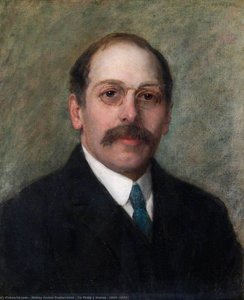
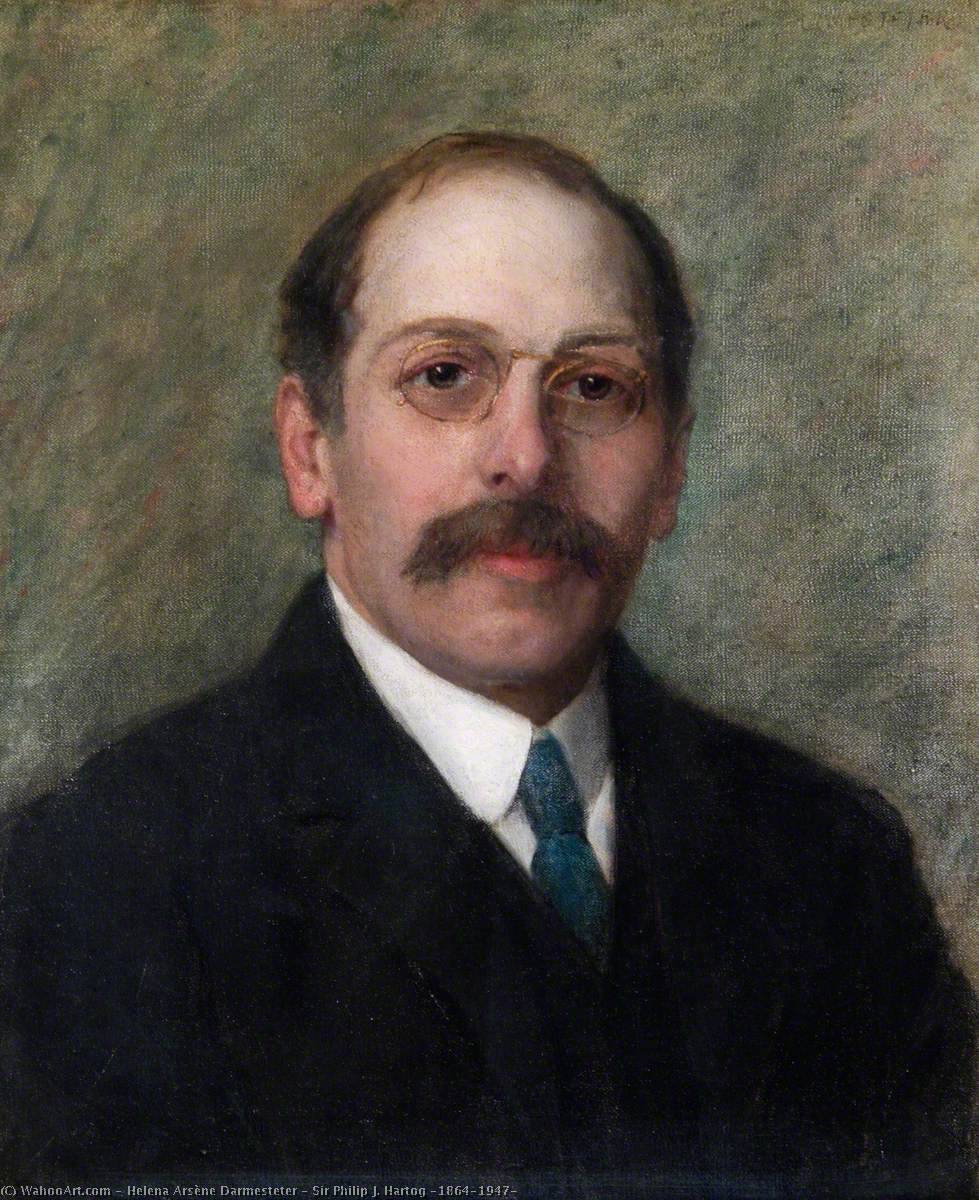
Sir Philip J. Hartog (1864–1947)
 50.0 x 43.0 cm
 School of Oriental And African Studies
 Read More
Hand Made Oil Reproduction
Hand-painted oil on canvas in your size and frame, made to order by our artists. ( Buy Print Buy Image)




































Pick from our preset sizes that match the artwork's original proportions.

You may enter your own dimensions to fit a specific frame or space. If your selected size does not match the original image's proportions, we will either crop the artwork or extend the painting with additional hand-painted elements. A digital mockup will be sent for your approval before production begins.
Please note that the on-screen preview does not reflect the actual cropping or extension. Only the mockup will accurately show the final composition.
While custom sizes are available, we recommend selecting a dimension from the predefined list to preserve the original proportions.
After order, ArtsDot.com team will email client for instructions and provide a mockup preview
Worldwide Delivery () in 3/4 weeks instead of standard 5 weeks. (22 August). No compromise on quality.

Free Worldwide Express Shipping

High-Quality Linen Canvas

Full Shipping Insurance

Customs Tax Refund Guarantee

True Color Matching Guarantee

60-Day Return Policy (Defects Only)

100% Money-Back Guarantee

Bulk Discount Offer
 Glass option is only available in size under 110 CM

Sir Philip J. Hartog (1864–1947)
Reproduction Medium
Reproduction Size
-


Total Price
$ 263
Related Artworks









Artist Biography
A Portraitist of the Belle Époque
In the vibrant, culturally rich tapestry of the late nineteenth and early twentieth centuries, few artists captured the quiet dignity and intellectual depth of their subjects as gracefully as Héléna Arsène Darmestéter. Born Helena Hartog in London, her life was a beautiful confluence of British heritage and French sophistication. Raised in an environment steeped in scholarly pursuits—the daughter of a French schoolteacher and the esteemed editor Marion Hartog Moss—Darmestéter’s early years were defined by a multilingualism and a cosmopolitan spirit that would later breathe life into her canvases. Her upbringing, characterized by the intellectual rigor of her family, provided the foundation for an artistic vision that sought to look beyond the surface, finding the soul beneath the skin.
Her journey into the heart of the art world led her from the streets of London to the prestigious studios of Paris. It was here, under the meticulous tutelage of Gustave Courtois, that her technical prowess began to crystallize. Studying in the French capital allowed her to absorb the nuances of light and shadow that defined the era's great masters. This period was not merely one of academic instruction but also one of profound personal transformation; it was in Paris that she met and married Arsène Darmestéter, a distinguished philologist. Their union created a partnership where art and intellect intertwined, fostering a life dedicated to the pursuit of beauty and historical truth.
Mastery of Character and Technique
Darmestéter’s work is characterized by an extraordinary ability to convey character and emotion through subtle nuances of expression and pose. As a portraitist, she did not merely record likenesses; she constructed psychological landscapes. Her canvases frequently featured the luminaries of British and French society—academics, writers, and pioneering scientists—rendering them with a refined realism that honored their contributions to history. Whether capturing the scientific brilliance of Hertha Ayrton or the scholarly gravity of Michael Sadler, her brushwork possessed a meticulous attention to detail that spoke of both her training and her deep respect for her subjects.
The technical sophistication of her style allowed her to navigate the shifting tides of art movements during the Belle Époque. Her work exhibited a seamless blend of classical precision and the emotive qualities sought after in the modern age. This mastery earned her prestigious placements in the most significant galleries of her time, including:
- The Royal Academy: Where her exhibitions in 1891, 1894, and later in the early 20th century solidified her standing among the British elite.
- Exposition Universelle (1900): A global stage in Paris that cemented her international reputation as a significant contributor to the visual arts.
- Société des Artistes Français: Her membership in this esteemed group reflected her integration into the highest echelons of the French art community.
A Lasting Legacy in Art History
Beyond the individual brilliance of her portraits, Darmestéter’s significance lies in her role as a bridge between cultures and a pioneer for women in the arts. In an era when the professional art world was heavily dominated by men, she navigated the prestigious salons and academies with distinction, proving that a woman's gaze could be both technically masterful and intellectually profound. Her inclusion in historical records, such as the 1905 book Women Painters of the World, serves as a testament to her enduring impact on the narrative of female achievement in fine art.
Today, her work remains a window into the Edwardian spirit—a period of transition, intellect, and elegance. To look upon a Darmestéter portrait is to encounter the ghosts of a vanished world, rendered with such clarity and empathy that their presence feels remarkably contemporary. She leaves behind a legacy not just of paint on canvas, but of captured humanity, reminding us that the true purpose of portraiture is to preserve the fleeting essence of the human spirit for generations to come.
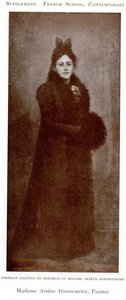
helena arsène darmesteter
1854 - 1923
Quick Facts
- Artistic Movement Or Style: Portrait Painting
- Artists Or Movements Influenced By This Artist: ['Belle Époque']
- Artists Who Influenced This Artist: ['Gustave Courtois']
- Date Of Birth: 1854
- Full Name: Héléna Arsène Darmesteter
- Nationality: British
- Notable Artworks:
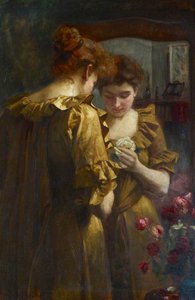
- Reflection in a Mirror
- Hertha Ayrton
- Place Of Birth: London, England