 Preview
 Send
Send Share
Share
 Details

 Download
 Similars
 X-Ray
X-Ray Diaporama
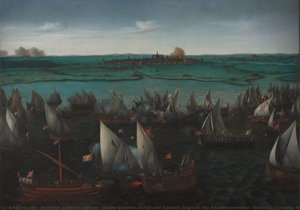
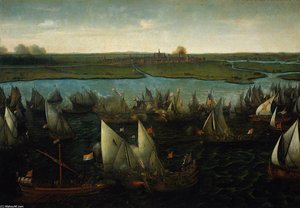
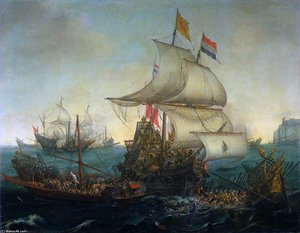
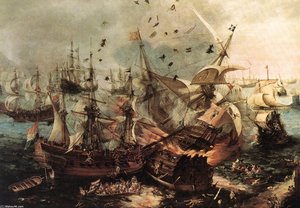
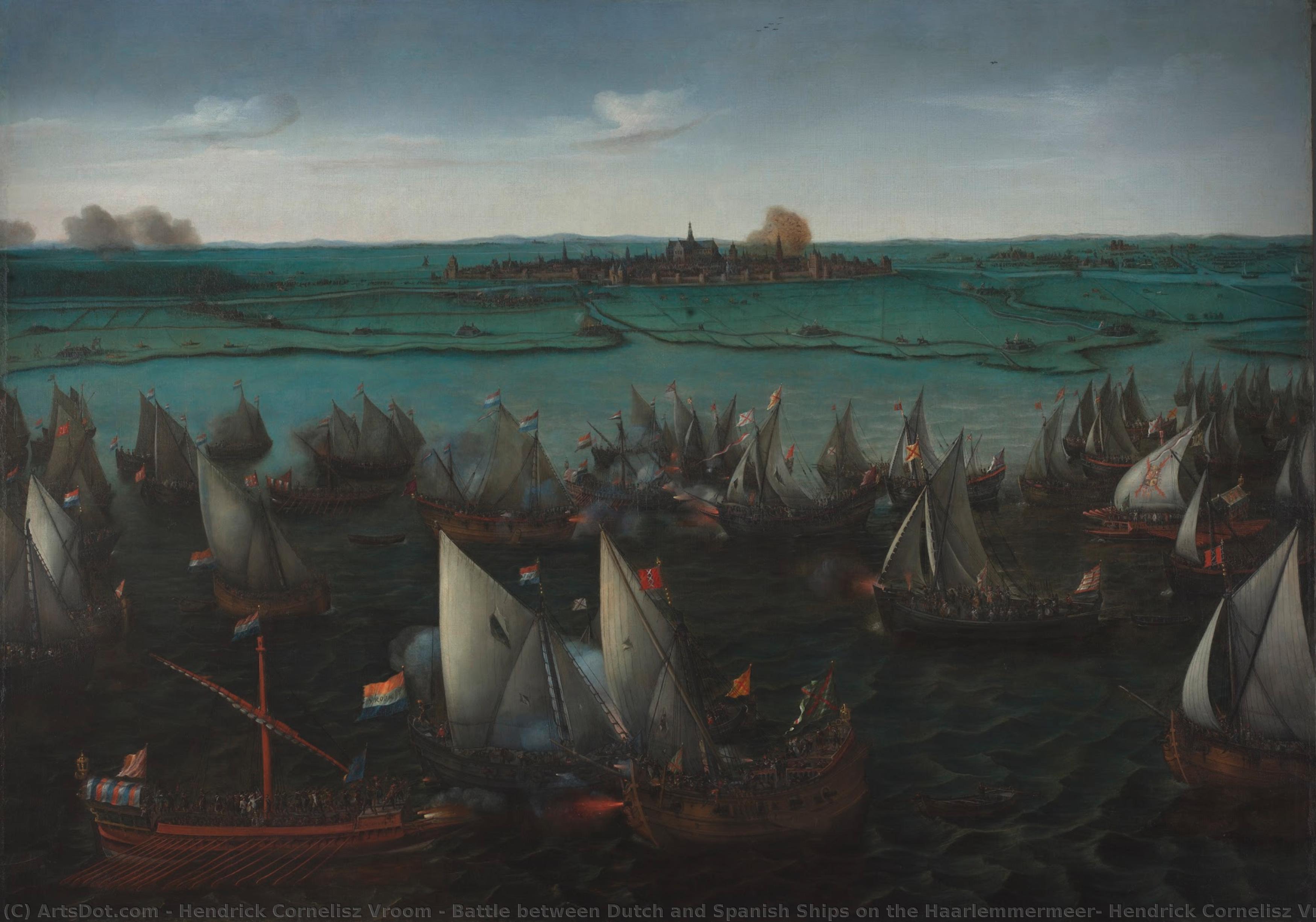
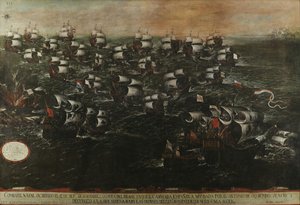
Battle between Dutch and Spanish Ships on the Haarlemmermeer, Hendrick Cornelisz Vroom, in or after 1629
 1629
1629 190.0 x 268.0 cm
 Read More
Hand Made Oil Reproduction
Hand-painted oil on canvas in your size and frame, made to order by our artists. ( Buy Print Buy Image)




































Pick from our preset sizes that match the artwork's original proportions.

You may enter your own dimensions to fit a specific frame or space. If your selected size does not match the original image's proportions, we will either crop the artwork or extend the painting with additional hand-painted elements. A digital mockup will be sent for your approval before production begins.
Please note that the on-screen preview does not reflect the actual cropping or extension. Only the mockup will accurately show the final composition.
While custom sizes are available, we recommend selecting a dimension from the predefined list to preserve the original proportions.
After order, ArtsDot.com team will email client for instructions and provide a mockup preview
Worldwide Delivery () in 3/4 weeks instead of standard 5 weeks. (23 August). No compromise on quality.

Free Worldwide Express Shipping

High-Quality Linen Canvas

Full Shipping Insurance

Customs Tax Refund Guarantee

True Color Matching Guarantee

60-Day Return Policy (Defects Only)

100% Money-Back Guarantee

Bulk Discount Offer
 Glass option is only available in size under 110 CM

Battle between Dutch and Spanish Ships on the Haarlemmermeer, Hendrick Cornelisz Vroom, in or after 1629
Reproduction Medium
Reproduction Size
-


Total Price
$ 263
Artwork Description
Related Artworks








Artist Biography
A Pioneer of the Dutch Golden Age: The Life and Art of Hendrick Cornelisz Vroom
Hendrick Cornelisz Vroom, born around 1563 in Haarlem, Netherlands, occupies a pivotal position in the history of Dutch painting. He is rightfully celebrated as the progenitor of marine art within the Northern Netherlands, a genre that would flourish during the Golden Age and capture not only the nation’s maritime prowess but also the raw power and unpredictable beauty of the sea itself. Vroom's journey to artistic prominence was anything but conventional, marked by adventure, hardship, and an insatiable curiosity that propelled him across Europe in search of knowledge and inspiration. Initially trained as a ceramic artist – a craft practiced within his family – he soon felt constrained by its limitations, embarking on a path that would lead him through Spain, Italy, and back again, shaping him into the groundbreaking painter we remember today. His early travels were not merely geographical explorations; they were immersive studies in light, color, and composition, experiences that fundamentally altered his artistic vision.From Italian Patronage to Dutch Mastery
Vroom’s time in Italy, particularly under the patronage of Cardinal Ferdinando de' Medici around 1585-87, proved transformative. The cardinal’s fascination with ships and naval affairs ignited within Vroom a passion for depicting maritime scenes. While studying under Paulus Bril, he honed his skills, but it was the subject matter itself – the dynamic interplay of vessels on the water, the vastness of the ocean, and the drama of naval encounters – that truly captivated him. This period saw him develop a unique style, moving away from the earlier “bird’s-eye” perspective common in Netherlandish marine art towards a more immersive viewpoint, bringing the viewer closer to the action and emphasizing the realism of the sea's surface. His experiences weren’t without peril; tales abound of near-shipwrecks, brushes with danger, and even moments where his life hung in the balance – stories recounted by Karel van Mander in his influential “Schilder-boeck,” adding a layer of romanticism to Vroom's already compelling biography. Upon returning to Haarlem in 1590, he established himself as a painter, marrying Joosje Cornelisse and continuing to refine his distinctive approach.Painting the Rise of Dutch Naval Power
The late 16th and early 17th centuries witnessed a dramatic rise in Dutch maritime power, fueled by burgeoning trade routes with the East Indies and increasingly frequent naval conflicts with Spain. Vroom’s art perfectly mirrored this historical context. He became highly sought after for his depictions of both triumphant victories and everyday seafaring life. He received commissions from prominent figures, including Lord Howard of Effingham, to create large-scale tapestry designs commemorating the defeat of the Spanish Armada in 1588 – a series that unfortunately was later lost to fire but survives in engravings. His paintings weren’t simply historical records; they were powerful statements about Dutch national identity and burgeoning global influence. He skillfully captured the grandeur of returning East Indiamen laden with exotic goods, the intensity of naval battles, and the bustling activity of harbors – all rendered with a dramatic use of color and texture that conveyed both the beauty and the inherent danger of life at sea.Legacy and Influence
Hendrick Cornelisz Vroom’s impact on Dutch art is undeniable. He didn't just paint ships; he *defined* how they were painted, establishing a visual language that would be adopted and adapted by generations of artists to come. His pioneering use of oil on panel and canvas allowed for greater detail and luminosity, enhancing the realism of his seascapes. He directly influenced painters such as Ludolf Backhuysen I and Jan Weenix, who further developed the genre of marine painting in the 18th century. Even Cornelis Verbeeck, a notable artist in his own right, acknowledged Vroom’s profound influence on his work.- Ludolf Backhuysen I: Known for his detailed and atmospheric depictions of Dutch ships and harbors. Jan Weenix: Specialized in painting seascapes and harbor scenes with a focus on realism and dramatic lighting.
- Cornelis Verbeeck: Acknowledged Vroom as a key influence in his own dynamic marine paintings.
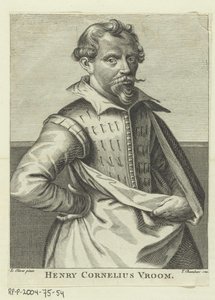
Hendrick Cornelisz. Vroom
1563 - 1640 , Netherlands
Quick Facts
- Artistic Movement Or Style: Marine painting
- Artists Or Movements Influenced By This Artist:
- Ludolf Backhuysen I
- Jan Weenix
- Artists Who Influenced This Artist: ['Paul Bril']
- Date Of Birth: c. 1563
- Date Of Death: 1640
- Full Name: Hendrick Cornelisz Vroom
- Nationality: Dutch
- Notable Artworks:
- Triumphal arch with bearers...
- Triumphal procession w/musicians
- Triumph of Frederik Hendrik
- Battle between Dutch & Spanish...
- Place Of Birth: Haarlem, Netherlands