 Preview
 Send
Send Share
Share
 Details

 Download
 Similars
 X-Ray
X-Ray Diaporama
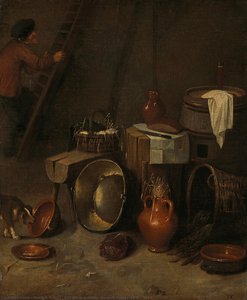
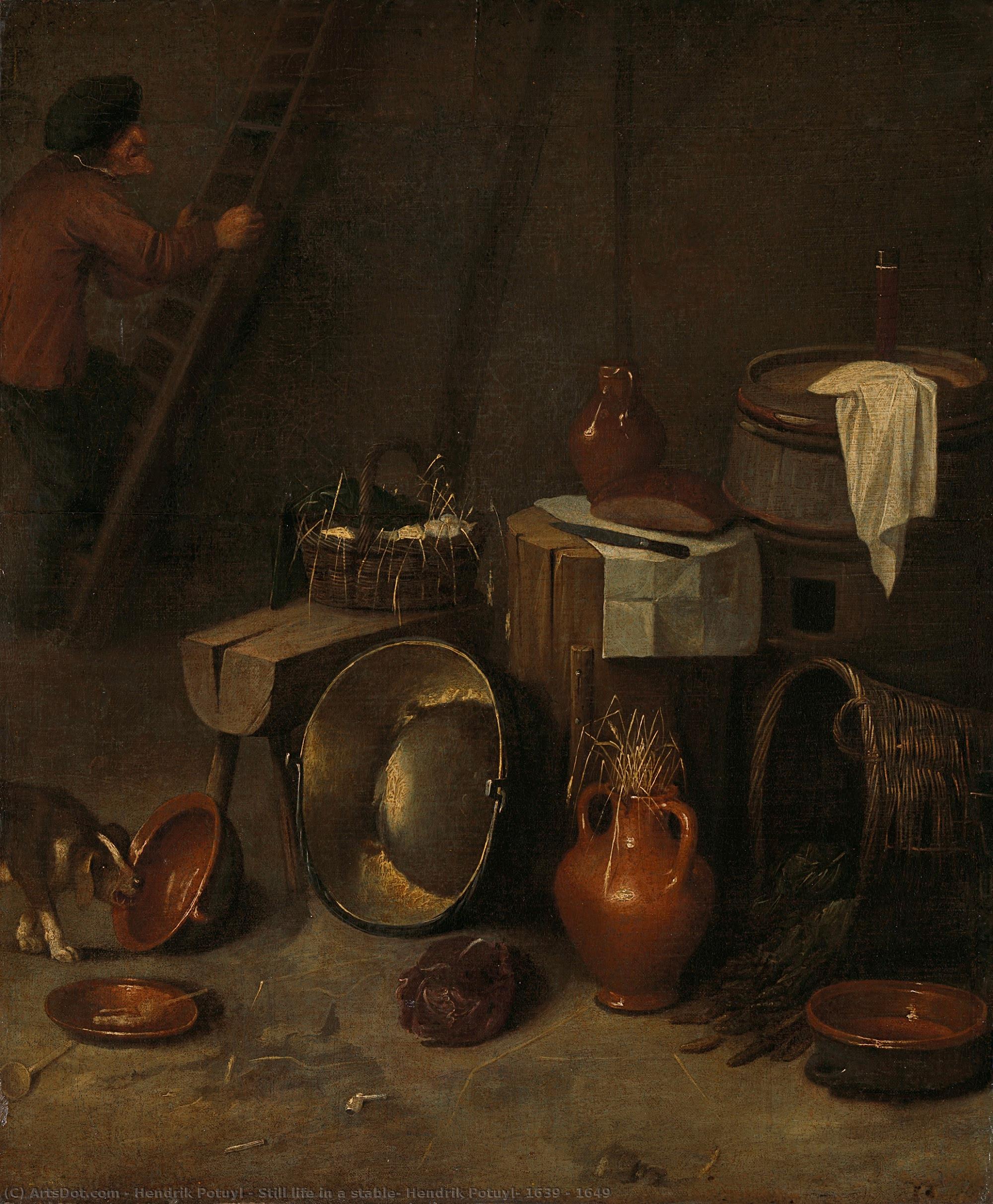
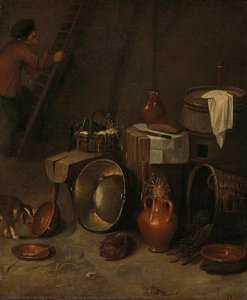
Still life in a stable, Hendrik Potuyl, 1639 - 1649
 1649
1649 78.0 x 65.0 cm
 Read More
Giclée / Art Print
Museum-quality giclée or canvas print with fast production and flexible finish options. ( Buy Hand Made Painting Buy Image)




































Pick from our preset sizes that match the artwork's original proportions.

You may enter your own dimensions to fit a specific frame or space. If your selected size does not match the original image's proportions, we will either crop the artwork or extend the image with a mirrored or solid-fill edge. A digital mockup will be sent for your approval before production begins.
Please note that the on-screen preview does not reflect the actual cropping or extension. Only the mockup will accurately show the final composition.
While custom sizes are available, we recommend selecting a dimension from the predefined list to preserve the original proportions.
Worldwide Delivery () in 2 weeks instead of standard 4/5 weeks. (27 August)

Free Worldwide Express Shipping

High-Quality Linen Canvas

Full Shipping Insurance

Customs Tax Refund Guarantee

True Color Matching Guarantee

60-Day Return Policy (Defects Only)

100% Money-Back Guarantee

Bulk Discount Offer
 Glass option is only available in size under 110 CM

Still life in a stable, Hendrik Potuyl, 1639 - 1649
Giclée / Art Print
Reproduction Size
-


Total Price
$ 63
Collectible Description
Related Artworks






Artist Biography
The Quiet Observer: The Life and Art of Hendrik Potuyl
Hendrik Potuyl, a name perhaps less celebrated than some of his Hague School contemporaries, nevertheless occupies a significant place in the history of Dutch 19th-century landscape painting. Born in Rotterdam in 1855, Potuyl’s artistic journey was one of quiet dedication and meticulous observation, resulting in works that capture the subtle beauty and atmospheric nuances of the Low Countries with remarkable sensitivity. Unlike artists who sought dramatic or sensational subjects, Potuyl found his inspiration in the everyday scenes of rural life – fields stretching towards distant horizons, tranquil waterways reflecting the shifting light of the sky, and the humble presence of farmsteads nestled within the landscape. His paintings are not grand statements but rather intimate meditations on the passage of time and the enduring power of nature.Early Influences and Artistic Development
Potuyl’s early artistic training remains somewhat obscure, though it is known he received instruction from Willem Maris, a prominent member of the Hague School and a master of realistic landscape painting. This mentorship proved crucial in shaping Potuyl's aesthetic sensibilities. Maris instilled in him a deep appreciation for plein air painting – working directly from nature – and an emphasis on capturing accurate tonal values and atmospheric effects. The influence of Johan Hendrik Weissenbruch is also readily apparent, particularly in Potuyl’s early works which share Weissenbruch’s delicate handling of light and his preference for muted color palettes. However, Potuyl quickly developed a distinctive style characterized by its exceptional detail and almost photographic realism. He wasn't interested in broad impressionistic brushstrokes; instead, he painstakingly rendered every blade of grass, every ripple on the water, creating scenes that feel both incredibly precise and deeply evocative.A Master of Dutch Pastoral Scenes
Potuyl’s oeuvre is dominated by depictions of the Dutch countryside, particularly the regions surrounding The Hague, Rotterdam, and the Veluwe area. He specialized in painting scenes featuring expansive fields, often punctuated by scattered farmhouses or windmills, and waterways reflecting the ever-changing sky. His palette typically consisted of subdued earth tones – ochres, browns, greens, and grays – skillfully blended to create a sense of atmospheric depth and tranquility. What sets Potuyl apart is his ability to convey not just *what* he saw but also *how* it felt to be present in that moment. His paintings evoke the cool dampness of a Dutch autumn morning, the warmth of the afternoon sun filtering through the clouds, or the stillness of twilight descending upon the land. He frequently included figures – farmers working in the fields, boats navigating the canals – but these are rarely central subjects; they serve instead to enhance the sense of scale and imbue the landscape with a quiet human presence.Technique and Artistic Approach
Potuyl’s meticulous technique was central to his artistic vision. He employed a slow, deliberate approach, building up layers of paint in thin glazes to achieve remarkable depth and luminosity. He often worked on multiple canvases simultaneously, allowing him to capitalize on fleeting atmospheric conditions and maintain consistency across different compositions. His brushwork is exceptionally fine, almost invisible at times, creating surfaces that appear remarkably smooth and polished. This dedication to detail was not merely a matter of technical skill; it reflected his deep respect for the natural world and his desire to capture its subtle complexities with unwavering accuracy. He wasn’t interested in romanticizing or idealizing the landscape; he sought instead to present it as it truly was – imperfect, weathered, and profoundly beautiful.Legacy and Historical Significance
While Potuyl never achieved widespread fame during his lifetime, his work has gained increasing recognition in recent decades. He is now considered an important representative of the Hague School and a master of Dutch realist landscape painting. His paintings offer a valuable glimpse into the rural life of 19th-century Netherlands and provide a poignant reminder of the enduring beauty of the natural world.- His dedication to plein air painting helped to establish a tradition of realistic landscape art in the Netherlands.
- His meticulous technique and subtle use of color influenced subsequent generations of Dutch painters.
- His works provide a valuable historical record of the Dutch countryside during a period of rapid social and economic change.
Quick Facts
- Artistic Movement Or Style: Hague School
- Date Of Death: Living
- Full Name: Hendrik Potuyl
- Nationality: Dutch