Artist Biography
A Glimpse into the Dutch Golden Age: The Life and Art of Hendrik van den Bosch
Hendrik van den Bosch remains a somewhat enigmatic figure within the pantheon of 18th-century Dutch portraiture, yet his work offers a compelling window into the societal values and artistic sensibilities of his time. While biographical details are scarce, the surviving portraits attributed to him reveal a skilled hand adept at capturing not merely likenesses but also the status, refinement, and often, the complex inner lives of his sitters. His paintings primarily document members of the Dutch elite, particularly those connected to the administration of the Dutch East Indies, suggesting a career closely intertwined with the colonial power structure. The few known facts place him firmly within a tradition of realism inherited from masters like Rembrandt and Frans Hals, yet he developed a distinctive style characterized by meticulous detail, subtle color palettes, and an ability to convey both authority and vulnerability in his subjects.
Portraying Power: Van den Bosch’s Colonial Connections
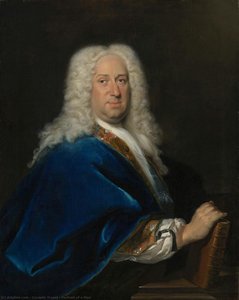
The most recognizable works by Hendrik van den Bosch center around portraits of figures involved with the Dutch East Indies Company (VOC) and its successor administration. Christoffel van Swoll, Governor-General of the Dutch East Indies, is perhaps his most celebrated achievement. Two versions of this portrait exist – one dated 1718, the other a copy from around 1750-1800. These paintings are not simply representations of an official; they are carefully constructed statements about power and legitimacy. Van den Bosch masterfully depicts van Swoll in opulent attire, surrounded by symbols of his authority – rich fabrics, imposing architecture, and perhaps most importantly, a gaze that commands respect. The artist’s attention to detail extends beyond the figure himself, encompassing the textures of clothing, the gleam of metal embellishments, and the subtle play of light across surfaces. This meticulous approach wasn't merely technical prowess; it served to reinforce the sitter’s position within the social hierarchy. The portraits speak volumes about the Dutch colonial project – its ambition, its wealth, and its reliance on a complex network of individuals like van Swoll to maintain control over distant territories.
Artistic Influences and Technical Skill
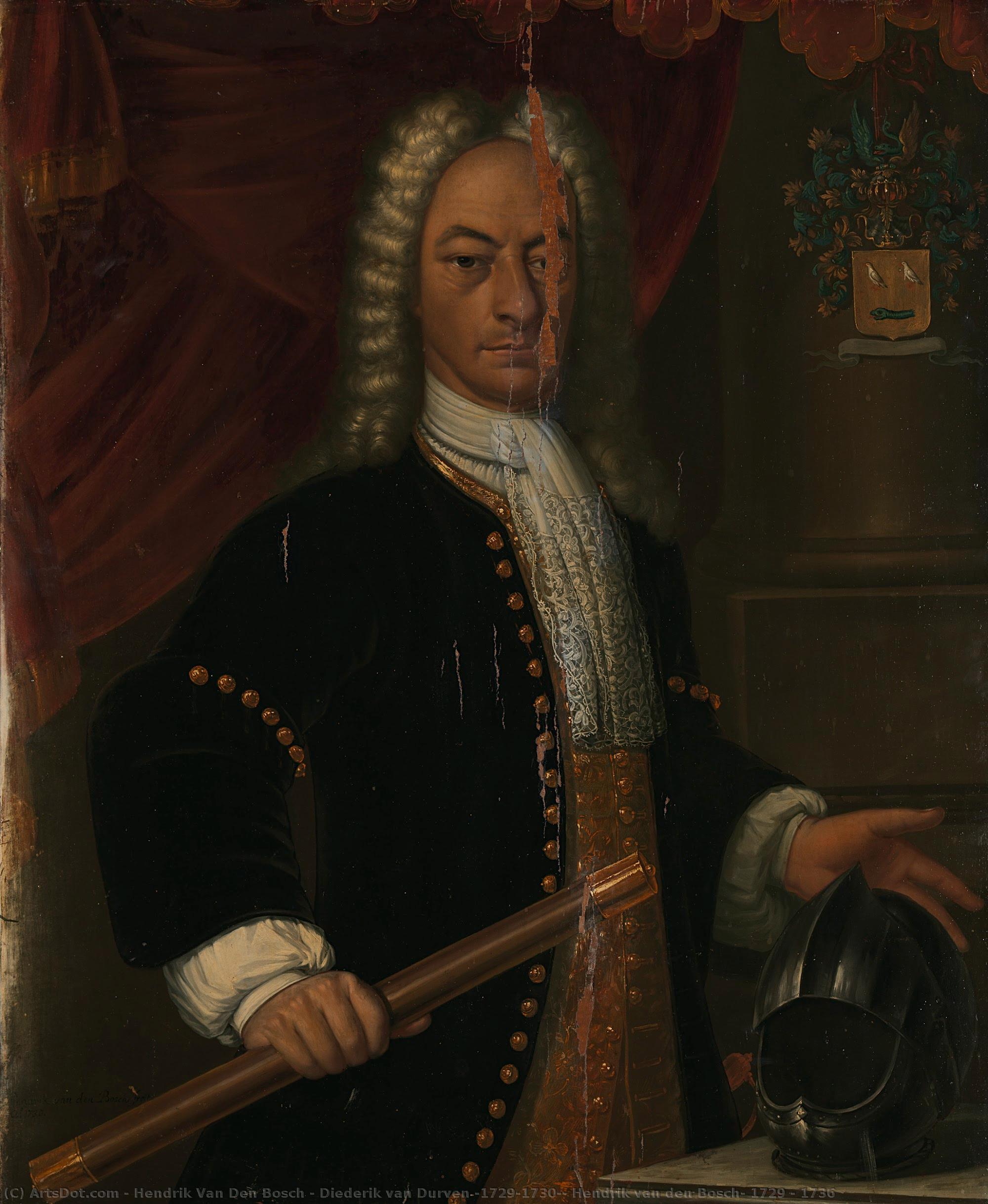
Van den Bosch's artistic lineage is rooted in the Dutch Golden Age tradition. He clearly absorbed lessons from earlier masters, particularly in his use of light and shadow – reminiscent of Rembrandt’s chiaroscuro – and his ability to capture individual character, a hallmark of Frans Hals. However, Van den Bosch moved away from the more dynamic brushwork favored by Hals, opting for a smoother, more polished finish that aligned with the prevailing tastes of the 18th century. His portraits often exhibit a Baroque realism, emphasizing volume and texture through careful modeling and precise rendering of details. Diederik van Durven, another portrait from his oeuvre, demonstrates this skill; the subject’s clothing appears almost tactile, and the subtle nuances of expression hint at an inner life beyond the formal pose. He wasn't a revolutionary innovator but rather a highly skilled practitioner who refined existing techniques to meet the demands of his clientele.
Beyond the Elite: Exploring Van den Bosch’s Broader Context
While primarily known for portraits of colonial officials, it is important to consider the broader context in which Van den Bosch operated. The Dutch Republic underwent significant political and social changes during the 18th century, transitioning from a dominant commercial power to a more centralized state. This period also saw growing awareness of Enlightenment ideals and increasing scrutiny of colonial practices. Although his work doesn’t explicitly engage with these themes, it is possible to interpret his portraits as reflections of this changing world – representations of an established order grappling with new ideas and challenges. The fact that he produced copies of earlier works, like the second version of the Christoffel van Swoll portrait, suggests a market driven by nostalgia for past glories or perhaps a desire to reaffirm traditional values in a time of uncertainty.
Legacy and Historical Significance
Hendrik van den Bosch’s legacy lies not in groundbreaking innovation but in his ability to create compelling portraits that offer valuable insights into the lives and aspirations of the Dutch elite during a pivotal period in history. His paintings serve as important historical documents, providing visual evidence of colonial power structures and societal norms. The connection between Van den Bosch's work and figures like Johannes van den Bosch, a later Governor-General known for implementing the controversial Cultivation System in Java, adds another layer of complexity to his artistic significance. While not directly related as artist and subject, the shared surname highlights the interconnectedness of Dutch society and its colonial endeavors. His work continues to be studied by art historians seeking to understand the nuances of 18th-century Dutch portraiture and its relationship to broader political and social forces.


 Preview
 Send
Send Share
Share
 Details

 Download
 Similars
 X-Ray
X-Ray Diaporama
 1736
1736 99.0 x 81.0 cm
 Read More
 Buy Print