 Preview
 Send
Send Share
Share
 Details

 Download
 Similars
 X-Ray
X-Ray Diaporama
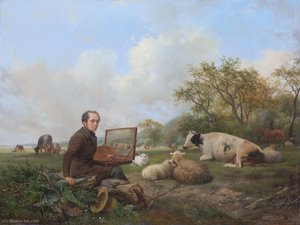
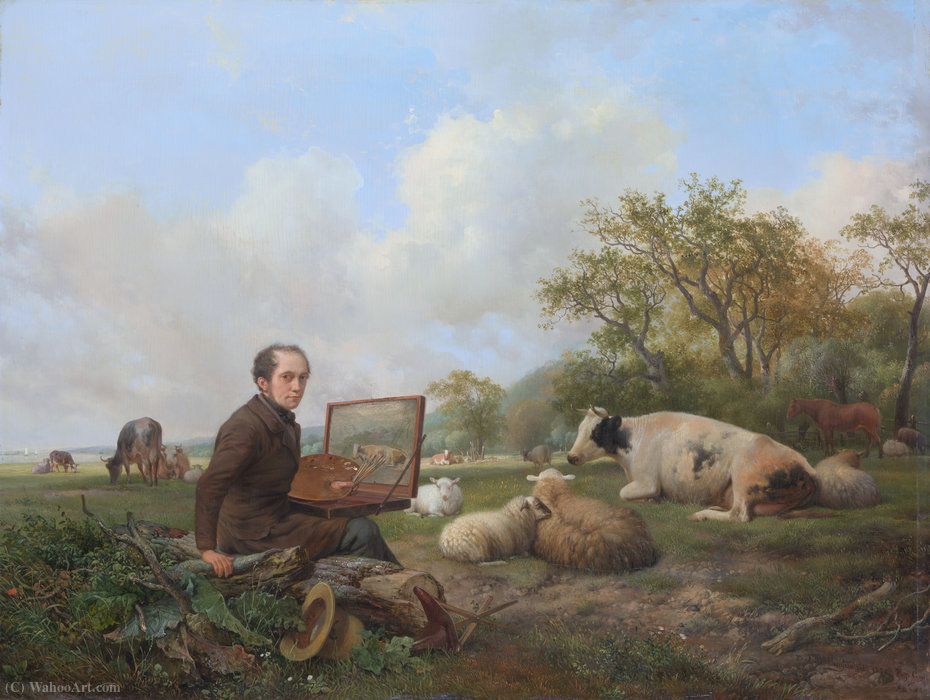
The painter himself, painting in a meadow landscape with cattle.
 Read More
Hand Made Oil Reproduction
Hand-painted oil on canvas in your size and frame, made to order by our artists. ( Buy Print Buy Image)




































Pick from our preset sizes that match the artwork's original proportions.

You may enter your own dimensions to fit a specific frame or space. If your selected size does not match the original image's proportions, we will either crop the artwork or extend the painting with additional hand-painted elements. A digital mockup will be sent for your approval before production begins.
Please note that the on-screen preview does not reflect the actual cropping or extension. Only the mockup will accurately show the final composition.
While custom sizes are available, we recommend selecting a dimension from the predefined list to preserve the original proportions.
After order, ArtsDot.com team will email client for instructions and provide a mockup preview
Worldwide Delivery () in 3/4 weeks instead of standard 5 weeks. (2 September). No compromise on quality.

Free Worldwide Express Shipping

High-Quality Linen Canvas

Full Shipping Insurance

Customs Tax Refund Guarantee

True Color Matching Guarantee

60-Day Return Policy (Defects Only)

100% Money-Back Guarantee

Bulk Discount Offer
 Glass option is only available in size under 110 CM

The painter himself, painting in a meadow landscape with cattle.
Reproduction Medium
Reproduction Size
-


Total Price
$ 263
Related Artworks


Artist Biography
A Legacy Rooted in Dutch Romanticism: The Life and Art of Hendrikus van de Sande Bakhuyzen
Hendrik (Hendrikus) van de Sande Bakhuyzen, born in The Hague on January 2nd, 1795, stands as a pivotal figure bridging the Romantic period with the nascent beginnings of the Hague School. His life unfolded against a backdrop of evolving artistic sensibilities in the Netherlands, and he became not only a respected landscape painter in his own right but also a crucial mentor to a generation that would redefine Dutch art. Born into a family steeped in publishing—his father, Gerrit Bakhuysen, was a prominent figure in the industry—Hendrik’s early life offered a stable foundation, though it wasn't necessarily one directly connected to the world of painting. He legally adopted his mother’s surname, van de Sande, in 1819, a gesture that perhaps signaled a conscious forging of his own identity within the artistic landscape. His wife, Sophia Wilhelmine Kiehl, provided a constant presence throughout his life and career. The Hague, with its unique light and atmospheric conditions, would become both his home and an enduring source of inspiration.Early Training and Establishing a Style
Bakhuyzen’s formal artistic journey began with lessons from Jan Willem Pieneman, followed by studies at the recently established Hague Academy under Simon Andreas Krausz. This early training laid the groundwork for his developing skills in landscape painting. He wasn't working in isolation; contemporaries like Andreas Schelfhout and Bart van Hove were fellow students, forming a cohort that would collectively shape the direction of Dutch art. His talent quickly became apparent, with the Rijksmuseum acquiring his *Gelder Landscape* in 1818—a significant achievement for such a young artist. This early success was followed by further recognition, including medals from Royal Societies in Brussels and Antwerp during the 1820s. These accolades not only affirmed his technical abilities but also established him within the Dutch art community. Bakhuyzen’s style at this stage can be characterized as Romantic Realism, deeply influenced by the pastoral scenes of earlier masters like Paulus Potter. He excelled in depicting idyllic landscapes populated with cattle and rural life, capturing a sense of tranquility and harmony.A Teacher and Founder of a Movement
Beyond his own artistic production, Bakhuyzen’s most lasting impact may lie in his role as an educator. He became a board member of the Art Academy in The Hague and eventually its Director, dedicating himself to nurturing the next generation of Dutch painters. His studio became a crucible for innovation, attracting students who would later become leading figures in the Hague School—a movement known for its realistic depictions of everyday life and its embrace of plein air painting. Among his most notable pupils were Willem Roelofs, Hubertus van Hove, François Pieter ter Meulen, and, crucially, his own son, Julius van de Sande Bakhuyzen. These artists, initially guided by their mentor’s Romantic sensibilities, gradually moved towards a more impressionistic approach, focusing on capturing the fleeting effects of light and atmosphere. His travels with pupils like Willem Roelofs along the Rhine River in 1841 were instrumental in broadening their artistic horizons and fostering a shared vision for a new style of Dutch landscape painting.The Influence of Family and Artistic Legacy
The Bakhuyzen family was remarkably prolific, contributing significantly to the art world across multiple generations. Hendrik’s son, Julius Jacobus van de Sande Bakhuyzen (1835-1925), followed in his father's footsteps, becoming a well-respected etcher and painter within the Hague School. His daughter, Gerardina Jacoba van de Sande Bakhuyzen (1826–1895), specialized in still life, flowers, and fruit paintings, adding another dimension to the family’s artistic output. Even his other sons pursued scientific endeavors—Henricus Gerardus becoming a prominent astronomer and director of the Leiden Observatory—demonstrating a broader intellectual curiosity within the family. This familial dedication to art and science underscores the Bakhuyzen's commitment to both aesthetic beauty and intellectual exploration.Historical Significance and Enduring Appeal
Hendrik van de Sande Bakhuyzen’s contribution extends beyond his own paintings; he was a catalyst for change, fostering an environment where artists could experiment with new techniques and perspectives. His influence is particularly evident in the development of the Hague School, which marked a departure from traditional Dutch Romanticism towards a more modern and realistic style. His works, characterized by their serene landscapes and evocative depictions of nature, continue to resonate with audiences today. They offer a glimpse into 19th-century Dutch life and a testament to the enduring power of landscape painting. He successfully blended tradition with innovation, paving the way for future generations of artists to explore the beauty and complexity of the natural world. His legacy is not merely that of a skilled painter, but of a dedicated teacher who nurtured a movement and shaped the course of Dutch art history.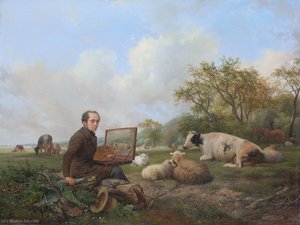
hendrikus van den sande bakhuyzen
1795 - 1860
Quick Facts
- Artistic Movement Or Style: Romanticism, Hague School
- Artists Or Movements Influenced By This Artist:
- Hague School
- Willem Roelofs
- Julius van de Sande Bakhuyzen
- Artists Who Influenced This Artist:
- Jan Willem Pieneman
- Simon Andreas Krausz
- Paul Potter
- Date Of Birth: January 2, 1795
- Date Of Death: December 12, 1860
- Full Name: Hendrikus van de Sande Bakhuyzen
- Nationality: Dutch
- Notable Artworks:
- Pond in the Hague Forest
- Gelders landschap
- Place Of Birth: The Hague, Netherlands