 Preview
 Send
Send Share
Share
 Details

 Download
 Similars
 X-Ray
X-Ray Diaporama
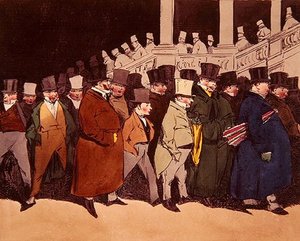
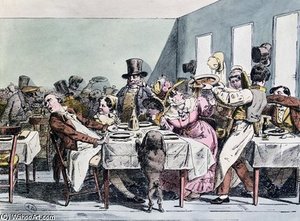
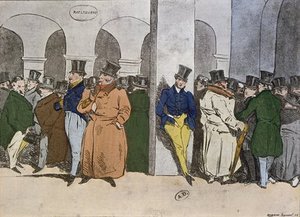
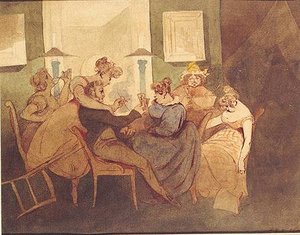
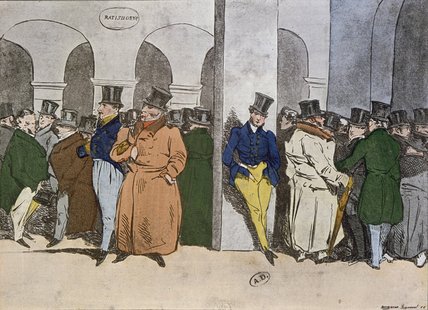
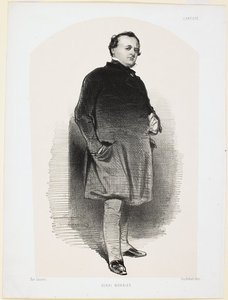
The Stock Exchange
 Read More
Hand Made Oil Reproduction
Hand-painted oil on canvas in your size and frame, made to order by our artists. ( Buy Print Buy Image)




































Pick from our preset sizes that match the artwork's original proportions.

You may enter your own dimensions to fit a specific frame or space. If your selected size does not match the original image's proportions, we will either crop the artwork or extend the painting with additional hand-painted elements. A digital mockup will be sent for your approval before production begins.
Please note that the on-screen preview does not reflect the actual cropping or extension. Only the mockup will accurately show the final composition.
While custom sizes are available, we recommend selecting a dimension from the predefined list to preserve the original proportions.
After order, ArtsDot.com team will email client for instructions and provide a mockup preview
Worldwide Delivery () in 3/4 weeks instead of standard 5 weeks. (17 August). No compromise on quality.

Free Worldwide Express Shipping

High-Quality Linen Canvas

Full Shipping Insurance

Customs Tax Refund Guarantee

True Color Matching Guarantee

60-Day Return Policy (Defects Only)

100% Money-Back Guarantee

Bulk Discount Offer
 Glass option is only available in size under 110 CM

The Stock Exchange
Reproduction Medium
Reproduction Size
-


Total Price
$ 488
Related Artworks

Artist Biography
The Chronicler of Parisian Wit: The Life and Legacy of Henri Bonaventure Monnier
In the bustling, transformative landscape of mid-nineteenth century France, few figures captured the rhythmic pulse of Parisian life with as much humor and sharp-eyed precision as Henri Bonaventure Monnier. Born in Paris in 1799, Monnier was far more than a mere illustrator; he was a multifaceted creator—a playwright, caricaturist, and actor whose work served as a vibrant mirror to the social mores of his era. His artistic journey was deeply rooted in the prestigious traditions of French neoclassicism and romanticism, having honed his skills under the watchful eyes of masters such as Anne-Louis Girodet-Trioson and Antoine-Jean Gros. These mentors instilled in him a profound respect for dramatic realism and an uncanny ability to observe the subtle nuances of human expression, qualities that would later become the hallmarks of his satirical genius.
Monnier’s early development was marked by a restless curiosity that eventually led him beyond the borders of France. In 1822, he ventured to London, a period of immersion in a different cultural atmosphere that broadened his artistic horizons and refined his perspective on international social dynamics. Upon his return to Paris, he found himself at the very heart of the nineteenth-century intellectual explosion. He moved within an elite circle of literary giants, forging connections with luminaries such as Alexandre Dumas, Stendhal, Honoré de Balzac, and Eugène Sue. This proximity to the era's greatest storytellers undoubtedly enriched his visual narratives, infusing his art with a literary depth and a penchant for character-driven storytelling that resonated with the reading public of his day.
The Art of Satire: Lithography and Social Commentary
While many of his contemporaries sought immortality through the grand scale of oil paintings, Monnier found his true voice in the medium of lithography. This technique offered him a unique advantage: the ability to produce rapid, reproducible works that could circulate quickly through the hands of the growing middle class. His lithographs were not merely sketches but meticulously crafted social commentaries, designed to lampoon the pretensions and idiosyncrasies of the Parisian petites-bourgeoisie. Through his prints, he captured the essence of daily life, from the bustling energy of local boutiques to the quiet, often absurd, interactions within professional offices.
One of Monnier’s most enduring contributions to the cultural fabric of France was his creation of the fictional characters Monsieur and Madame Prud’homme. Through these archetypal figures, he was able to satirize the predictable manners and moralizing tendencies of the middle class with a biting yet affectionate wit. His work often focused on the "physiognomies" of his contemporaries—the way a specific gesture or facial expression could betray one's social standing or hidden intentions. This dedication to capturing the mores of his time allowed him to document a vanishing world, making his collection of prints an invaluable historical record of nineteenth-century French society.
A Lasting Impression on the Parisian Spirit
The significance of Henri Bonaventure Monnier lies in his ability to bridge the gap between high art and popular culture. He utilized the tools of the theater and the printing press to engage a wide audience, ensuring that his critiques were as much a part of the street conversation as they were part of the salon discussion. His work remains a testament to the power of humor as a tool for social observation, providing a window into a period defined by rapid urban growth and shifting class structures.
As we look back upon his prolific career, several key elements emerge that define his historical importance:
- Mastery of Medium: His skillful use of lithography allowed for the democratization of art, bringing social satire to a mass audience.
- Literary Synergy: His deep connections with the titans of French literature helped shape the visual language of nineteenth-century storytelling.
- Character Archetypes: The creation of figures like the Prud’homme family provided a lasting framework for social caricature in France.
- Historical Documentation: His keen eye for detail preserved the fleeting fashions, gestures, and social hierarchies of mid-century Paris for future generations.
Though he passed away in 1877, Monnier’s legacy persists through the enduring charm of his caricatures. He remains a beloved observer of the human comedy, reminding us that even in the most biting satire, there is often a profound affection for the very subjects being mocked.
henri bonaventure monnier
1799 - 1877 , France
Quick Facts
- Artistic Movement Or Style: Caricaturist
- Artists Or Movements Influenced By This Artist: ['Romanticism']
- Artists Who Influenced This Artist:
- Anne-Louis Girodet-Trioson
- Antoine-Jean Gros
- Date Of Birth: June 7, 1799
- Full Name: Henry Bonaventure Monnier
- Nationality: French
- Notable Artworks: ['Humorous Depiction Of The Behaviour']
- Place Of Birth: Paris, France