

 Preview
 Send
Send Share
Share
 Details

 Download
 Similars
 X-Ray
X-Ray Diaporama
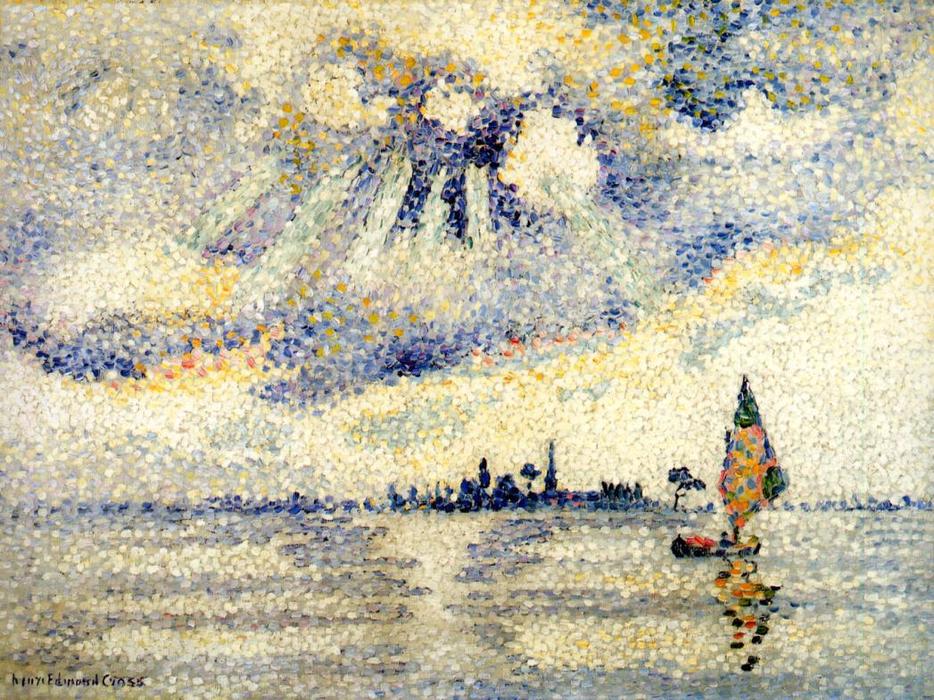
Sunset on the Lagoon, Venice


 Read More
Purchase a high-resolution, enhanced digital image, far superior to the online preview.
Each file is meticulously prepared by our in-house specialists using advanced tools and expert manual retouching. We ensure every image has exceptional clarity, precise color accuracy, and fine detail.
The final file is delivered via email within 72 hours, optimized for immediate use in professional, editorial, and print environments. This is the same quality trusted by top-tier design studios, publishers, and galleries.
Digital Image
Download a high-resolution file for personal display, printing, and creative projects. ( Buy Print Buy Hand Made Painting)
Included in Every Digital Image Order
Expert Digital Delivery, Guaranteed
When you choose ArtsDot.com, you're not just getting an image - you're receiving a professionally enhanced digital artwork, crafted with precision and backed by a satisfaction guarantee. Here's everything that comes with your order, automatically:

Fast Email Delivery
Your high-resolution digital image file will be emailed to you within 72 hours of ordering - ready for immediate use.

AI-Enhanced Digital File
Your artwork is professionally optimized using advanced AI tools and manual editing, ensuring maximum detail, clarity, and color accuracy.

Free Lifetime Re-Delivery
Accidentally deleted or lost your file? No worries - we'll resend it to you anytime, free of charge.

No Import Fees - Ever
Enjoy your artwork instantly with zero customs, duties, or delivery fees - digital downloads are always tax-free.

Color Accuracy Guarantee
We ensure your digital image reflects the original colors as closely as possible using professional tools and color management.

60-Day Satisfaction Guarantee
If you're not satisfied with your digital image, we'll revise it or refund 100% within 60 days - no questions asked.

100% Money-Back Guarantee
Not satisfied? Get a full refund within 60 days of receiving your digital file - no questions asked.

Bulk Order Discounts
Buy 3 images, save 10% - Buy 5, save 15% - Buy 10+, save 20%. Great for creative projects, galleries, and agencies.
Collectible Description
Sunset on the Lagoon, Venice – A Symphony of Light and Impression
Henri Edmond Cross’s “Sunset on the Lagoon, Venice,” painted in 1903-1904, stands as a cornerstone of Neo-Impressionism and exemplifies the movement's revolutionary approach to capturing fleeting moments of beauty. More than just a depiction of a Venetian vista, it embodies a profound philosophical contemplation on light, color, and the sublime—themes central to Cross’s artistic vision.
The artwork employs Pointillist technique, meticulously applying tiny dots of pure pigment – predominantly yellows, oranges, blues, purples, and greens – onto canvas. This method, championed by artists like Georges Seurat and Paul Signac, abandons traditional blending methods in favor of optical mixing when viewed from a distance. Each dot contributes to an overall luminescence that surpasses the sum of its parts, creating an ethereal atmosphere reminiscent of Monet’s Impressionist predecessors.
Compositionally, Cross utilizes a horizontal format emphasizing the expansive lagoon and sky. The horizon line sits low in the frame, prioritizing the celestial spectacle—a fiery sunset ablaze with hues mirroring the shimmering water surface. A solitary sailboat drifts gracefully along the lower right edge, serving as an anchor point for the eye and subtly introducing a human element into this serene landscape.
The color palette is deliberately vibrant and nuanced. Cross’s masterful use of complementary colors – orange against blue – amplifies visual impact while simultaneously conveying a sense of harmony. The sky transitions from warm yellows and oranges near the horizon to cooler blues and purples higher up, mirroring the atmospheric haze characteristic of Venetian sunsets.
Beyond its aesthetic qualities, “Sunset on the Lagoon, Venice” resonates with symbolic depth. The sunset itself represents closure, reflection, and the passage of time—themes explored extensively in Romantic art. Simultaneously, the sailboat symbolizes exploration and aspiration, hinting at a desire to transcend earthly limitations and embrace the grandeur of nature. Ultimately, Cross’s masterpiece invites viewers into a contemplative experience, fostering appreciation for beauty's ephemeral character.
This artwork is housed in The Museum of Fine Arts, Houston. Its high-quality reproduction offers an opportunity to bring this iconic Impressionist landscape into any home or interior design project.
Related Artworks
Artist Biography
A Life Bathed in Light: The Journey of Henri Edmond Cross
Henri Edmond Cross, born Henri-Edmond-Joseph Delacroix in 1856 in the northern French town of Douai, was an artist whose life and work were inextricably linked to a pursuit of light, color, and a harmonious vision of existence. His story is one of artistic evolution, driven by both personal circumstance and a fervent embrace of avant-garde ideals. The son of an adventurous father and a British mother, Cross’s early years saw a relocation to Lille, where his budding talent was recognized and nurtured by Dr. Auguste Soins, a patron who provided crucial financial support for lessons with the esteemed Carolus-Duran. This foundational training instilled in him a respect for classical technique—a grounding that would later be brilliantly subverted as he ventured into the revolutionary world of Neo-Impressionism. Even early on, a desire to forge his own artistic identity led him to adopt “Cross” as part of his name, and eventually fully transition to "Henri-Edmond Cross" in 1886, distancing himself from both the celebrated Eugène Delacroix and another contemporary artist sharing the same surname. This act was symbolic of a larger ambition: to define a unique artistic voice amidst a rapidly changing art world.From Realism to Radiant Divisionism
Cross’s initial artistic explorations leaned towards the Realist tradition, manifesting in portraits and still lifes that demonstrated technical skill but lacked a distinctive spark. However, the Parisian art scene of the 1880s was abuzz with new ideas, and Cross found himself increasingly drawn to the revolutionary principles of Neo-Impressionism—a movement spearheaded by Georges Seurat and Paul Signac. This encounter proved transformative. The scientific approach to color theory, the meticulous application of tiny, distinct brushstrokes (or “points”) designed to create optical mixing, resonated deeply with his artistic sensibilities. Simultaneously, recurring bouts of rheumatism led him to seek solace in the warmer climate of southern France, beginning in 1883 and culminating in a permanent settlement in Saint-Clair in 1891. The radiant light and vibrant landscapes of this region became integral to his artistic vision. He didn’t simply replicate Seurat's pointillism; instead, he evolved it, favoring larger, more mosaic-like brushstrokes that retained the luminosity of divided color while allowing for greater expressive freedom. This “second generation” Neo-Impressionism was characterized by its bold chromatic intensity and dynamic compositions—a style that would become his signature.Anarchist Ideals and Utopian Visions
Beyond technical innovation, Cross’s work was deeply informed by a strong sense of social and political idealism—specifically, anarchist beliefs. This conviction wasn't overtly propagandistic; rather, it manifested in his depictions of idyllic rural scenes, portraying harmonious coexistence between humanity and nature as an alternative to the perceived corruption and alienation of modern urban life. His paintings weren’t merely aesthetic exercises but visual statements advocating for a more equitable and peaceful world. The influence of this ideology is subtly woven into the fabric of his compositions, imbuing them with a sense of utopian longing. Works like *Before the Storm* and *The Farm, Evening* are not simply representations of nature; they are allegories for a just society—the vibrant colors and dynamic brushwork evoking energy and optimism, suggesting transformation and renewal. He sought to capture a world where humanity lived in balance with its surroundings, free from the constraints of industrialization and social hierarchy.Legacy and Influence on Modern Art
Henri-Edmond Cross’s artistic journey culminated in a significant body of work that profoundly impacted the course of modern art. His first individual exhibition at the Galerie Druet in 1905, followed by a retrospective organized by Félix Fénéon at the Galerie Bernheim-Jeune in 1908, cemented his reputation as a leading figure in Neo-Impressionism. However, his influence extended far beyond this movement. His bold use of non-local color—applying colors not according to their natural appearance but for expressive effect—and his willingness to distort forms paved the way for the radical experimentation of Fauvism. Artists like Henri Matisse and André Derain were deeply inspired by Cross’s work, recognizing in it a liberation from traditional constraints and a pathway towards greater artistic freedom. He demonstrated that color could be used not merely to represent reality but to evoke emotion and create a purely visual experience. He died of cancer in Saint-Clair in 1910, leaving behind a legacy that continues to resonate with artists and art lovers today. His paintings remain powerful testaments to the transformative potential of color, light, and form—and to the enduring power of art as a vehicle for social and political expression.Key Works & Continuing Relevance
Several works stand out as particularly representative of Cross’s artistic vision:- Before the Storm (aka The Storm): A quintessential example of his Neo-Impressionist landscapes, capturing dramatic skies and hinting at underlying anarchist themes.
- The Washerwoman: Showcases his mastery of Pointillism and divisionism, depicting a scene of everyday life with vibrant color and dynamic composition.
- The Farm, Evening: A serene depiction of rural life, embodying his utopian vision of harmonious coexistence between humanity and nature.
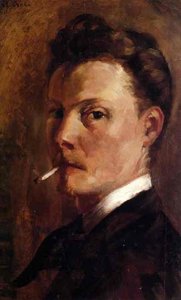
Henri Edmond Cross
1856 - 1910 , France
Quick Facts
- Artistic Movement Or Style: Neo-Impressionism
- Artists Or Movements Influenced By This Artist:
- Henri Matisse
- Fauvism
- Artists Who Influenced This Artist:
- Georges Seurat
- Paul Signac
- Date Of Birth: 1856
- Date Of Death: 1910
- Full Name: Henri Edmond Cross
- Nationality: French
- Notable Artworks:
- Before the Storm
- The Washerwoman
- The Farm, Evening
- Place Of Birth: Douai, France

