

 Preview
 Send
Send Share
Share
 Details

 Download
 Similars
 X-Ray
X-Ray Diaporama
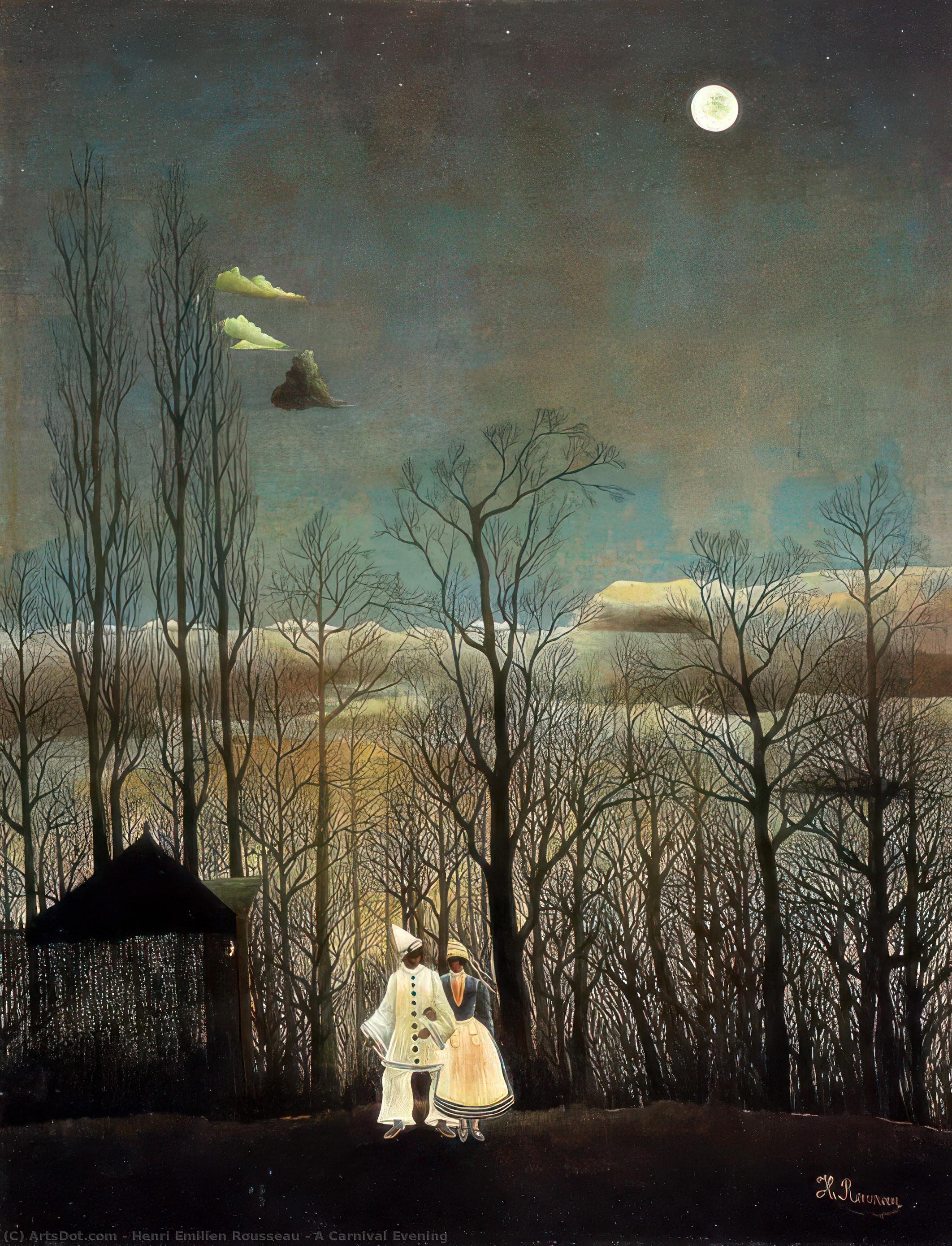
A Carnival Evening
 Oil On Canvas
- WallArt
- Naive Art
 1885
1885- 19th Century
 117.0 x 90.0 cm
 Philadelphia Museum of Art
 Read More
Purchase a high-resolution, enhanced digital image, far superior to the online preview.
Each file is meticulously prepared by our in-house specialists using advanced tools and expert manual retouching. We ensure every image has exceptional clarity, precise color accuracy, and fine detail.
The final file is delivered via email within 72 hours, optimized for immediate use in professional, editorial, and print environments. This is the same quality trusted by top-tier design studios, publishers, and galleries.
Digital Image
Download a high-resolution file for personal display, printing, and creative projects. ( Buy Print Buy Hand Made Painting)
Included in Every Digital Image Order
Expert Digital Delivery, Guaranteed
When you choose ArtsDot.com, you're not just getting an image - you're receiving a professionally enhanced digital artwork, crafted with precision and backed by a satisfaction guarantee. Here's everything that comes with your order, automatically:

Fast Email Delivery
Your high-resolution digital image file will be emailed to you within 72 hours of ordering - ready for immediate use.

AI-Enhanced Digital File
Your artwork is professionally optimized using advanced AI tools and manual editing, ensuring maximum detail, clarity, and color accuracy.

Free Lifetime Re-Delivery
Accidentally deleted or lost your file? No worries - we'll resend it to you anytime, free of charge.

No Import Fees - Ever
Enjoy your artwork instantly with zero customs, duties, or delivery fees - digital downloads are always tax-free.

Color Accuracy Guarantee
We ensure your digital image reflects the original colors as closely as possible using professional tools and color management.

60-Day Satisfaction Guarantee
If you're not satisfied with your digital image, we'll revise it or refund 100% within 60 days - no questions asked.

100% Money-Back Guarantee
Not satisfied? Get a full refund within 60 days of receiving your digital file - no questions asked.

Bulk Order Discounts
Buy 3 images, save 10% - Buy 5, save 15% - Buy 10+, save 20%. Great for creative projects, galleries, and agencies.
Collectible Description
A Carnival Evening: A Dreamscape of Mystery & Naive Brilliance
Henri Rousseau’s 1885 masterpiece, A Carnival Evening, is more than just a painting; it's an invitation to step into a world suspended between reality and dream. This captivating scene, currently housed at the Philadelphia Museum of Art, draws viewers in with its enigmatic atmosphere and subtly unsettling beauty, inviting contemplation on themes of desire, escape, and the complexities of human experience.
The Allure of Naive Art & Rousseau’s Unique Vision
Executed in the distinctive style of Naïve or Primitivist art, A Carnival Evening exemplifies Rousseau's self-taught approach. Rejecting the formal training of the Académie des Beaux-Arts, he developed a highly personal visual language characterized by meticulous detail, flattened perspective, and an almost childlike simplicity. This deliberate departure from convention isn’t a lack of skill, but rather a conscious choice – a unique way of seeing and representing the world. The precision with which Rousseau renders foliage and fabric is striking, creating a captivating tension against the painting's surreal elements.
Decoding the Symbolic Landscape
At first glance, we observe a formally dressed couple enjoying an evening stroll near a dense forest. However, beneath this seemingly straightforward depiction lies a rich tapestry of symbolism. The brightly illuminated hot air balloon, populated with shadowy figures, floats ethereally above – a potent symbol of aspiration, escape from earthly constraints, or perhaps a detachment from reality itself. Conversely, the dark and imposing forest represents the unknown, the subconscious, and potentially, isolation. The moon, a timeless emblem of mystery, intuition, and the feminine principle, casts its gentle glow upon the scene, amplifying the painting’s enigmatic atmosphere.
The couple themselves are intriguing figures. Their formal attire suggests celebration, yet their downcast gazes and lack of interaction hint at an underlying melancholy or introspection. The contrast between their bright clothing and the surrounding darkness further emphasizes their emotional state. Even seemingly minor details – like the distant gazebo and street lamp – contribute to the painting’s overall sense of mystery.
Technique, Palette & Atmosphere
Rousseau employed oil paints on canvas with remarkable precision, applying thin layers to achieve smooth surfaces and intricate detail. His meticulous brushwork brings each element to life, from individual tree branches to the delicate folds in the couple’s attire. The color palette is dominated by cool blues, greens, and blacks, establishing a nocturnal mood beautifully offset by warmer tones in the moon and the balloon's illumination. This interplay of light and shadow creates an ethereal quality, enhancing the painting’s dreamlike effect.
Historical Context & Lasting Legacy
Created during a period of burgeoning artistic experimentation, A Carnival Evening debuted at the Salon des Indépendants in 1886. Initially met with mixed reactions – some critics dismissed Rousseau's work as simplistic or amateurish – it soon garnered attention for its originality and unique aesthetic. Rousseau profoundly influenced subsequent generations of artists, including Pablo Picasso and Wassily Kandinsky, paving the way for new approaches to representation and inspiring movements like Surrealism and Fauvism.
Emotional Resonance & Interior Appeal
A Carnival Evening evokes a powerful emotional response, inviting contemplation on universal themes. Its unique aesthetic makes it an exceptional addition to any art collection or interior space. The painting's muted tones and atmospheric quality lend themselves well to both modern and traditional settings, adding a touch of sophisticated mystery and artistic intrigue.
Display Recommendations:
- Setting: This piece thrives in spaces designed for contemplation – libraries, studies, or living rooms with soft lighting.
- Complementary Colors: Pair it with furniture and accessories in shades of deep blues, greens, grays, and muted golds to enhance the painting’s nocturnal mood.
- Framing: A simple, elegant frame – perhaps a dark wood or gilded finish – will complement the artwork without overpowering its delicate details.
- Scale: At 117 x 90 cm (46 x 35 1/8 inches), this painting makes a statement but isn’t overwhelming. Consider its size in relation to the surrounding space.
A Carnival Evening is not merely a visual experience; it's an emotional journey – a testament to the power of imagination and the enduring appeal of Naive art.
Related Artworks
Artist Biography
Henri Emile Rousseau (1875 – 1933): The Enchanted Vision of Primitive Beauty
Henri Emile Rousseau, born in Lyon, France, in 1875, defied the conventions of Impressionism and Post-Impressionism to forge a singular artistic path—one characterized by an uncompromising embrace of Naïve Art. His canvases depict fantastical landscapes populated by animals and humans rendered with childlike simplicity and vibrant color palettes, transporting viewers into dreamlike realms brimming with symbolic resonance. Rousseau’s upbringing in a working-class family instilled in him a deep appreciation for the natural world and folklore, influences that would profoundly shape his artistic vision. Despite facing considerable skepticism from critics of his time—who dismissed his style as amateurish—Rousseau persevered, establishing himself as one of France's most distinctive painters and securing a place among the pioneers of Modern Art.- Early Life & Artistic Beginnings: Rousseau’s formal artistic training was minimal; he largely self-taught, honing his skills through sketching outdoors and studying prints. He initially pursued commercial illustration work to support himself, but his passion for painting remained unwavering.
- The Influence of Primitive Art: Rousseau's fascination with African masks and tribal art—particularly those collected by Alexandre Cabanel—served as a catalyst for his stylistic evolution. These artworks captivated him with their bold colors, stylized forms, and rejection of academic realism, inspiring him to abandon traditional techniques in favor of a more direct and expressive approach.
- Key Paintings & Artistic Style: Rousseau’s oeuvre is dominated by monumental landscapes infused with mythological elements and populated by animals imbued with spiritual significance. Notable works include “The Sleeping Venus” (1890), “The Promised Land” (1893), “The Concert” (1897), and “The Shepherdess,” which exemplifies his signature style—characterized by flattened perspectives, luminous colors, and a deliberate blurring of outlines.
- Recognition & Legacy: Despite initial rejection by the Parisian avant-garde, Rousseau gained recognition in 1905 thanks to the patronage of Ambroise Vollard, who championed his work and secured exhibitions at Galerie Bernheim-Jeune. His paintings gradually attracted admirers among artists like Picasso and Matisse, cementing his reputation as a visionary artist whose uncompromising vision anticipated Surrealism.
- Death & Enduring Influence: Rousseau died in Étampes in 1933, leaving behind a legacy of approximately 800 paintings—a remarkable achievement considering his unconventional methods. His distinctive Naïve Art style continues to inspire artists today, demonstrating the enduring power of imagination and the beauty found in unfiltered observation.
Exploring Rousseau’s Palette & Technique
Rousseau's artistic technique was remarkably simple yet profoundly effective. He eschewed meticulous detail, opting instead for bold brushstrokes and vibrant hues—often achieved through layering thin glazes of color onto a toned ground. This method allowed him to capture the essence of his subjects with remarkable immediacy and luminosity, conveying emotion and atmosphere as much as visual representation. His use of complementary colors—such as reds and greens—created striking contrasts that heightened the dramatic impact of his compositions. Furthermore, Rousseau’s deliberate flattening of perspective—a technique borrowed from African art—reinforced the dreamlike quality of his landscapes and contributed to their captivating allure.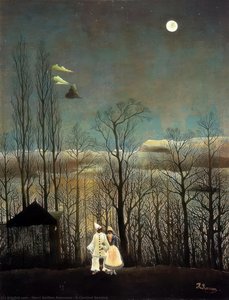
henri emilien rousseau
1875 - 1933
Quick Facts
- Artistic Movement Or Style: Naive Art
- Artists Or Movements Influenced By This Artist: ['Symbolism']
- Artists Who Influenced This Artist:
- Gustave Moreau
- Pierre Puvis de Chavannes
- Date Of Birth: 1875
- Full Name: Henri Émile Rousseau
- Nationality: French
- Notable Artworks:
- A Carnival Evening
- War or The Ride of Discord
- Fantasia de mariage
- Place Of Birth: Nancy, France

