 Preview
 Send
Send Share
Share
 Details

 Download
 Similars
 X-Ray
X-Ray Diaporama
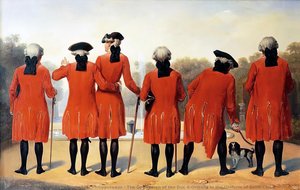
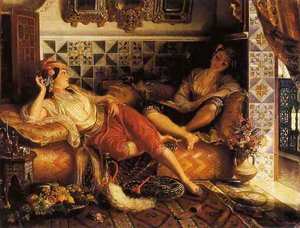
The Arab Scouts
 Read More
Hand Made Oil Reproduction
Hand-painted oil on canvas in your size and frame, made to order by our artists. ( Buy Print Buy Image)




































Pick from our preset sizes that match the artwork's original proportions.

You may enter your own dimensions to fit a specific frame or space. If your selected size does not match the original image's proportions, we will either crop the artwork or extend the painting with additional hand-painted elements. A digital mockup will be sent for your approval before production begins.
Please note that the on-screen preview does not reflect the actual cropping or extension. Only the mockup will accurately show the final composition.
While custom sizes are available, we recommend selecting a dimension from the predefined list to preserve the original proportions.
After order, ArtsDot.com team will email client for instructions and provide a mockup preview
Worldwide Delivery () in 3/4 weeks instead of standard 5 weeks. (24 August). No compromise on quality.

Free Worldwide Express Shipping

High-Quality Linen Canvas

Full Shipping Insurance

Customs Tax Refund Guarantee

True Color Matching Guarantee

60-Day Return Policy (Defects Only)

100% Money-Back Guarantee

Bulk Discount Offer
 Glass option is only available in size under 110 CM

The Arab Scouts
Reproduction Medium
Reproduction Size
-


Total Price
$ 263
Related Artworks










Artist Biography
Adolph Menzel: A Chronicle of 19th-Century Germany
Born in 1815, Adolph Menzel’s life and career were inextricably linked to the burgeoning artistic landscape of 19th-century Germany. Initially destined for a military career, his innate talent for drawing led him towards painting, a path he pursued with unwavering dedication and a unique, almost documentary realism. Menzel wasn't merely an artist; he was a keen observer of society, meticulously documenting the lives of ordinary people and significant historical events through his powerful canvases. His work offers a fascinating glimpse into the social, political, and cultural currents shaping Europe during this transformative era.
Menzel’s early artistic development was profoundly influenced by the Royal Academy in London, where he spent several formative years studying under Sir Thomas Lawrence. This exposure to British portraiture instilled in him a rigorous approach to technique and composition – a foundation that would later inform his own distinctive style. However, Menzel quickly rejected the idealized conventions of academic art, seeking instead to capture the essence of his subjects with unflinching honesty. He was particularly drawn to the works of history painters like David, but he deliberately moved away from grand historical narratives, focusing instead on scenes of everyday life and contemporary events.
- Early Works (1830s-1840s): Menzel’s early paintings, such as *The Battle of Wunna* (1845), demonstrate his growing mastery of composition and his ability to convey the drama of battle. These works, though technically impressive, already reveal a critical distance from traditional heroic depictions of warfare.
- Social Commentary: A defining characteristic of Menzel’s oeuvre is his commitment to social commentary. He frequently depicted scenes of poverty, injustice, and political unrest, offering a starkly realistic portrayal of the lives of the working class and marginalized communities.
- The Roman Baths (1839-1842): This monumental work, commissioned for the Berlin Museum, stands as perhaps Menzel’s most ambitious undertaking. It showcases his meticulous attention to detail, his ability to render complex architectural spaces with remarkable accuracy, and his talent for capturing the atmosphere of a bygone era.
Delacroix's Shadow: A Shared Romantic Vision
Eugène Delacroix’s influence on Adolph Menzel is undeniable, though their artistic approaches differed significantly. Both artists were considered leading figures within the Romantic movement, yet Menzel approached Romanticism with a more restrained and analytical sensibility than his predecessor. Delacroix's passionate brushwork and dramatic compositions served as an initial inspiration for Menzel, particularly in his early depictions of historical events. However, Menzel quickly developed his own distinct style, characterized by a meticulous attention to detail, a cool palette, and a focus on capturing the psychological nuances of his subjects.
Menzel’s fascination with Delacroix extended beyond mere stylistic imitation. He deeply admired Delacroix's willingness to challenge academic conventions and depict contemporary life with unflinching honesty. Notably, Menzel posed for Delacroix’s monumental painting *The Raft of the Medusa* (1819), a gesture that underscored their shared commitment to artistic innovation. This connection is further evidenced by Menzel’s own depictions of historical events – such as *The Massacre at Scio* (1824) – which, while retaining a degree of theatricality, are grounded in meticulous observation and psychological realism.
- Delacroix's Influence: The dynamism and emotional intensity of Delacroix’s paintings initially inspired Menzel’s own approach to historical painting.
- A Divergent Path: However, Menzel ultimately developed a more restrained and analytical style, prioritizing accuracy and psychological depth over dramatic spectacle.
The Roman Empire Revisited: A Masterclass in Detail
Menzel’s *The Roman Baths* (1839-1842) remains the centerpiece of his artistic legacy—a monumental achievement that cemented his reputation as one of Germany's foremost painters. Commissioned for the Berlin Museum, this vast canvas depicts a bustling scene within the ancient Roman baths at Bath, England. The painting is not merely a historical record; it’s a meticulously constructed tableau of social interaction, architectural grandeur, and everyday life.
Menzel spent years researching the subject, consulting archaeological reports, architectural drawings, and even visiting the actual site in Bath. This dedication to accuracy is evident in every detail—from the intricate mosaics adorning the walls to the varied clothing and hairstyles of the bathers. The painting’s scale – measuring over 12 feet by 18 feet – further enhances its immersive quality, transporting the viewer back in time to experience the sights, sounds, and smells of a Roman bathing complex.
- Extensive Research: Menzel's meticulous research process involved consulting numerous sources to ensure historical accuracy.
- Monumental Scale: The painting’s immense size creates an immersive viewing experience.
- A Tableau of Life: *The Roman Baths* offers a detailed portrayal of social life, architecture, and daily routines in ancient Rome.
Legacy and Historical Significance
Adolph Menzel died in 1870, leaving behind a vast and complex body of work that continues to fascinate art historians and viewers alike. His paintings are valued not only for their technical brilliance but also for their social commentary and their unflinching portrayal of the realities of 19th-century life. Menzel’s commitment to realism—particularly his ability to capture the psychological nuances of his subjects—established him as a pivotal figure in German art, bridging the gap between academic tradition and the burgeoning spirit of Romanticism.
His work served as a powerful critique of social inequality and political injustice, reflecting the anxieties and tensions of a rapidly changing Europe. Menzel’s legacy extends beyond his individual achievements; he helped to shape the course of German art history, paving the way for future generations of artists who sought to capture the complexities of their time with honesty and insight. His meticulous documentation of everyday life offers a valuable window into the past, reminding us of the enduring relevance of social observation and artistic engagement.
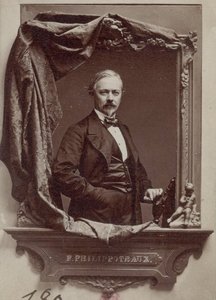
henri félix emmanuel philippoteaux
1815 - 1884 , France
Quick Facts
- Artistic Movement Or Style: Portraiture, History painting
- Artists Or Movements Influenced By This Artist: ["Copley's work influenced later portraitists."]
- Artists Who Influenced This Artist:
- Gros
- Delaroche
- Date Of Birth: July 3, 1738
- Date Of Death: September 9, 1815
- Full Name: John Singleton Copley
- Nationality: American
- Notable Artworks:
- Watson and the Shark
- John Copley, 1st Baron Lyndhurst
- Place Of Birth: Boston, Massachusetts