 Preview
 Send
Send Share
Share
 Details

 Download
 Similars
 X-Ray
X-Ray Diaporama
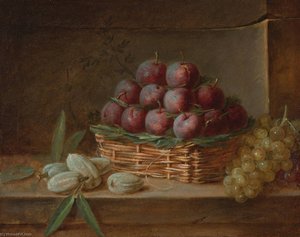
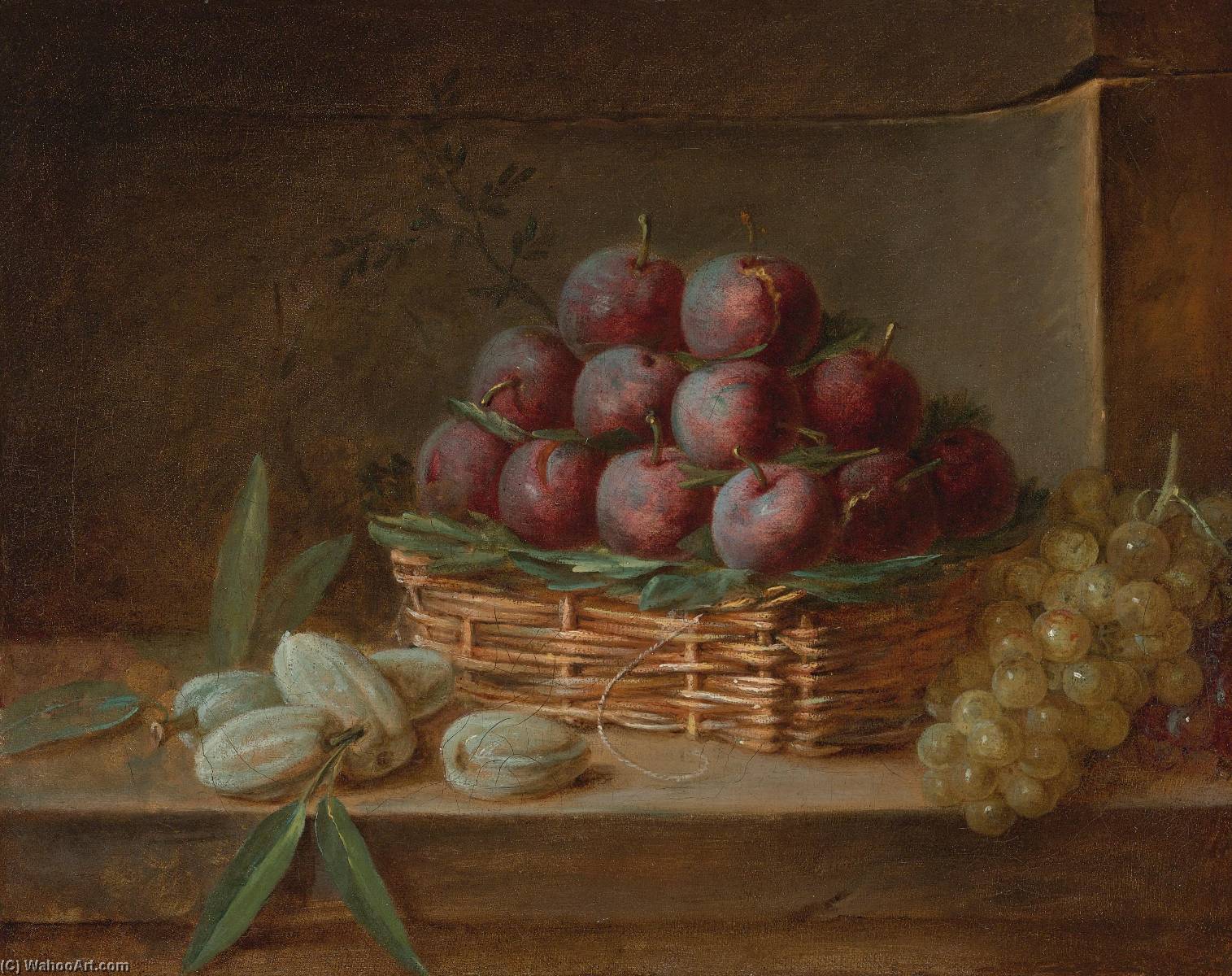
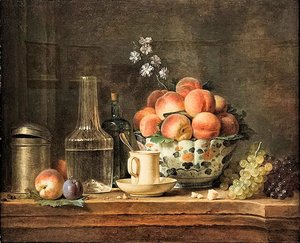
Still Life with Plums, Almonds and Raisins
 33.0 x 41.0 cm
 Read More
Hand Made Oil Reproduction
Hand-painted oil on canvas in your size and frame, made to order by our artists. ( Buy Print Buy Image)




































Pick from our preset sizes that match the artwork's original proportions.

You may enter your own dimensions to fit a specific frame or space. If your selected size does not match the original image's proportions, we will either crop the artwork or extend the painting with additional hand-painted elements. A digital mockup will be sent for your approval before production begins.
Please note that the on-screen preview does not reflect the actual cropping or extension. Only the mockup will accurately show the final composition.
While custom sizes are available, we recommend selecting a dimension from the predefined list to preserve the original proportions.
After order, ArtsDot.com team will email client for instructions and provide a mockup preview
Worldwide Delivery () in 3/4 weeks instead of standard 5 weeks. (31 August). No compromise on quality.

Free Worldwide Express Shipping

High-Quality Linen Canvas

Full Shipping Insurance

Customs Tax Refund Guarantee

True Color Matching Guarantee

60-Day Return Policy (Defects Only)

100% Money-Back Guarantee

Bulk Discount Offer
 Glass option is only available in size under 110 CM

Still Life with Plums, Almonds and Raisins
Reproduction Medium
Reproduction Size
-


Total Price
$ 263
Related Artworks







Artist Biography
Henri-Horace Roland de la Porte: A Master of Quiet Elegance
Henri-Horace Roland de la Porte (c. 1724 – November 23, 1793) remains a quietly significant figure in the history of French still life painting. Often overshadowed by his more flamboyant contemporaries, De La Porte’s work possesses a subtle grace and meticulous observation that reveals a profound understanding of light, texture, and the inherent beauty within everyday objects. Born in Paris, he initially trained under Jean-Baptiste Oudry, a master known for his depictions of exotic animals and vibrant floral arrangements – an influence readily apparent in his early works. However, De La Porte quickly developed a distinct style, one characterized by a restrained palette, carefully considered compositions, and a remarkable ability to imbue seemingly mundane subjects with a sense of quiet dignity.
His artistic journey was marked by acceptance into the Royal Academy of Painting and Sculpture in 1763, where he presented his “reception piece,” *Vase de lapis orné de bronze et musette à soufflet* (1763). This ambitious work, now housed in the Louvre Museum, immediately established him as a skilled painter capable of rendering complex textures and intricate details. It showcased his burgeoning talent for trompe-l’œil – creating illusions of three-dimensional objects on a two-dimensional surface – a technique he would continue to refine throughout his career. The painting itself, a lavish display of lapis lazuli, bronze, and musical instruments, exemplifies De La Porte's fascination with luxurious materials and the interplay of light and shadow.
The Language of Still Life
De La Porte’s still lifes are not merely arrangements of objects; they are carefully constructed narratives. He meticulously studied the principles of composition, employing techniques borrowed from classical architecture to create balanced and harmonious scenes. A key element in his work is the use of equilateral triangles – a compositional device frequently observed in his paintings, as seen in works like *Nature morte aux instruments de musique* (1765) and *Apprêts d’un déjeuner rustique*. Within these triangular frameworks, repeated shapes and colors subtly reinforce each other, generating a sense of visual unity. He skillfully manipulated light to highlight specific elements within the composition, drawing the viewer's eye to key details – a glistening grape, a delicate porcelain cup, or the polished surface of a musical instrument.
Furthermore, De La Porte’s approach was deeply influenced by Chardin, whose quiet realism and focus on everyday objects resonated with the artist. Like Chardin, De La Porte sought to capture the essence of his subjects through subtle gestures and carefully observed details. His brushwork is notably dry and precise, reflecting a meticulous attention to surface texture – the sheen of polished silver, the rough grain of wood, or the delicate folds of fabric. This painstaking detail elevates even the simplest objects into works of art.
Musical Instruments and Everyday Objects
A defining characteristic of De La Porte’s oeuvre is his fascination with musical instruments. He produced numerous still lifes depicting violins, cellos, harpsichords, and other instruments, often arranged in intimate settings alongside food and drink. These paintings are not simply depictions of objects; they evoke a sense of leisure, refinement, and the pleasures of the table. The inclusion of musical instruments suggests an appreciation for beauty, harmony, and the pursuit of artistic expression – values that were highly valued during the 18th century.
Alongside his celebrated depictions of musical instruments, De La Porte also painted a wide range of everyday objects: fruit bowls overflowing with seasonal produce, stacks of bread and cheese, and arrangements of tableware. These works demonstrate his ability to find beauty in the ordinary, transforming simple items into subjects worthy of artistic contemplation. His *Nature morte au potiron et aux champignons* (Still Life with Pumpkin and Mushrooms) exemplifies this talent, showcasing a rustic charm and an appreciation for the bounty of nature.
Legacy and Historical Context
Despite his considerable skill and consistent output, De La Porte’s work received relatively little recognition during his lifetime. His style, characterized by its restraint and subtlety, contrasted with the more flamboyant tendencies of other still life painters of the era. However, in recent decades, scholars have increasingly recognized De La Porte's unique contribution to French painting. His meticulous observation, masterful use of light and shadow, and profound understanding of composition have earned him a place among the most important artists of the 18th century.
De La Porte’s career coincided with significant social and political changes in France. The Enlightenment emphasized reason, science, and individual expression – values that found their way into his art. His paintings reflect a desire to capture the beauty of the natural world and the pleasures of everyday life, offering a counterpoint to the grandeur and excess of the aristocracy. His work serves as a poignant reminder of the quiet elegance and understated grace that can be found in the most unexpected places.
henri horace roland de la porte
1724 - 1793 , France
Quick Facts
- Artistic Movement Or Style: Still life, Trompe-l'œil
- Artists Or Movements Influenced By This Artist: ['Jean Siméon Chardin']
- Artists Who Influenced This Artist: ['Jean-Baptiste Oudry']
- Date Of Birth: c. 1724
- Date Of Death: 1793
- Full Name: Henri-Horace Roland Delaporte
- Nationality: French
- Notable Artworks:
- Vase of Lapis
- Nature morte à la vielle
- Basket of Eggs
- Place Of Birth: Paris, France