 Preview
 Send
Send Share
Share
 Details

 Download
 Similars
 X-Ray
X-Ray Diaporama
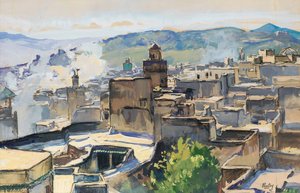
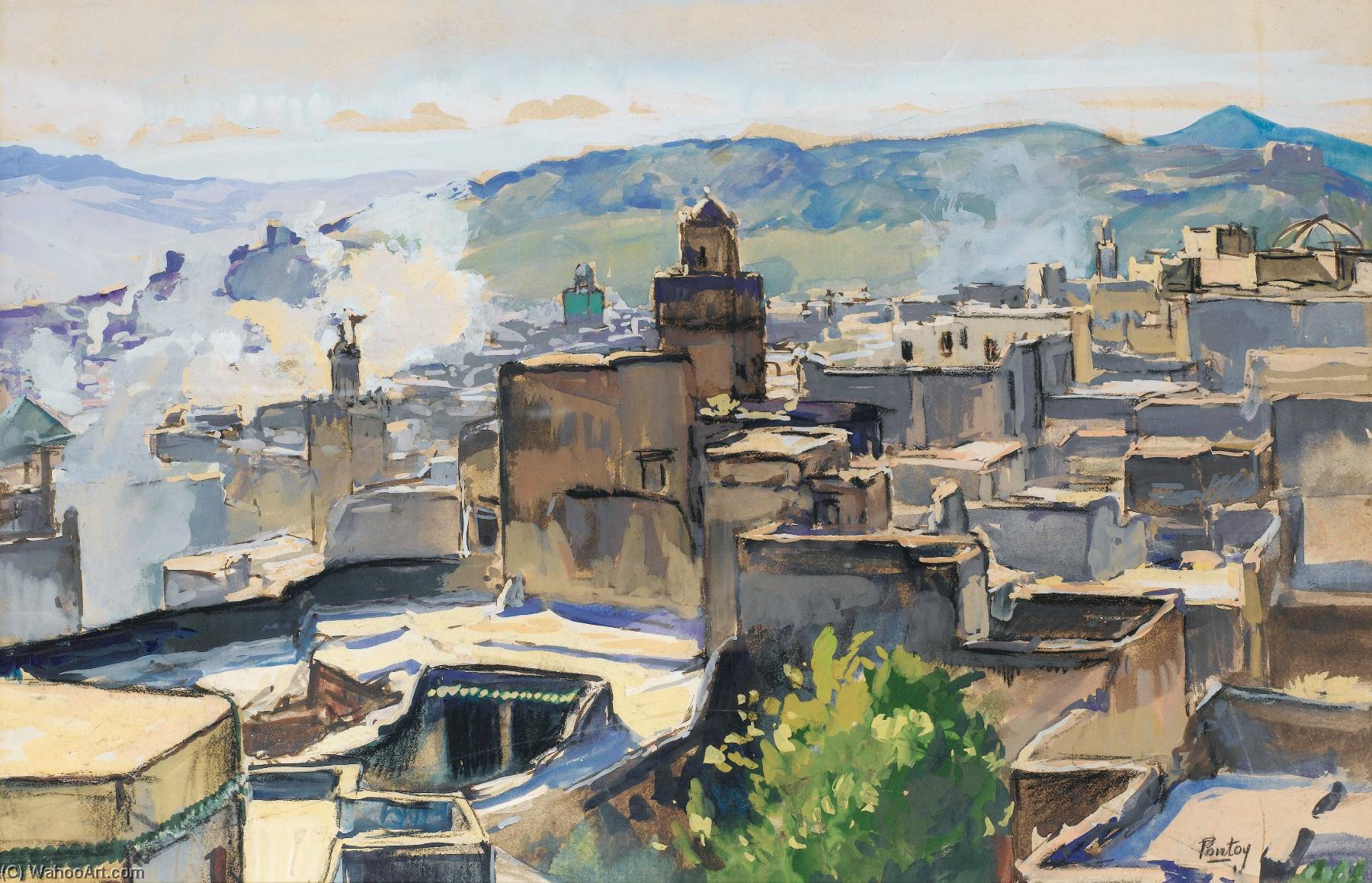
Vue des toits de fez, Maroc
 Read More
Giclée / Art Print
Museum-quality giclée or canvas print with fast production and flexible finish options. ( Buy Hand Made Painting Buy Image)




































Pick from our preset sizes that match the artwork's original proportions.

You may enter your own dimensions to fit a specific frame or space. If your selected size does not match the original image's proportions, we will either crop the artwork or extend the image with a mirrored or solid-fill edge. A digital mockup will be sent for your approval before production begins.
Please note that the on-screen preview does not reflect the actual cropping or extension. Only the mockup will accurately show the final composition.
While custom sizes are available, we recommend selecting a dimension from the predefined list to preserve the original proportions.
Worldwide Delivery () in 2 weeks instead of standard 4/5 weeks. (27 August)

Free Worldwide Express Shipping

High-Quality Linen Canvas

Full Shipping Insurance

Customs Tax Refund Guarantee

True Color Matching Guarantee

60-Day Return Policy (Defects Only)

100% Money-Back Guarantee

Bulk Discount Offer
 Glass option is only available in size under 110 CM

Vue des toits de fez, Maroc
Giclée / Art Print
Reproduction Size
-


Total Price
$ 63
Related Artworks









Artist Biography
The Luminous Legacy of Henri Jean Pontoy
To wander through the canvases of Henri Jean Pontoy is to embark on a sensory journey across the sun-drenched landscapes of North Africa, where the heat of the desert and the vibrant pulse of the marketplace feel almost tangible. Born in 1888 in Cherbourg, Normandy, Pontoy’s early life was rooted in the temperate landscapes of France, yet his artistic soul was destined for the brilliant light of the Maghreb. While his beginnings remain somewhat shrouded in the quietude of provincial France, his innate talent for drawing served as the foundation for a career that would eventually bridge the gap between European academic tradition and the evocative spirit of Orientalism.
His formal education at the École Supérieure des Beaux-Arts in Paris provided him with a rigorous command of classical principles, yet Pontoy was never one to be confined by the rigid boundaries of academic realism. Instead, he allowed his brush to be guided by the burgeoning currents of Impressionism and Post-Impressionism. From masters like Monet and Renoir, he inherited a profound fascination with the ephemeral nature of light and the way atmosphere can transform a landscape. This stylistic evolution allowed him to move beyond mere topographical recording, instead seeking to capture the very essence of the environments he inhabited.
A Life Immersed in the Maghreb
The true metamorphosis of Pontoy’s artistry occurred during his extended sojourns in Algeria and Morocco between 1908 and 1934. This period was not merely a chapter of travel, but a profound immersion into a new cultural and visual reality. As he traversed the Atlas Mountains, explored lush oases, and navigated the bustling, rhythmic chaos of the souks, his palette expanded to include the searing ochres, deep terracities, and brilliant azures of the North African terrain. His work became a prolific chronicle of a colonial era, documenting over 250 paintings that serve as both art and historical witness.
Pontoy’s connection to the region was deeply personal; his later years saw him settling in Fez, Morocco, where he continued to draw inspiration from the daily rhythms of the local inhabitants. His ability to render the textures of Moroccan life—the intricate patterns of a marketplace or the tranquil stillness of a desert caravan—demonstrates a deep empathy for his subjects. He did not merely observe the Orient from a distance; he sought to translate its soul through a technique that balanced academic precision with expressive, fluid brushwork.
Artistic Mastery and Historical Resonance
The significance of Pontoy’s contribution to the art world extends beyond his beautiful landscapes. His participation in the prestigious painting event at the 1924 Summer Olympics highlights his standing within the international artistic community of his time. His work stands as a vital link in the tradition of Orientalist painting, yet it avoids the purely exoticized tropes of the genre by infusing his scenes with a genuine atmospheric truth and emotional depth.
Today, the works of Henri Jean Pontoy remain cherished for their ability to transport the viewer across time and geography. His legacy is defined by several key artistic pillars:
- The Mastery of Light: A lifelong pursuit of capturing the fleeting, transformative effects of sunlight on desert sands and urban architecture.
- Cultural Documentation: An unparalleled visual record of Algerian and Moroccan landscapes and social customs during the early 20th century.
- Stylistic Synthesis: The seamless blending of French academic training with the emotive, color-driven techniques of Post-Impressionism.
- Emotional Resonance: A unique ability to imbue even the most tranquil vistas with a sense of movement, life, and historical weight.
As we look back upon his prolific career, Pontoy emerges not just as a painter of landscapes, but as a poet of light, whose brushstrokes continue to breathe life into the golden memories of a vanished era.
henri jean pontoy
1888 - 1968
Quick Facts
- Artistic Movement Or Style: Orientalist Painting
- Artists Or Movements Influenced By This Artist: ['Impressionism']
- Artists Who Influenced This Artist: ['Gustave Moreau']
- Date Of Birth: 1888
- Date Of Death: 1968
- Full Name: Henri Jean Pontoy
- Nationality: French
- Notable Artworks:
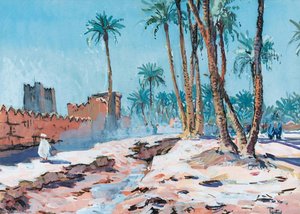
- Les remparts à Marrakech
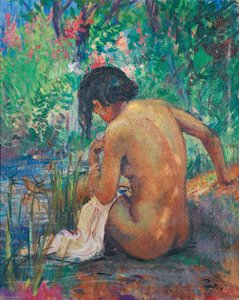
- Nu aux lauriers roses
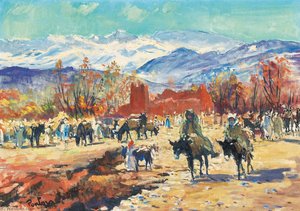
- Scène de marché au pied de l'Atlas
- Place Of Birth: Cherbourg