

 Preview
 Send
Send Share
Share
 Details

 Download
 Similars
 X-Ray
X-Ray Diaporama
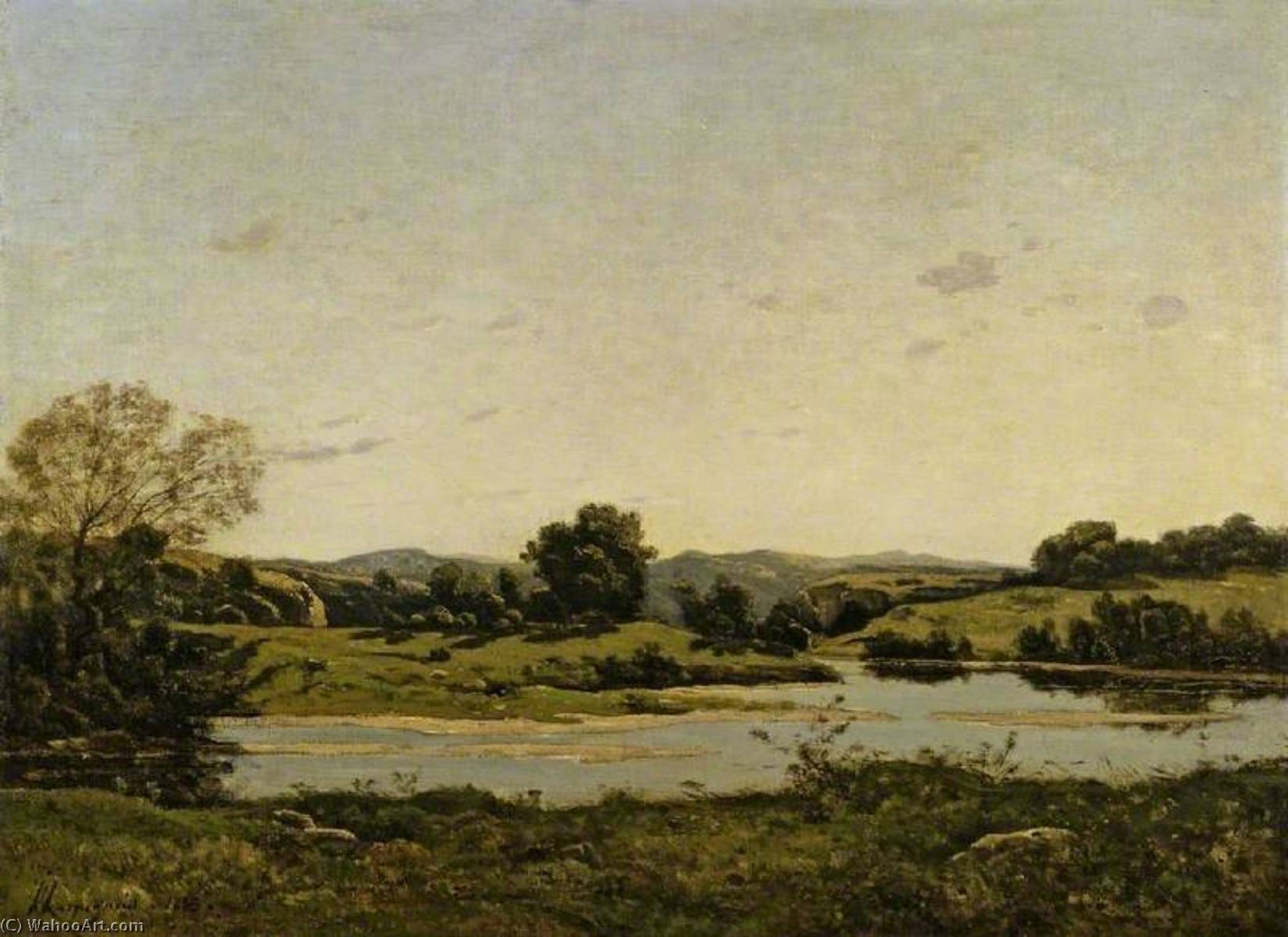
On the Banks of the Oise
 Acrylic On Canvas
- WallArt
- Barbizon Landscape Painting
 1883
1883 60.0 x 82.0 cm
 Fitzwilliam College
 Read More
Purchase a high-resolution, enhanced digital image, far superior to the online preview.
Each file is meticulously prepared by our in-house specialists using advanced tools and expert manual retouching. We ensure every image has exceptional clarity, precise color accuracy, and fine detail.
The final file is delivered via email within 72 hours, optimized for immediate use in professional, editorial, and print environments. This is the same quality trusted by top-tier design studios, publishers, and galleries.
Digital Image
Download a high-resolution file for personal display, printing, and creative projects. ( Buy Print Buy Hand Made Painting)
Included in Every Digital Image Order
Expert Digital Delivery, Guaranteed
When you choose ArtsDot.com, you're not just getting an image - you're receiving a professionally enhanced digital artwork, crafted with precision and backed by a satisfaction guarantee. Here's everything that comes with your order, automatically:

Fast Email Delivery
Your high-resolution digital image file will be emailed to you within 72 hours of ordering - ready for immediate use.

AI-Enhanced Digital File
Your artwork is professionally optimized using advanced AI tools and manual editing, ensuring maximum detail, clarity, and color accuracy.

Free Lifetime Re-Delivery
Accidentally deleted or lost your file? No worries - we'll resend it to you anytime, free of charge.

No Import Fees - Ever
Enjoy your artwork instantly with zero customs, duties, or delivery fees - digital downloads are always tax-free.

Color Accuracy Guarantee
We ensure your digital image reflects the original colors as closely as possible using professional tools and color management.

60-Day Satisfaction Guarantee
If you're not satisfied with your digital image, we'll revise it or refund 100% within 60 days - no questions asked.

100% Money-Back Guarantee
Not satisfied? Get a full refund within 60 days of receiving your digital file - no questions asked.

Bulk Order Discounts
Buy 3 images, save 10% - Buy 5, save 15% - Buy 10+, save 20%. Great for creative projects, galleries, and agencies.
Collectible Description
A Symphony of Tranquility: Henri-Joseph Harpignies’ “On the Banks of the Oise”
The painting "On the Banks of the Oise," completed in 1883 by Henri-Joseph Harpignies, stands as a quintessential embodiment of Barbizon landscape artistry—a movement that championed direct observation and tonal harmony to capture the essence of rural France. More than just a depiction of scenery, it’s an invitation into a realm of serene contemplation, reflecting Harpignies' profound connection with the natural world and his unwavering dedication to portraying its subtle beauty.The Barbizon Spirit: Impressionistic Roots
Born in Valenciennes in 1819, Harpignies initially faced familial pressure toward a conventional profession; however, his artistic inclination prevailed. Influenced by luminism—the precursor to Impressionism—Harpignies adopted a technique characterized by muted colors and broad brushstrokes that prioritized atmospheric effects over precise detail. Unlike the meticulous realism favored by earlier Romantic painters, Harpignies sought to convey not merely what he saw but how it *felt*. This approach aligns perfectly with the Barbizon School’s core philosophy: to depict nature as it appeared to the eye, unfiltered by intellectual preconceptions. Jean-Baptiste-Camille Corot, Harpignies' mentor and fellow Barbizon painter, instilled in him a belief that art should serve as a conduit for experiencing the sublime—the awe-inspiring grandeur of God’s creation.Detailed Observation: The Canvas Speaks Volumes
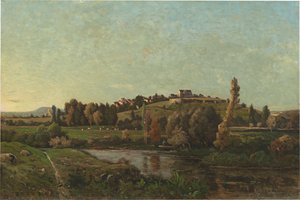
The painting itself presents a captivating vista overlooking the Oise River valley. Lush green meadows stretch towards distant mountains, bathed in soft sunlight. Harpignies meticulously rendered the textures of grass and foliage using layering techniques – applying thin glazes over thicker underpaintings—resulting in remarkable tonal gradation. This masterful manipulation of color creates an illusion of depth and luminosity, transporting the viewer to the tranquil scene depicted. The artist’s keen eye for detail is evident in the depiction of numerous birds scattered across the meadow; their presence adds a dynamic element to the composition while simultaneously reinforcing the painting's overarching theme of harmony with nature.Symbolism Beneath Surface Calm
Beyond its visual splendor, “On the Banks of the Oise” carries symbolic weight. The river itself represents fluidity and renewal—themes frequently explored by Barbizon artists—suggesting a timelessness that transcends the specific moment captured on canvas. The mountains serve as anchors to the landscape, symbolizing stability and permanence alongside the ephemeral beauty of springtime blossoms. Harpignies’ deliberate choice of subject matter speaks to the Romantic preoccupation with capturing idealized visions of rural life – a reaction against the industrialization and urbanization of the era.A Legacy of Tranquility
Today, reproductions of “On the Banks of the Oise” continue to inspire collectors and interior designers alike. Its understated elegance and masterful execution exemplify the enduring appeal of Barbizon landscape painting—a testament to Harpignies’ ability to distill the profound emotional resonance of nature into a single, unforgettable image. It remains a poignant reminder that true beauty resides not in ostentation but in quiet contemplation – a sentiment perfectly encapsulated within this timeless masterpiece.Related Artworks

Artist Biography
Henri-Joseph Harpignies: A Life in Landscape
Early Life and Training
Born on June 28, 1819, in Valenciennes, France, Henri-Joseph Harpignies initially faced parental expectations to pursue a business career. However, his passion for art proved too strong to ignore. Of Belgian origin, his family’s initial plans were set aside as he dedicated himself to becoming an artist. At the age of twenty-seven, he formally began his artistic training in Paris, entering the atelier of Jean Achard. This foundational period focused on developing solid draughtsmanship skills – a crucial element that would remain central to Harpignies’ work.
The Barbizon School and Italian Influence
After two years under Achard's tutelage, Harpignies embarked on a pivotal journey to Italy in 1848. This experience profoundly shaped his artistic vision. Upon his return in 1850, he became acquainted with the leading figures of the Barbizon School, including Jean-Baptiste-Camille Corot. The Barbizon painters’ emphasis on direct observation of nature and their realistic portrayal of rural life deeply resonated with Harpignies. In 1860, he further cemented his artistic connection with Corot through a collaborative trip back to Italy.
Artistic Development and Style
Harpignies’ style is characterized by its serene and idyllic depictions of the French countryside. He masterfully captured the subtle nuances of light and atmosphere, creating landscapes that evoke a sense of tranquility and harmony. His technique involved careful observation combined with a refined understanding of composition. While influenced by the Barbizon School's realism, Harpignies developed his own distinct voice, often incorporating a poetic sensibility into his work.
Notable Works
- Soir sur les bords de la Loire (Evening on the Banks of the Loire) – 1861: A quintessential example of his atmospheric landscapes, showcasing the beauty of the Loire Valley.
- Les corbeaux (The Ravens) – 1865: Demonstrates his skill in capturing mood and detail within a natural setting.
- Le soir (Evening) – 1866: A captivating portrayal of the quiet beauty of dusk.
- La loire (The Loire) – 1882: Another stunning depiction of the Loire River, highlighting his mastery of light and water.
- Vue de Saint-Privé (View of Saint-Privé) – 1883: A picturesque scene showcasing a charming French village.
Legacy and Influence
Harpignies’ artistic legacy extends beyond his own paintings. He was a dedicated teacher, imparting his knowledge and skills to numerous students, including Émile Appay (1876-1935) and James Wilson Morrice (1865-1924). His influence can be seen in the development of French landscape painting throughout the late 19th and early 20th centuries. He helped to solidify the Barbizon School’s impact on subsequent generations of artists.
Historical Significance
Henri-Joseph Harpignies occupies an important place in the history of French landscape painting. His work reflects a deep appreciation for nature and a commitment to capturing its beauty with honesty and sensitivity. He died in 1916, leaving behind a rich artistic legacy that continues to inspire and captivate audiences today. His paintings are held in prominent museum collections, including the Musée des Beaux-Arts Valence, ensuring his enduring recognition as a master of landscape art.
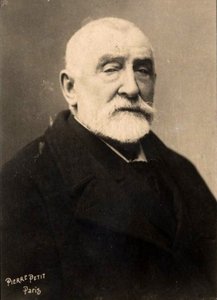
Henri-Joseph Harpignies
1819 - 1916 , France
Quick Facts
- Birth Date: June 28, 1819
- Birth Place: Valenciennes, France
- Death Date: 1916
- Influenced:
- Émile Appay
- James Wilson Morrice
- Influenced By: Jean-Baptiste-Camille Corot
- Movement: Barbizon School
- Name: Henri-Joseph Harpignies
- Nationality: French
- Notable Works:
- Soir sur les bords de la Loire
- Les corbeaux
- Le soir
- La loire
- Vue de Saint-Privé

