

 Preview
 Send
Send Share
Share
 Details

 Download
 Similars
 X-Ray
X-Ray Diaporama
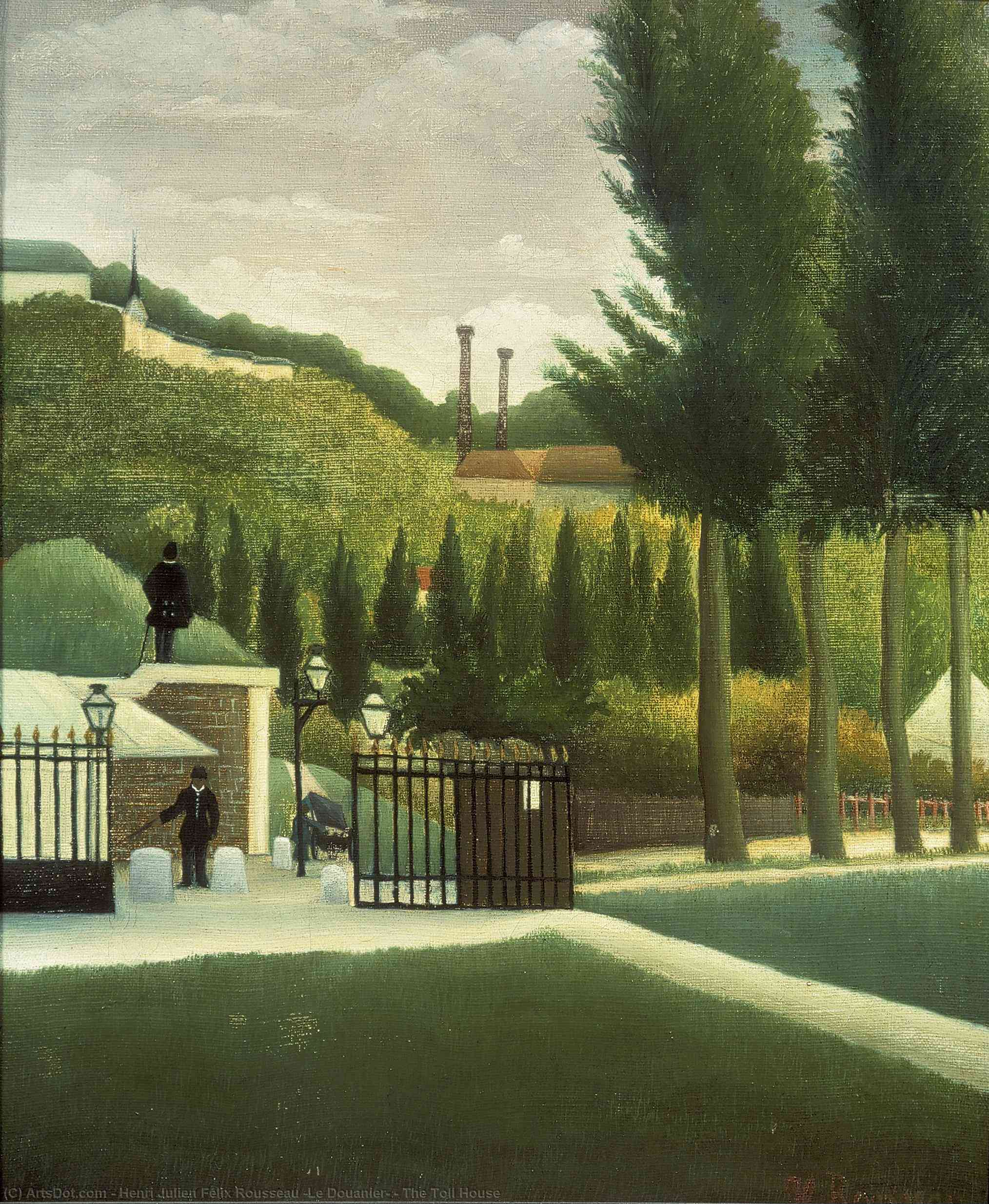
The Toll House
 Oil On Canvas
- WallArt
- Naïve Art
 1890
1890- 19th Century
 32.0 x 40.0 cm
 Read More
Purchase a high-resolution, enhanced digital image, far superior to the online preview.
Each file is meticulously prepared by our in-house specialists using advanced tools and expert manual retouching. We ensure every image has exceptional clarity, precise color accuracy, and fine detail.
The final file is delivered via email within 72 hours, optimized for immediate use in professional, editorial, and print environments. This is the same quality trusted by top-tier design studios, publishers, and galleries.
Digital Image
Download a high-resolution file for personal display, printing, and creative projects. ( Buy Print Buy Hand Made Painting)
Included in Every Digital Image Order
Expert Digital Delivery, Guaranteed
When you choose ArtsDot.com, you're not just getting an image - you're receiving a professionally enhanced digital artwork, crafted with precision and backed by a satisfaction guarantee. Here's everything that comes with your order, automatically:

Fast Email Delivery
Your high-resolution digital image file will be emailed to you within 72 hours of ordering - ready for immediate use.

AI-Enhanced Digital File
Your artwork is professionally optimized using advanced AI tools and manual editing, ensuring maximum detail, clarity, and color accuracy.

Free Lifetime Re-Delivery
Accidentally deleted or lost your file? No worries - we'll resend it to you anytime, free of charge.

No Import Fees - Ever
Enjoy your artwork instantly with zero customs, duties, or delivery fees - digital downloads are always tax-free.

Color Accuracy Guarantee
We ensure your digital image reflects the original colors as closely as possible using professional tools and color management.

60-Day Satisfaction Guarantee
If you're not satisfied with your digital image, we'll revise it or refund 100% within 60 days - no questions asked.

100% Money-Back Guarantee
Not satisfied? Get a full refund within 60 days of receiving your digital file - no questions asked.

Bulk Order Discounts
Buy 3 images, save 10% - Buy 5, save 15% - Buy 10+, save 20%. Great for creative projects, galleries, and agencies.
Collectible Description
A Serene Encounter in Naive Masterpiece
In the quiet, sun-dappled corners of art history, few works possess the enchanting simplicity of The Toll House by Henri Julien Félix Rousseau. Painted in 1890, this captivating oil on canvas invites the viewer into a world that feels simultaneously familiar and dreamlike. At its heart, the composition centers on a man perched atop a fence before a gate, a figure that commands attention through his singular placement within a lush, verdant landscape. The scene is far from a mere snapshot of daily life; it is a carefully constructed moment of stillness, where the presence of other figures and a solitary umbrella in the lower-left corner add layers of quiet realism to an otherwise whimsical setting. As one gazes upon this work, there is an immediate sense of peace, as if the frantic pace of the modern world has been momentarily suspended by the artist's brush.
The magic of The Toll House lies in its profound connection to the Naïve Art movement, a style that Rousseau pioneered with unparalleled charm. Eschewing the complex anatomical precision and dramatic chiaroscuro of his contemporaries, Rousseau embraced a technique defined by flat perspectives, simplified forms, and a bold, vibrant palette. His brushstrokes, though seemingly straightforward, possess a rhythmic quality that breathes life into the surrounding trees and garden elements. This approach creates a unique sense of depth that does not rely on traditional vanishing points but rather on the layering of color and shape, making the painting feel like a window into a beautifully curated folk tale. For the collector or interior designer, this technique offers a refreshing visual texture that complements both classical and contemporary spaces.
Beyond its aesthetic appeal, the painting serves as a poignant reflection of Rousseau’s own life and his unique perspective on the world. Known affectionately as Le Douanier due to his career as a customs officer, Rousseau brought an observant, almost meditative eye to his subjects. The gate and the fence in this work act as symbolic thresholds between the structured world of human commerce and the untamed beauty of nature. There is a profound innocence embedded in every leaf and figure, a quality that has inspired generations of modern artists to seek truth in simplicity. To possess a reproduction of this masterpiece is to bring more than just decor into a home; it is to invite an atmosphere of tranquility, nostalgia, and enduring wonder into one's personal sanctuary.
Related Artworks

Artist Biography
Henri Julien Félix Rousseau: A Life in Art
Early Life and Background
- Born on May 21, 1844, in Laval, France, Henri Julien Félix Rousseau led an unconventional life before becoming a renowned artist.
- His early years were marked by modest circumstances; his father was a tinsmith, and Rousseau himself worked various jobs throughout his youth.
- He received some formal education, showing aptitude for drawing, but ultimately pursued a career as a toll collector – earning him the nickname “Le Douanier” (the customs officer).
- Rousseau served in the military for four years before settling into his role at the Paris octroi, collecting taxes on goods entering the city.
Artistic Development and Style
- Rousseau was largely self-taught as an artist, beginning to paint seriously in his early forties after receiving encouragement from a friend.
- His style is characterized by its naïve or primitive quality, marked by flat perspectives, simplified forms, and vibrant, often unrealistic colors.
- He drew inspiration from botanical gardens, illustrated magazines, and visits to the Jardin des Plantes in Paris, rather than direct observation of nature.
- Rousseau’s paintings often feature lush jungle scenes, exotic animals, portraits, and depictions of everyday life, all rendered with a unique sense of wonder and imagination.
Influences and Artistic Context
- While largely self-taught, Rousseau was aware of the artistic movements of his time – Impressionism and Post-Impressionism – but developed a distinctly personal style that set him apart.
- He admired artists like Eugène Delacroix and drew inspiration from their use of color and exotic subject matter.
- Rousseau’s work predates and anticipates aspects of Surrealism and other early 20th-century avant-garde movements.
Major Works and Achievements
- Some of Rousseau's most celebrated paintings include:
- The Sleeping Gypsy (1897) – a dreamlike depiction of a woman asleep in a jungle setting.
- Tiger in a Tropical Storm (Surprised!) (1891) – showcasing his dramatic use of color and composition.
- Self-Portrait (1890) - A formal portrait showing the artist with a palette and brushes.
- The Carnival Evening (1886) – capturing a festive scene with intricate details.
- He exhibited regularly at the Salon des Indépendants, gaining recognition among fellow artists and gradually attracting critical attention.
Historical Significance and Legacy
- Initially ridiculed by many critics for his unconventional style, Rousseau’s work eventually gained appreciation as a unique expression of artistic vision.
- He became an inspiration to several prominent artists, including Pablo Picasso and other members of the avant-garde movement.
- In 1908, Picasso famously organized “Le Banquet Rousseau,” a celebratory event honoring the artist and acknowledging his influence.
- Rousseau’s paintings continue to captivate audiences today with their dreamlike quality, vibrant colors, and imaginative subject matter.
- His work remains a testament to the power of self-expression and the enduring appeal of naïve art.
Death and Posthumous Recognition
- Henri Rousseau died on September 2, 1910, in Paris.
- His legacy continued to grow after his death, solidifying his place as a significant figure in modern art history.
- Today, his works are displayed in major museums worldwide and continue to inspire artists and art lovers alike.
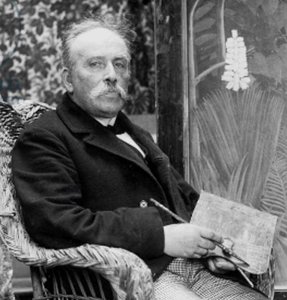
henri julien félix rousseau (le douanier)
1844 - 1910
Quick Facts
- Birth Date: April 17, 1844
- Birth Place: Laval, France
- Death Date: September 2, 1910
- Influenced:
- Vincent van Gogh
- Paul Gauguin
- Influenced By: Impressionist and Post-Impressionist contemporaries
- Movement: Post-Impressionism, Naive art
- Name: Henri Julien Félix Rousseau
- Nationality: French
- Notable Works:
- Sleeping Gypsy
- The Dream
- Carnival Evening
- Tiger in a Tropical Storm
- The Toll House

