

 Preview
 Send
Send Share
Share
 Details

 Download
 Similars
 X-Ray
X-Ray Diaporama
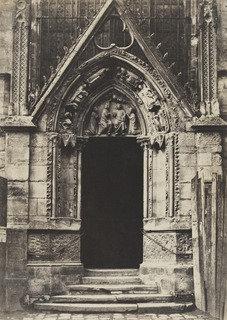
La Porte Rouge, Notre Dame
 1852
1852 32.0 x 23.0 cm
 Read More
Purchase a high-resolution, enhanced digital image, far superior to the online preview.
Each file is meticulously prepared by our in-house specialists using advanced tools and expert manual retouching. We ensure every image has exceptional clarity, precise color accuracy, and fine detail.
The final file is delivered via email within 72 hours, optimized for immediate use in professional, editorial, and print environments. This is the same quality trusted by top-tier design studios, publishers, and galleries.
Digital Image
Download a high-resolution file for personal display, printing, and creative projects. ( Buy Print Buy Hand Made Painting)
Included in Every Digital Image Order
Expert Digital Delivery, Guaranteed
When you choose ArtsDot.com, you're not just getting an image - you're receiving a professionally enhanced digital artwork, crafted with precision and backed by a satisfaction guarantee. Here's everything that comes with your order, automatically:

Fast Email Delivery
Your high-resolution digital image file will be emailed to you within 72 hours of ordering - ready for immediate use.

AI-Enhanced Digital File
Your artwork is professionally optimized using advanced AI tools and manual editing, ensuring maximum detail, clarity, and color accuracy.

Free Lifetime Re-Delivery
Accidentally deleted or lost your file? No worries - we'll resend it to you anytime, free of charge.

No Import Fees - Ever
Enjoy your artwork instantly with zero customs, duties, or delivery fees - digital downloads are always tax-free.

Color Accuracy Guarantee
We ensure your digital image reflects the original colors as closely as possible using professional tools and color management.

60-Day Satisfaction Guarantee
If you're not satisfied with your digital image, we'll revise it or refund 100% within 60 days - no questions asked.

100% Money-Back Guarantee
Not satisfied? Get a full refund within 60 days of receiving your digital file - no questions asked.

Bulk Order Discounts
Buy 3 images, save 10% - Buy 5, save 15% - Buy 10+, save 20%. Great for creative projects, galleries, and agencies.
Related Artworks







Artist Biography
The Sculptor of Light: The Life and Legacy of Henri Le Secq
In the mid-nineteenth century, as the world stood on the precipice of a technological revolution, Jean-Louis-Henri Le Secq des Tournelles emerged as a visionary who would bridge the gap between classical artistry and the dawn of the photographic age. Born in 1818 to an aristocratic Norman family, Le Secq’s early life was steeped in the traditions of French nobility and a profound respect for craftsmanship. His initial training was not behind a lens, but rather in the tactile, three-dimensional world of sculpture. This foundational period in various prestigious ateliers instilled in him a meticulous eye for detail and an intimate understanding of form, texture, and structure—sensibilities that would later define his revolutionary approach to capturing the architectural soul of France.
Le Secq’s artistic journey was profoundly shaped by his early association with the celebrated Romantic painter Paul Delaroche. It was within this atmosphere of grand narratives and emotional depth that Le Secq first encountered the burgeoning possibilities of the daguerreotype. When the French government opened the daguerreotype process to the public in 1839, Le Secq did not merely observe the change; he embraced it. His transition from a painter and sculptor to a pioneer of photography was seamless, driven by a desire to document the vanishing grandeur of France's historical monuments with a precision that no brush could ever achieve.
The Missions Héliographiques and the Architecture of Memory
The true zenith of Le Secq’s career arrived with his appointment to the Commission des Monuments Historiques. As one of only five photographers selected for this monumental undertaking, he became a central figure in the Missions Héliographiques. Alongside luminaries such as Gustave Le Gray and Charles Nègre, Le Secq embarked on expeditions across the French landscape, tasked with a sacred duty: to create a permanent photographic record of the nation's most iconic cathedrals and landmarks. His work during this period focused heavily on the majestic structures of Chartres, Strasbourg, and Reims, where he sought to capture not just the stone and mortar, but the very spirit of medieval France.
Technically, Le Secq was a master of evolution. While he began with the singular, precious images of the daguerreotype, he later mastered the waxed-paper negative process alongside Gustave Le Gray. This advancement allowed for greater flexibility and the creation of multiple prints, enabling a more expansive way to share his visions. Using specialized cameras capable of producing massive large-format prints, sometimes exceeding 51 cm by 74 cm, he captured the intricate Gothic details—the soaring arches, the delicate tracery, and the weathered textures of ancient portals—with an almost sculptural depth. His ability to manipulate light and shadow transformed architectural documentation into a profound form of fine art.
A Lasting Impression on the Photographic Canon
Beyond his technical prowess, Le Secq was a foundational figure in the institutionalization of photography. In 1851, he became one of the founding members of the Société héliographique, the world's first photographic organization. Though the society was short-lived, its impact on the recognition of photography as a legitimate art form was monumental. Even as Le Secq eventually moved away from active photography after 1856 to return to painting and his passion for collecting wrought iron, his influence remained indelible.
In his later years, driven by a poignant fear that his precious negatives might fade into obscurity, Le Secq began reprinting his most significant works as cyanotypes. This decision preserved the haunting, blue-hued beauty of his architectural studies for future generations. Today, we remember Henri Le Secq not merely as a documentarian, but as an artist who used the new language of light to immortalize the stone monuments of history, ensuring that the grandeur of the past would never truly fade from the human eye.
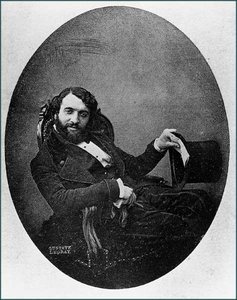
Henri Le Secq
1818 - 1882
Quick Facts
- Artistic Movement Or Style: Realism
- Artists Or Movements Influenced By This Artist: ['Photography']
- Artists Who Influenced This Artist: ['Paul Delaroche']
- Date Of Birth: 18 August 1818
- Date Of Death: 26 December 1882
- Full Name: Jean-Louis-Henri Le Secq des Tournelles
- Nationality: French
- Notable Artworks:
- Portrait of Talbot’s Wife (Constance) or Half-Sister (Caroline or Horatia)
- James Gordon, William Hanna D.D. and ‘Mr. Cowan’
- Windsor Castle From Across The River
- Base of Radcliffe Library, Oxford
- Palace Algeria
- The Tomb of Itimad-ud-Daulah
- Rue Chartière (impasse Chartière) de la rue de Reims
- Electrical Excitation of m. zygomaticus minor and m. corrugator supercilii: Painful Weeping
- Place Of Birth: Paris, France

