 Preview
 Send
Send Share
Share
 Details

 Download
 Similars
 X-Ray
X-Ray Diaporama
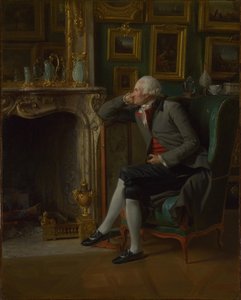
JEAN FRANCOIS DE LA MARCHE


 Read More
Giclée / Art Print
Museum-quality giclée or canvas print with fast production and flexible finish options. ( Buy Hand Made Painting Buy Image)




P118B $10

P118H $10

P118W $10

P438Z $10

P508JH $12

P508YH $12

P805H $10

P805Z $10

P919BZ $10

P919G $10

P919XJ $10

P959ZH $10

P968JZ $12

W106C $8

W218G $10

W218JH $8

W218Y $10

W307PJ $10

W316G $10

W316PJ $8

W316Y $10

W398PJ $8

W4111J $10

W500HY $15

W500JH $15

W692G $12

W849H $8

W940BG $15

W953PJ $8




Pick from our preset sizes that match the artwork's original proportions.

You may enter your own dimensions to fit a specific frame or space. If your selected size does not match the original image's proportions, we will either crop the artwork or extend the image with a mirrored or solid-fill edge. A digital mockup will be sent for your approval before production begins.
Please note that the on-screen preview does not reflect the actual cropping or extension. Only the mockup will accurately show the final composition.
While custom sizes are available, we recommend selecting a dimension from the predefined list to preserve the original proportions.
Worldwide Delivery () in 2 weeks instead of standard 4/5 weeks. (23 August)

Free Worldwide Express Shipping

High-Quality Linen Canvas

Full Shipping Insurance

Customs Tax Refund Guarantee

True Color Matching Guarantee

60-Day Return Policy (Defects Only)

100% Money-Back Guarantee

Bulk Discount Offer
 Glass option is only available in size under 110 CM

JEAN FRANCOIS DE LA MARCHE
Giclée / Art Print
Reproduction Size
-


Total Price
$ 63
Collectible Description
A Window into the Mind of a Bishop
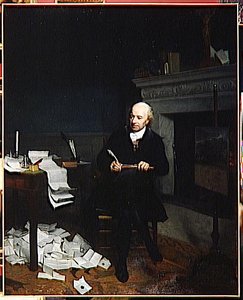
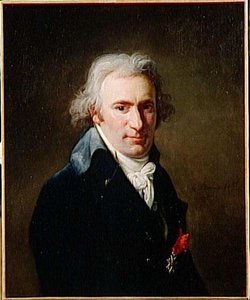
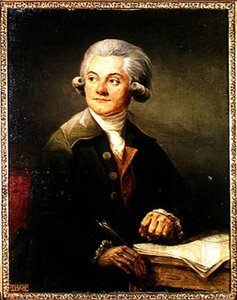
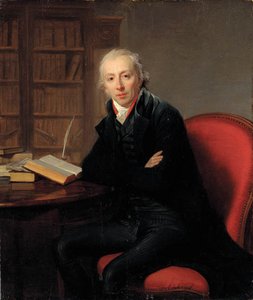
Henri Pierre Danloux’s “Jean François de la Marche” is more than simply a portrait; it's a carefully constructed tableau vivant, offering a rare glimpse into the contemplative world of an elderly bishop. Painted in 1798, during a period of significant social and political upheaval in France – a time marked by both revolutionary fervor and the lingering shadow of aristocratic tradition – the work transcends the conventions of its era to capture a profound sense of intellectual depth and quiet dignity. The subject himself, Jean François de la Marche, was a prominent figure within the Catholic Church, a Bishop known for his administrative skills and dedication to his diocese. Danloux’s brushstrokes don't merely depict a man; they reveal a mind actively engaged in thought, a spirit wrestling with the weight of responsibility and the pursuit of knowledge.
The composition is deliberately restrained, favoring a pyramidal arrangement that anchors the figure within a modestly furnished study. The clutter on the desk – scattered papers, an open book, a quill pen – isn’t haphazard; it speaks to a life devoted to scholarship and administration. These aren't the symbols of opulent leisure but rather the tools of a man deeply immersed in his work, suggesting a tireless dedication to duty and intellectual pursuits. The muted color palette—dominated by browns, grays, and creams—contributes to an atmosphere of quiet contemplation, while subtle highlights – particularly on the shirt collar and the edges of the papers – draw attention to key details and prevent the scene from becoming overly somber.
Neoclassical Precision Meets Romantic Depth
Danloux’s style is firmly rooted in Neoclassicism, a movement that sought to revive the ideals of ancient Greece and Rome. This manifests itself in the meticulous attention to detail, the balanced composition, and the realistic rendering of textures – from the smooth skin of the face to the rough grain of the wooden desk. However, beneath this formal exterior lies a subtle undercurrent of Romanticism. The painting isn’t merely about accurate representation; it's about conveying emotion and capturing the inner life of the subject. Danloux masterfully utilizes chiaroscuro – the dramatic contrast between light and shadow – to sculpt the figure’s face, creating a sense of volume and emphasizing his age and wisdom. The lighting itself seems to emanate from an unseen source, bathing the scene in a soft, diffused glow that reinforces the atmosphere of quiet reflection.
Technically, Danloux demonstrates remarkable skill in his use of brushwork. The strokes are generally smooth and blended, creating a sense of realism and depth. Layering of paint is evident in the depiction of textures – particularly on the papers – adding to the tactile quality of the image. The artist’s ability to capture the subtle nuances of light and shadow, combined with his meticulous attention to detail, results in a portrait that is both visually engaging and emotionally resonant.
Symbolism and the Weight of Responsibility
Beyond its formal qualities, “Jean François de la Marche” is rich in symbolic meaning. The scattered papers on the desk can be interpreted as representing the weight of responsibility – the burdens of leadership and the demands of a complex administrative role. The bishop’s furrowed brow and thoughtful gaze suggest a man wrestling with difficult decisions and grappling with the challenges of his position. There's an undeniable sense of weariness in his expression, hinting at the long hours spent poring over documents and making judgments that affect countless lives. The very stillness of the scene—the lack of movement or outward activity—underscores the internal intensity of the subject’s contemplation.
Furthermore, the painting can be viewed as a meditation on the nature of knowledge and wisdom. The open book suggests a lifelong pursuit of learning, while the scattered papers represent the accumulated fruits of that intellectual labor. The portrait ultimately serves as a poignant reminder of the dedication required to fulfill one’s responsibilities and the enduring value of scholarly pursuits.
A Timeless Portrait of Intellectual Dignity
“Jean François de la Marche” is a remarkable achievement, capturing not only the likeness of a prominent bishop but also his inner world. It's a testament to Danloux’s skill as an artist and his ability to imbue his subjects with a sense of dignity and humanity. The painting continues to resonate today because it speaks to universal themes – responsibility, knowledge, wisdom, and the quiet contemplation that defines the human experience. Reproductions of this work offer a beautiful opportunity to bring this evocative portrait into any space, serving as a constant reminder of the enduring power of intellect and the importance of thoughtful reflection.
Related Artworks

Artist Biography
Thomas Bewick: The Quiet Master of Nature’s Details
Born in Burford, Oxfordshire, on August 11th, 1753, Thomas Bewick’s life was a testament to the power of observation and dedication. His early years were marked by personal tragedy – the loss of both his parents before he reached adolescence – shaping a childhood spent largely under the guidance of his uncle, a solicitor who instilled in him a love for learning and a methodical approach to work. Initially destined for a legal career, Bewick’s artistic inclinations led him down an entirely different path, ultimately establishing him as one of England's most celebrated wood engravers and natural history illustrators.
Bewick’s formal training began at the Royal Academy Schools in London, where he honed his skills under the tutelage of Johan Zoffany, a renowned painter known for his intricate compositions. However, Bewick quickly developed his own distinctive style, characterized by an extraordinary attention to detail and a remarkable ability to capture the essence of his subjects – primarily animals and plants – with astonishing accuracy. He initially took on various commercial commissions, including engraving cutlery and creating wood blocks for advertisements, gaining valuable experience in the craft before dedicating himself fully to illustration.
- Early Career & Newcastle: Bewick’s early career saw him working as a partner in an engraving business in Newcastle upon Tyne. This period was crucial in developing his technical skills and establishing his reputation within the printmaking community.
- A History of Quadrupeds: His breakthrough came with *A History of British Birds* (1797), a monumental work that showcased his mastery of wood engraving. The small, sharply observed illustrations, known as “tail-pieces,” became immensely popular and set a new standard for natural history illustration.
- Aesop’s Fables & Beyond: Bewick continued to illustrate *Aesop's Fables* throughout his life, demonstrating his versatility and commitment to the craft. He also produced numerous other works, including illustrations for children’s books and a comprehensive *A History of British Birds*, Volume II (1804).
Bewick’s artistic philosophy was deeply rooted in observation and meticulous study. He spent countless hours sketching animals in their natural habitats, meticulously documenting their behavior and appearance. This dedication to realism is evident in his illustrations, which are remarkably lifelike and imbued with a sense of immediacy. Unlike the prevailing trends of the time, Bewick rejected the idealized representations favored by many artists, instead choosing to depict nature as he saw it – with all its imperfections and nuances. His work was not merely decorative; it was a profound exploration of the natural world.
Bewick’s contribution to printmaking extends far beyond his individual illustrations. He pioneered the use of wood engraving for high-quality illustration, developing techniques that allowed for greater detail and durability than traditional woodcuts. His method involved cutting hard boxwood across the grain using metal-engraving tools, creating printing blocks that could be seamlessly integrated with metal type – a revolutionary approach at the time. This technique enabled him to produce stunningly detailed illustrations at a relatively low cost, making them accessible to a wider audience.
Furthermore, Bewick’s work profoundly influenced subsequent generations of engravers and illustrators. His meticulous attention to detail, his commitment to realism, and his innovative techniques set a new standard for the craft. He is often considered the “father of wood engraving,” having single-handedly transformed it from a simple decorative technique into a powerful medium for artistic expression and scientific documentation. His legacy continues to inspire artists today, reminding us of the beauty and wonder that can be found in the details of the natural world.
The Influence of Bewick’s Legacy
Thomas Bewick's impact resonated far beyond his own lifetime. His meticulous approach to illustration, particularly his use of wood engraving, fundamentally altered how images were produced and disseminated. Prior to Bewick, illustrations were often printed separately from the text, a cumbersome process that limited their quality and accessibility. Bewick’s method of integrating engravings with type revolutionized book production, allowing for more detailed and visually engaging publications.
- The Rise of Field Guides: *A History of British Birds* is widely regarded as the first modern field guide, setting a precedent for subsequent natural history illustrations. Its accessible language, combined with Bewick’s captivating images, made ornithology accessible to a broader audience.
- Impact on Printmaking Techniques: Bewick's innovations in wood engraving influenced countless engravers and printmakers who followed him. His techniques were adopted and adapted by artists across Europe, contributing to the development of modern printmaking practices.
- Influence on Illustration Styles: Bewick’s emphasis on realism and detail had a lasting impact on illustration styles, particularly in natural history and scientific fields. His work served as a model for generations of illustrators seeking to capture the essence of their subjects with accuracy and artistry.
Beyond his technical innovations, Bewick's legacy is also tied to his deep appreciation for nature. His illustrations are not merely representations of animals and plants; they are imbued with a sense of wonder and respect for the natural world. He championed a more observational approach to art, encouraging viewers to engage with their surroundings and appreciate the beauty that exists all around them. Thomas Bewick died on November 8th, 1828, leaving behind a remarkable body of work that continues to captivate and inspire audiences today.
henri pierre danloux
1753 - 1809 , France
Quick Facts
- Artistic Movement Or Style: Portraiture
- Artists Or Movements Influenced By This Artist:
- Bewick
- Turner
- Artists Who Influenced This Artist:
- Zoffany
- Reynolds
- Date Of Birth: 12 December 1753
- Date Of Death: 28 January 1839
- Full Name: William Beechey
- Nationality: British
- Notable Artworks:
- Captain Keppel
- Elizabeth Gunning
- Bishop Douglas
- Place Of Birth: Burford, Oxfordshire
Related Articles
The Intimate Gaze: Study & Intellectual Pursuit in Western Art
Explore the fascinating history of study and intellectual pursuit in Western art! Discover Renaissance scholars, iconic portraits like Holbein's Erasmus, and Leonardo’s studies – a journey through humanist ideals & artistic mastery. Learn more at ArtsDot.
Leonardo da Vinci's Masterpieces: Explore 25 Iconic Artworks for Your Home | ArtsDot
Journey through Leonardo da Vinci's genius with our curated selection of 25 iconic artworks. Explore the stories behind Mona Lisa, The Last Supper & more Renaissance masterpieces. Find museum-quality art reproductions for your home at ArtsDot.com.
Charles Le Brun: Master of French Baroque Classicism & His Enduring Legacy
Explore the life & art of Charles Le Brun, master of French Baroque Classicism. Discover his royal commissions, influence on Versailles, and enduring legacy through detailed analysis & stunning artworks.
Jacques-Louis David: Neoclassical Ideals & Revolutionary Witness
Explore the life & art of Jacques-Louis David, leading Neoclassical painter of the French Revolution. Discover iconic works like 'The Death of Marat' and his lasting impact on art history. Expert analysis & high-quality reproductions at ArtsDot.
Neoclassical Art: 10 Masterpieces That Shaped History |
Explore 10 defining Neoclassical masterpieces by David, Ingres & Canova. Discover the history, symbolism & artistry behind these iconic paintings and sculptures. Find museum-quality art reproductions at – elevate your home with timeless beauty.