

 Preview
 Send
Send Share
Share
 Details

 Download
 Similars
 X-Ray
X-Ray Diaporama
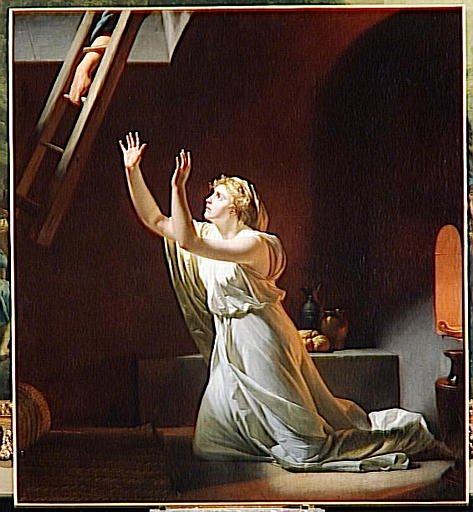
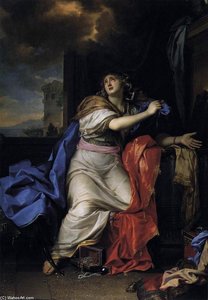
LE SUPPLICE D'UNE VESTALE


 Read More
Purchase a high-resolution, enhanced digital image, far superior to the online preview.
Each file is meticulously prepared by our in-house specialists using advanced tools and expert manual retouching. We ensure every image has exceptional clarity, precise color accuracy, and fine detail.
The final file is delivered via email within 72 hours, optimized for immediate use in professional, editorial, and print environments. This is the same quality trusted by top-tier design studios, publishers, and galleries.
Digital Image
Download a high-resolution file for personal display, printing, and creative projects. ( Buy Print Buy Hand Made Painting)
Included in Every Digital Image Order
Expert Digital Delivery, Guaranteed
When you choose ArtsDot.com, you're not just getting an image - you're receiving a professionally enhanced digital artwork, crafted with precision and backed by a satisfaction guarantee. Here's everything that comes with your order, automatically:

Fast Email Delivery
Your high-resolution digital image file will be emailed to you within 72 hours of ordering - ready for immediate use.

AI-Enhanced Digital File
Your artwork is professionally optimized using advanced AI tools and manual editing, ensuring maximum detail, clarity, and color accuracy.

Free Lifetime Re-Delivery
Accidentally deleted or lost your file? No worries - we'll resend it to you anytime, free of charge.

No Import Fees - Ever
Enjoy your artwork instantly with zero customs, duties, or delivery fees - digital downloads are always tax-free.

Color Accuracy Guarantee
We ensure your digital image reflects the original colors as closely as possible using professional tools and color management.

60-Day Satisfaction Guarantee
If you're not satisfied with your digital image, we'll revise it or refund 100% within 60 days - no questions asked.

100% Money-Back Guarantee
Not satisfied? Get a full refund within 60 days of receiving your digital file - no questions asked.

Bulk Order Discounts
Buy 3 images, save 10% - Buy 5, save 15% - Buy 10+, save 20%. Great for creative projects, galleries, and agencies.
Collectible Description
The Weight of Divine Judgment: An Encounter with Danloux's "LE SUPPLICE D'UNE VESTALE"
To stand before Henri Pierre Danloux’s Le Supplice d'une Vestale is to be enveloped in a profound atmosphere of dramatic tension. This painting is not merely a depiction of an event; it is an immersion into the crushing weight of consequence, rendered with the masterful hand of a Neoclassical artist steeped in classical drama. The scene centers upon a kneeling figure—the Vestal Virgin—whose posture speaks volumes of despair and supplication. Danloux has captured that fleeting, agonizing moment when human will confronts divine decree. The composition itself is taut, almost breathless, drawing the viewer into its somber embrace.
Mastery in Light and Shadow: Technical Brilliance
Technically, the painting is a breathtaking study in chiaroscuro. A single, powerful light source, originating from the right, carves the figure out of an otherwise undefined, brooding darkness. This dramatic illumination does more than just reveal form; it sculpts emotion. Observe how the artist handles the textures: the implied smoothness of skin contrasts sharply with the heavy, yielding folds of drapery and the stark geometry of the descending ladder. Danloux employs a polished finish, suggesting meticulous brushwork that allows subtle gradations of tone to emerge from deep shadow into luminous highlights. This sophisticated handling of oil paint on canvas elevates the piece beyond mere narrative illustration into the realm of high art.
Symbolism and the Echoes of Antiquity
The subject matter draws deeply from Roman mythology, touching upon themes of sacred vows, transgression, and inevitable retribution. The Vestal Virgin herself embodies purity under duress. Symbolically, the descending ladder acts as a potent visual metaphor—it represents authority, judgment, or perhaps the inescapable descent into fate. The surrounding darkness is not empty space; it is the unknown consequence, the abyss against which her vulnerability is measured. For the modern collector or designer, this piece offers an immediate conduit to classical gravitas, lending any space an air of profound, storied depth.
An Emotional Resonance for Contemporary Spaces
While rooted in antiquity, the emotional impact of Le Supplice d'une Vestale remains startlingly contemporary. It speaks to universal feelings of guilt, desperation, and the moment one must face an undeniable truth. For those seeking art that commands attention without resorting to overt melodrama, this work provides sophisticated drama. Its restrained palette—dominated by muted greys, beiges, and deep browns—ensures that while the subject is intense, its visual presence is one of stately melancholy. Reproducing this masterpiece allows one to integrate a piece of dramatic historical narrative into an interior setting, adding intellectual weight and artistic passion to any room.
Related Artworks
Artist Biography
Thomas Bewick: The Quiet Master of Nature’s Details
Born in Burford, Oxfordshire, on August 11th, 1753, Thomas Bewick’s life was a testament to the power of observation and dedication. His early years were marked by personal tragedy – the loss of both his parents before he reached adolescence – shaping a childhood spent largely under the guidance of his uncle, a solicitor who instilled in him a love for learning and a methodical approach to work. Initially destined for a legal career, Bewick’s artistic inclinations led him down an entirely different path, ultimately establishing him as one of England's most celebrated wood engravers and natural history illustrators.
Bewick’s formal training began at the Royal Academy Schools in London, where he honed his skills under the tutelage of Johan Zoffany, a renowned painter known for his intricate compositions. However, Bewick quickly developed his own distinctive style, characterized by an extraordinary attention to detail and a remarkable ability to capture the essence of his subjects – primarily animals and plants – with astonishing accuracy. He initially took on various commercial commissions, including engraving cutlery and creating wood blocks for advertisements, gaining valuable experience in the craft before dedicating himself fully to illustration.
- Early Career & Newcastle: Bewick’s early career saw him working as a partner in an engraving business in Newcastle upon Tyne. This period was crucial in developing his technical skills and establishing his reputation within the printmaking community.
- A History of Quadrupeds: His breakthrough came with *A History of British Birds* (1797), a monumental work that showcased his mastery of wood engraving. The small, sharply observed illustrations, known as “tail-pieces,” became immensely popular and set a new standard for natural history illustration.
- Aesop’s Fables & Beyond: Bewick continued to illustrate *Aesop's Fables* throughout his life, demonstrating his versatility and commitment to the craft. He also produced numerous other works, including illustrations for children’s books and a comprehensive *A History of British Birds*, Volume II (1804).
Bewick’s artistic philosophy was deeply rooted in observation and meticulous study. He spent countless hours sketching animals in their natural habitats, meticulously documenting their behavior and appearance. This dedication to realism is evident in his illustrations, which are remarkably lifelike and imbued with a sense of immediacy. Unlike the prevailing trends of the time, Bewick rejected the idealized representations favored by many artists, instead choosing to depict nature as he saw it – with all its imperfections and nuances. His work was not merely decorative; it was a profound exploration of the natural world.
Bewick’s contribution to printmaking extends far beyond his individual illustrations. He pioneered the use of wood engraving for high-quality illustration, developing techniques that allowed for greater detail and durability than traditional woodcuts. His method involved cutting hard boxwood across the grain using metal-engraving tools, creating printing blocks that could be seamlessly integrated with metal type – a revolutionary approach at the time. This technique enabled him to produce stunningly detailed illustrations at a relatively low cost, making them accessible to a wider audience.
Furthermore, Bewick’s work profoundly influenced subsequent generations of engravers and illustrators. His meticulous attention to detail, his commitment to realism, and his innovative techniques set a new standard for the craft. He is often considered the “father of wood engraving,” having single-handedly transformed it from a simple decorative technique into a powerful medium for artistic expression and scientific documentation. His legacy continues to inspire artists today, reminding us of the beauty and wonder that can be found in the details of the natural world.
The Influence of Bewick’s Legacy
Thomas Bewick's impact resonated far beyond his own lifetime. His meticulous approach to illustration, particularly his use of wood engraving, fundamentally altered how images were produced and disseminated. Prior to Bewick, illustrations were often printed separately from the text, a cumbersome process that limited their quality and accessibility. Bewick’s method of integrating engravings with type revolutionized book production, allowing for more detailed and visually engaging publications.
- The Rise of Field Guides: *A History of British Birds* is widely regarded as the first modern field guide, setting a precedent for subsequent natural history illustrations. Its accessible language, combined with Bewick’s captivating images, made ornithology accessible to a broader audience.
- Impact on Printmaking Techniques: Bewick's innovations in wood engraving influenced countless engravers and printmakers who followed him. His techniques were adopted and adapted by artists across Europe, contributing to the development of modern printmaking practices.
- Influence on Illustration Styles: Bewick’s emphasis on realism and detail had a lasting impact on illustration styles, particularly in natural history and scientific fields. His work served as a model for generations of illustrators seeking to capture the essence of their subjects with accuracy and artistry.
Beyond his technical innovations, Bewick's legacy is also tied to his deep appreciation for nature. His illustrations are not merely representations of animals and plants; they are imbued with a sense of wonder and respect for the natural world. He championed a more observational approach to art, encouraging viewers to engage with their surroundings and appreciate the beauty that exists all around them. Thomas Bewick died on November 8th, 1828, leaving behind a remarkable body of work that continues to captivate and inspire audiences today.
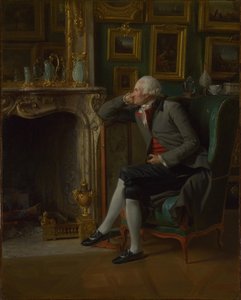
henri pierre danloux
1753 - 1809 , France
Quick Facts
- Artistic Movement Or Style: Portraiture
- Artists Or Movements Influenced By This Artist:
- Bewick
- Turner
- Artists Who Influenced This Artist:
- Zoffany
- Reynolds
- Date Of Birth: 12 December 1753
- Date Of Death: 28 January 1839
- Full Name: William Beechey
- Nationality: British
- Notable Artworks:
- Captain Keppel
- Elizabeth Gunning
- Bishop Douglas
- Place Of Birth: Burford, Oxfordshire

