 Preview
 Send
Send Share
Share
 Details

 Download
 Similars
 X-Ray
X-Ray Diaporama
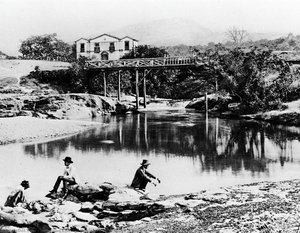
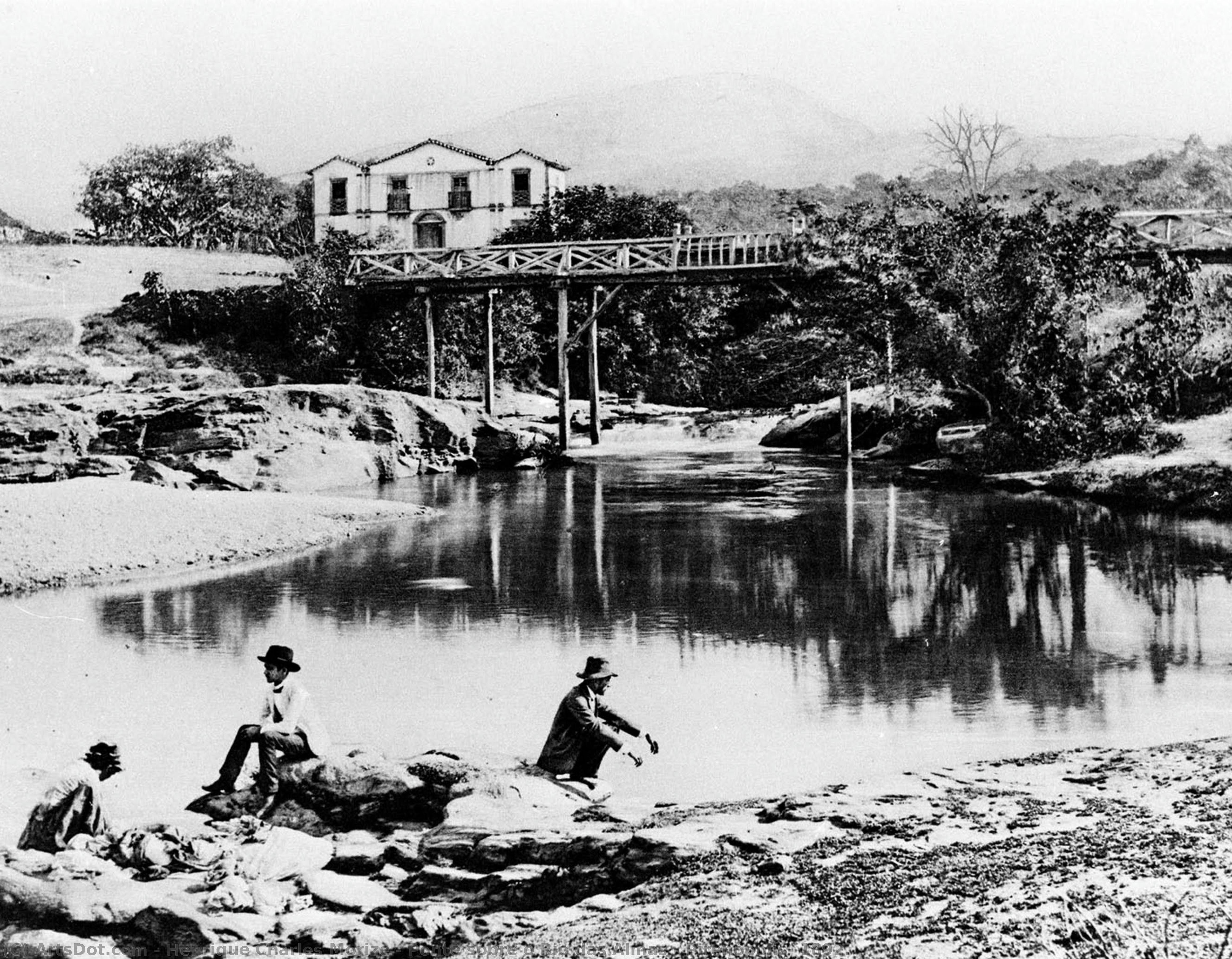
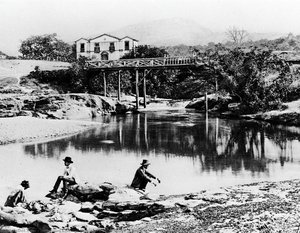
Ponte sobre o Rio das Almas - Pirenópolis, 1892.


 Read More
Hand Made Oil Reproduction
Hand-painted oil on canvas in your size and frame, made to order by our artists. ( Buy Print Buy Image)




































Pick from our preset sizes that match the artwork's original proportions.

You may enter your own dimensions to fit a specific frame or space. If your selected size does not match the original image's proportions, we will either crop the artwork or extend the painting with additional hand-painted elements. A digital mockup will be sent for your approval before production begins.
Please note that the on-screen preview does not reflect the actual cropping or extension. Only the mockup will accurately show the final composition.
While custom sizes are available, we recommend selecting a dimension from the predefined list to preserve the original proportions.
After order, ArtsDot.com team will email client for instructions and provide a mockup preview
Worldwide Delivery () in 3/4 weeks instead of standard 5 weeks. (24 August). No compromise on quality.

Free Worldwide Express Shipping

High-Quality Linen Canvas

Full Shipping Insurance

Customs Tax Refund Guarantee

True Color Matching Guarantee

60-Day Return Policy (Defects Only)

100% Money-Back Guarantee

Bulk Discount Offer
 Glass option is only available in size under 110 CM

Ponte sobre o Rio das Almas - Pirenópolis, 1892.
Reproduction Medium
Reproduction Size
-


Total Price
$ 263
Related Artworks








Artist Biography
The Physician of Light: The Dual Legacy of Henrique Charles Morize
In the golden twilight of Brazil’s Belle Époque, a unique harmony emerged between the rigorous precision of science and the emotive fluidity of art. At the heart of this intersection stood Henrique Charles Morize, a man whose life was defined by an insatiable curiosity for the unseen. While history may remember him as a distinguished physician specializing in ophthalmology, his true legacy resides in the way he trained his eyes—not merely to diagnose the human eye, but to perceive the soul of the Brazilian landscape. Born in São Paulo in 1879, Morize possessed a rare duality; he was a scholar of the natural sciences and a master of the brush, a combination that allowed him to document the burgeoning identity of a nation through both empirical observation and poetic expression.
Morize’s artistic evolution was deeply intertwined with his scientific expeditions. As a participant in groundbreaking explorations of the Brazilian interior, he did not merely observe flora and fauna for classification; he sought to capture their essence on canvas. His journey into the heart of Goiás provided him with a breathtaking palette of natural wonders. Influenced by the luminous techniques of Impressionism and Post-Impressionism, particularly the works of Claude Monet and Camille Pissarro, Morize adopted the plein air method. This approach allowed him to chase the fleeting nuances of light as it danced across the water of the Cachoeira do Rio Cassú or settled upon the historic Ponte sobre o Rio das Almas in Pirenópolis. His work transcends simple documentation, offering instead a visceral experience of the Brazilian wilderness.
A Symphony of Science and Impressionism
The brilliance of Morize’s technique lies in his ability to marry the meticulous detail required by a scientist with the atmospheric softness of an Impressionist. To look upon a Morize landscape is to witness a masterclass in light and texture. He had an uncanny ability to render the dappled sunlight filtering through dense tropical foliage, creating a sense of depth that pulls the viewer into the humid, vibrant air of the Brazilian highlands. His canvases are characterized by:
- Luminous Color Palettes: A profound use of vibrant hues that reflect the true vitality of the Goiás landscapes.
- Atmospheric Precision: The ability to capture the shimmering reflections on river surfaces and the heavy, moisture-laden atmosphere of the rainforest.
- Scientific Observation: An underlying structural accuracy in his depictions of botanical elements, born from his deep knowledge of biodiversity.
This technical mastery served a higher purpose than mere aesthetic beauty. Through his art, Morize acted as a cultural cartographer. During an era when Brazil was striving to define its place on the global stage, his paintings provided a visual language for the nation's natural splendor. He did not just paint scenery; he painted a sense of wonder, translating the raw, untamed beauty of the Brazilian interior into a sophisticated visual narrative that resonated with the intellectual currents of his time.
Historical Significance and Enduring Vision
The historical significance of Henrique Charles Morize extends far beyond the boundaries of the art gallery. He represents a pivotal moment in Brazilian history when the pursuit of scientific knowledge and the cultivation of national art were seen as two sides of the same coin. His expeditions, often documented through both photography and painting, remain invaluable records of the Brazilian landscape during the late 19th and early 20th centuries. By documenting the biodiversity of regions like Uberaba and Pirenópolis, he contributed to a growing consciousness of Brazil's ecological and cultural wealth.
Today, Morize stands as a singular figure—a bridge between the analytical mind and the creative spirit. His life reminds us that science and art are not opposing forces, but rather complementary lenses through which we can understand the world. In every brushstroke, there is a heartbeat of discovery; in every landscape, there is a testament to a man who saw the beauty of the world with both the clarity of a doctor and the passion of a poet. His work continues to inspire a profound appreciation for the delicate balance between our scientific understanding of nature and our emotional connection to its breathtaking beauty.
henrique charles morize
1879 - , Brazil
Quick Facts
- Artistic Movement Or Style: Landscape Painting
- Date Of Birth: 1879
- Full Name: Henrique Charles Morize
- Nationality: Brazilian
- Notable Artworks:
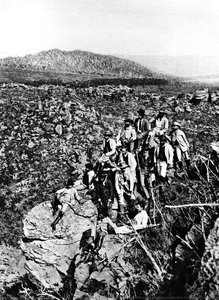
- Membros da Comissão Exploradora do Planalto Central no alto dos Pirineus - Goiás, 1892.
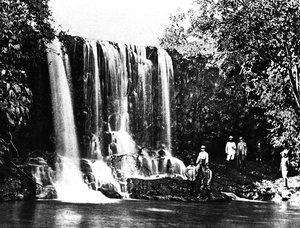
- Membros da Comissão Exploradora do Planalto Central do Brasi na Cachoeira do Rio Cassú - Uberaba, 1892.
- Ponte sobre o Rio das Almas - Pirenópolis, 1892.
- Place Of Birth: Brazil