 Preview
 Send
Send Share
Share
 Details

 Download
 Similars
 X-Ray
X-Ray Diaporama
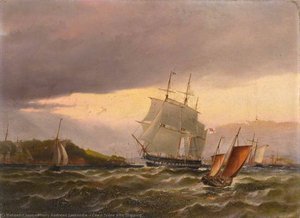
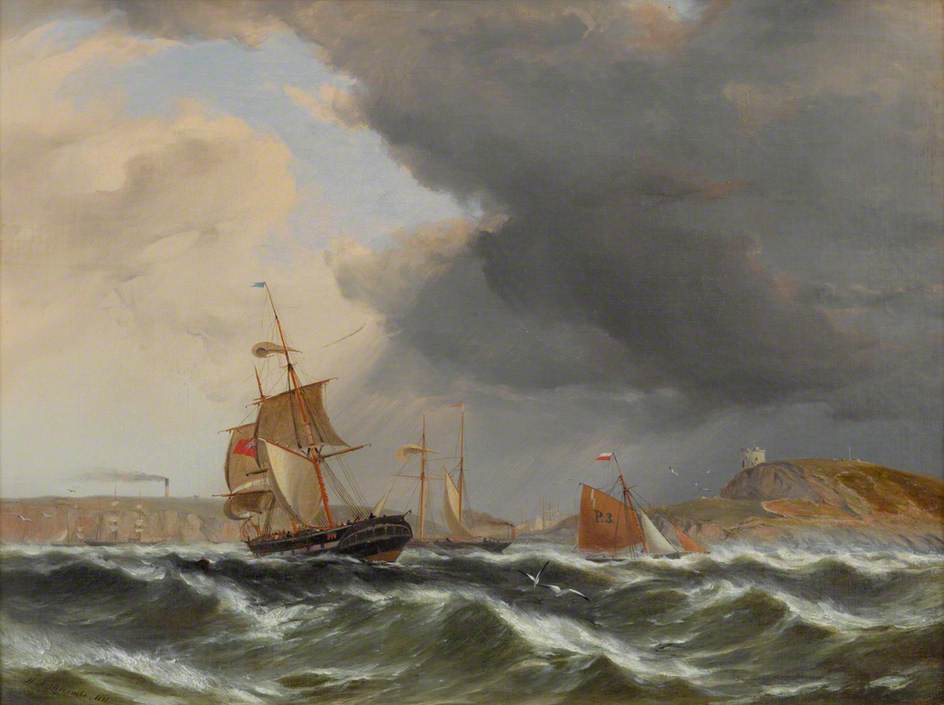
View of Mount Batten and Entrance to Catwater, Plymouth
 1861
1861 45.0 x 60.0 cm
 Government Art Collection
 Read More
Giclée / Art Print
Museum-quality giclée or canvas print with fast production and flexible finish options. ( Buy Hand Made Painting Buy Image)




































Pick from our preset sizes that match the artwork's original proportions.

You may enter your own dimensions to fit a specific frame or space. If your selected size does not match the original image's proportions, we will either crop the artwork or extend the image with a mirrored or solid-fill edge. A digital mockup will be sent for your approval before production begins.
Please note that the on-screen preview does not reflect the actual cropping or extension. Only the mockup will accurately show the final composition.
While custom sizes are available, we recommend selecting a dimension from the predefined list to preserve the original proportions.
Worldwide Delivery () in 2 weeks instead of standard 4/5 weeks. (7 September)

Free Worldwide Express Shipping

High-Quality Linen Canvas

Full Shipping Insurance

Customs Tax Refund Guarantee

True Color Matching Guarantee

100-Day Return Policy (Defects Only)

100% Money-Back Guarantee

Bulk Discount Offer
 Glass option is only available in size under 110 CM

View of Mount Batten and Entrance to Catwater, Plymouth
Giclée / Art Print
Reproduction Size
-


Total Price
$ 63
Related Artworks








Artist Biography
The Mariner's Vision: The Life and Legacy of Henry Andrews Luscombe
Born in the maritime heart of Plymouth, Devon, in 1864, Henry Andrews Luscombe emerged as a preeminent voice in British marine art, possessing a rare ability to translate the ephemeral qualities of light and water onto canvas. His life's work serves as a luminous window into the late 19th and early 20th centuries, a period when the grandeur of sailing vessels met the burgeoning influence of Impressionism. Luscombe was not merely a chronicler of ships; he was a poet of the coast, whose brush captured the rhythmic pulse of the sea and the atmospheric drama of the horizon. His artistic journey was deeply rooted in the tradition of plein air painting, a movement that sought to capture the fleeting essence of nature through direct observation, much like the legendary Claude Monet.
The development of Luscombe’s style was profoundly shaped by his travels and his exposure to the diverse light conditions of the European coastline. While his early years were spent mastering the rugged, salt-sprayed vistas of Cornwall, it was his expansion into Italy that acted as a transformative catalyst for his artistry. Immersed in the vibrant Mediterranean atmosphere, he became enamored with the way sunlight danced across turquoise waters and illuminated ancient coastal architecture. This period of exploration allowed him to integrate the sophisticated techniques of Venetian masters—such as the delicate perspective of Canaletto and the dramatic chiaroscuro of Tiepolo—into his own work, blending meticulous maritime detail with a lyrical, almost ethereal, sense of light.
Mastery of Technique and the Impressionistic Spirit
Luscombe’s prolific output, which includes over 300 significant works primarily in watercolor, demonstrates an unwavering commitment to capturing the true essence of the maritime experience. His technique was a masterful balance of precision and fluidity. In his depictions of sailing ships, one can observe an incredible attention to the intricate rigging and the heavy texture of wind-sweed sails, yet this realism is always softened by an Impressionistic touch. He utilized a delicate palette of pastel hues, shimmering ochres, and deep sea-greens to evoke the shifting moods of the ocean, from the tranquil clarity of a summer morning to the turbulent tension of a storm-tossed sea.
The artist’s ability to render texture was particularly noteworthy. Through expressive brushstrokes, he could convey the rugged, unyielding nature of seaside cliffs alongside the gentle, rhythmic ripple of a coastal breeze. This duality allowed his paintings to possess both a structural strength and a sensory softness. His works often feature:
- The Play of Light: A signature use of luminosity that captures the reflection of sunbeams on undulating waves.
- Atmospheric Depth: The skillful application of haze, mist, and cloud formations to create a sense of vast, infinite space.
- Dynamic Movement: An energetic approach to composition that suggests the forward momentum of vessels navigating through choppy waters.
Historical Significance and Artistic Heritage
Throughout his career, Henry Andrews Luscombe achieved considerable renown, establishing himself as a significant figure in the lineage of British marine painters. His work stands alongside notable contemporaries such as Nicholas Pocock and Thomas Buttersworth, yet he carved out a unique niche by infusing the traditional maritime genre with a modern, atmospheric sensibility. By moving beyond simple nautical documentation to explore the emotional resonance of the seascape, he helped bridge the gap between classical maritime realism and the emotive qualities of late-century landscape painting.
Today, Luscombe’s legacy lives on through his celebrated works held in prestigious institutions, such as the National Maritime Museum in the United States and the Royal Albert Memorial Museum in Exeter. His paintings remain vital historical documents, offering a nostalgic yet technically brilliant glimpse into an era of maritime majesty. For the art enthusiast, Luscombe’s oeuvre continues to provide a profound sense of wonder, inviting viewers to rediscover the timeless beauty of the sea through the eyes of a true master of light and landscape.
Quick Facts
- Artistic Movement Or Style: Maritime Art
- Artists Or Movements Influenced By This Artist: ['Romanticism']
- Artists Who Influenced This Artist:
- William Turner
- John Constable
- Full Name: Henry Andrews Luscombe
- Nationality: British
- Notable Artworks:
- A Frigate
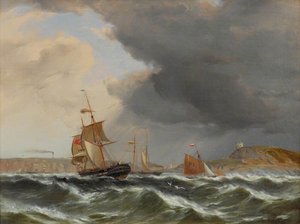
- Coast Scene with Shipping
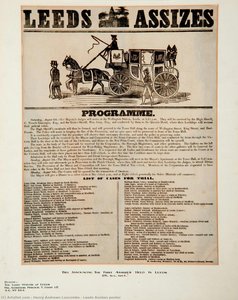
- Leeds Assizes poster
- Place Of Birth: Plymouth, England