 Preview
 Send
Send Share
Share
 Details

 Download
 Similars
 X-Ray
X-Ray Diaporama
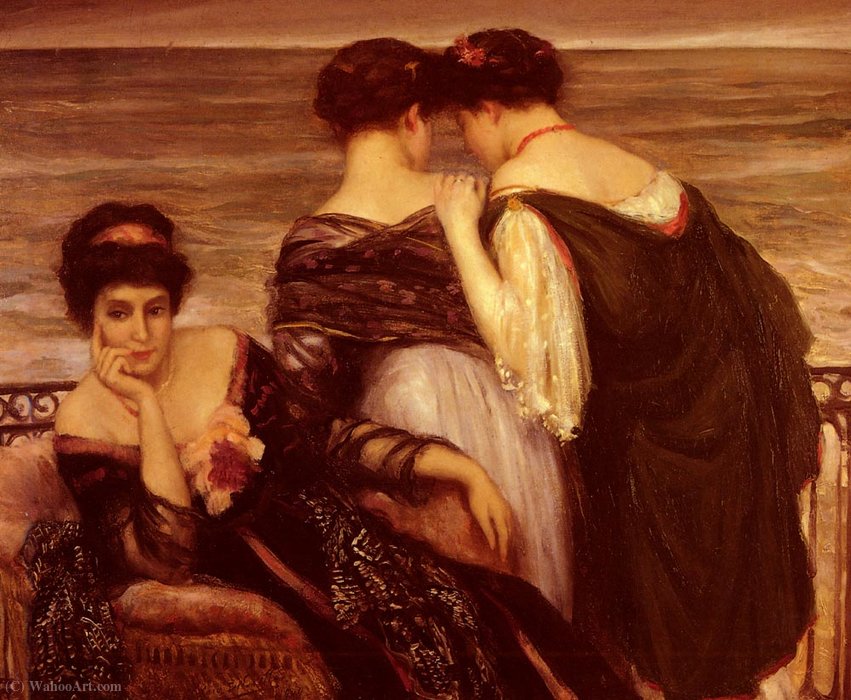
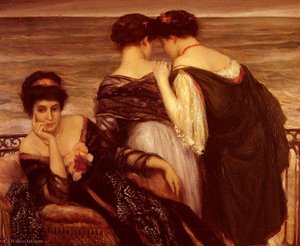
Sur la terrasse, bairritz
 Read More
Hand Made Oil Reproduction
Hand-painted oil on canvas in your size and frame, made to order by our artists. ( Buy Print Buy Image)




































Pick from our preset sizes that match the artwork's original proportions.

You may enter your own dimensions to fit a specific frame or space. If your selected size does not match the original image's proportions, we will either crop the artwork or extend the painting with additional hand-painted elements. A digital mockup will be sent for your approval before production begins.
Please note that the on-screen preview does not reflect the actual cropping or extension. Only the mockup will accurately show the final composition.
While custom sizes are available, we recommend selecting a dimension from the predefined list to preserve the original proportions.
After order, ArtsDot.com team will email client for instructions and provide a mockup preview
Worldwide Delivery () in 3/4 weeks instead of standard 5 weeks. (20 August). No compromise on quality.

Free Worldwide Express Shipping

High-Quality Linen Canvas

Full Shipping Insurance

Customs Tax Refund Guarantee

True Color Matching Guarantee

60-Day Return Policy (Defects Only)

100% Money-Back Guarantee

Bulk Discount Offer
 Glass option is only available in size under 110 CM

Sur la terrasse, bairritz
Reproduction Medium
Reproduction Size
-


Total Price
$ 263
Related Artworks

Artist Biography
Henry Caro-Delvaille: A Parisian Painter of the Belle Époque
Henry Caro-Delvaille (1876-1928) emerges from the vibrant artistic landscape of early 20th-century Paris, a period defined by both opulent social life and burgeoning modernism. His work offers a captivating glimpse into this era, particularly through his evocative portrayals of Parisian society, intimate domestic scenes, and striking portraits. Born in Bayonne, Spain, to a family with strong ties to France, Caro-Delvaille’s early exposure to both cultures profoundly shaped his artistic sensibilities – a blend of Iberian warmth and French elegance that would become a hallmark of his style.
His formal training began at the Bayonne School of Fine Arts in 1895, followed by studies at the prestigious École des Beaux-Arts in Paris under Léon Bonnat. This rigorous academic foundation provided him with essential technical skills, but it was Caro-Delvaille’s independent spirit and keen observation that truly distinguished his work. He quickly gained recognition within Parisian artistic circles, exhibiting at the Salon de la Société des Artistes Français as early as 1899, a significant step towards establishing himself as a professional artist.
A Life Shaped by Patronage and Travel
Caro-Delvaille’s career unfolded against a backdrop of shifting artistic trends. Initially influenced by the academic style of Bonnat, he gradually embraced elements of Impressionism and Post-Impressionism, incorporating looser brushwork and a greater emphasis on capturing fleeting moments of light and atmosphere. However, his work never fully aligned with any single movement, retaining a unique character rooted in his personal vision.
A pivotal moment in his career came through commissions from prominent figures like Edmond Rostand, the celebrated playwright of *Cyrano de Bergerac*. Rostand’s villa in Cambo became a hub for artistic activity, and Caro-Delvaille's decorative panels and portraits contributed to its sophisticated ambiance. This patronage opened doors to further opportunities and exposed him to a wider audience.
In 1913, he embarked on an extended sojourn in the United States, settling in New York City. This transatlantic experience profoundly impacted his artistic style, leading him towards a more streamlined, Art Deco aesthetic – characterized by geometric forms, bold colors, and a focus on modern urban life. He continued to paint portraits and landscapes, capturing the energy of American society during this transformative period.
Themes and Artistic Style
Caro-Delvaille’s paintings frequently depict scenes of Parisian social life—elegant gatherings, intimate moments in private homes, and glimpses into the lives of fashionable women. His compositions are often imbued with a sense of leisure and sophistication, reflecting the spirit of the Belle Époque. He skillfully captured the nuances of light and color, creating luminous effects that evoke both atmosphere and emotion.
His portraits are particularly noteworthy for their psychological depth and subtle expressions. He possessed a remarkable ability to capture not only physical likeness but also the inner character of his subjects. His use of muted tones and delicate brushwork contributes to an air of intimacy and quiet contemplation. Notable works like “Sur la terrasse, Biarritz” exemplify this style, offering a serene tableau of women enjoying the coastal scenery.
A recurring motif in his oeuvre is the depiction of interiors—drawing rooms filled with luxurious furnishings, salons bathed in soft light, and glimpses into private lives. These scenes are often imbued with a sense of nostalgia for a bygone era, evoking a romanticized vision of Parisian elegance.
Legacy and Recognition
Despite not achieving widespread fame during his lifetime, Henry Caro-Delvaille’s work has gained increasing recognition in recent decades. His paintings offer a valuable window into the social and artistic life of early 20th-century Paris, capturing the spirit of a vibrant era with remarkable sensitivity and skill.
His influence can be seen in the works of other artists who were active during this period, and his paintings continue to be exhibited and appreciated by collectors worldwide. Caro-Delvaille’s legacy lies not only in his artistic achievements but also in his ability to capture the essence of a particular time and place – a testament to the enduring power of art to transport us across generations.
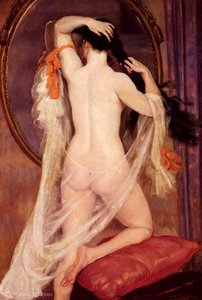
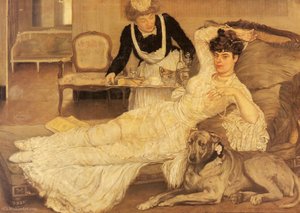
Notable works include “Tea Time” (a charming depiction of women enjoying an afternoon tea), "Nu au miroir" (a captivating study of a woman gazing at her reflection), and numerous portraits commissioned by prominent figures of his time. His artistic output reflects a keen eye for detail, a masterful command of technique, and a deep understanding of the human condition.
henry caro-delvaille
1876 - 1928
Quick Facts
- Artistic Movement Or Style: Impressionism
- Artists Or Movements Influenced By This Artist: ['Carolus Duran']
- Artists Who Influenced This Artist: ['Léon Bonnat']
- Date Of Birth: 1876
- Date Of Death: 1928
- Full Name: Henry Caro-Delvaille
- Nationality: French
- Notable Artworks:
- Sur la terrasse, Biarritz
- Tea time painting
- Nu au miroir artwork
- Place Of Birth: Bayonne, France