 Preview
 Send
Send Share
Share
 Details

 Download
 Similars
 X-Ray
X-Ray Diaporama
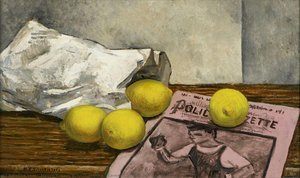
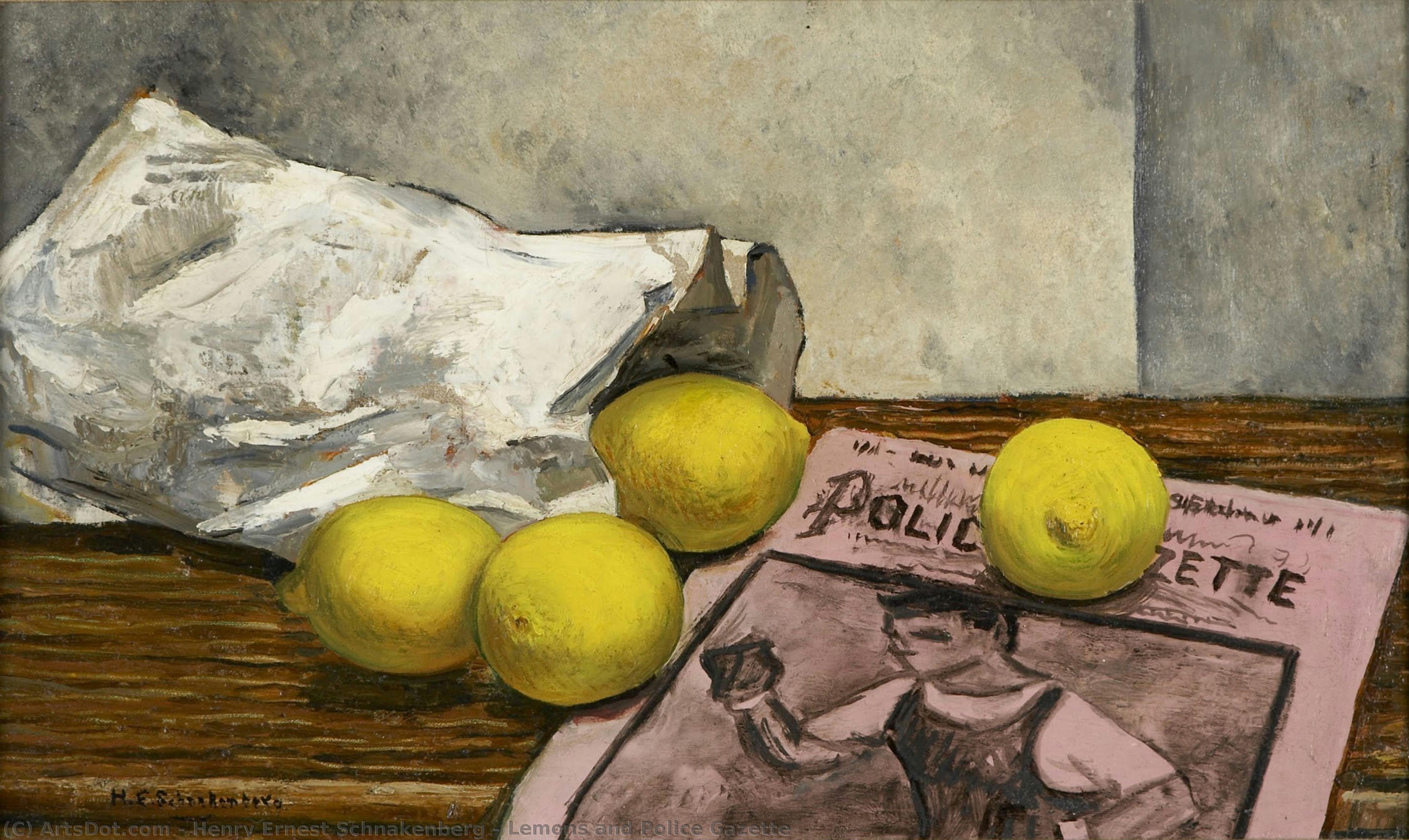
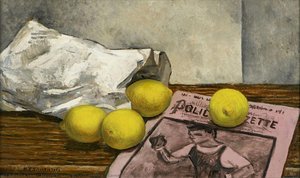
Lemons and Police Gazette

 Read More
Giclée / Art Print
Museum-quality giclée or canvas print with fast production and flexible finish options. ( Buy Hand Made Painting Buy Image)




































Pick from our preset sizes that match the artwork's original proportions.

You may enter your own dimensions to fit a specific frame or space. If your selected size does not match the original image's proportions, we will either crop the artwork or extend the image with a mirrored or solid-fill edge. A digital mockup will be sent for your approval before production begins.
Please note that the on-screen preview does not reflect the actual cropping or extension. Only the mockup will accurately show the final composition.
While custom sizes are available, we recommend selecting a dimension from the predefined list to preserve the original proportions.
Worldwide Delivery () in 2 weeks instead of standard 4/5 weeks. (27 August)

Free Worldwide Express Shipping

High-Quality Linen Canvas

Full Shipping Insurance

Customs Tax Refund Guarantee

True Color Matching Guarantee

60-Day Return Policy (Defects Only)

100% Money-Back Guarantee

Bulk Discount Offer
 Glass option is only available in size under 110 CM

Lemons and Police Gazette
Giclée / Art Print
Reproduction Size
-


Total Price
$ 63
Related Artworks








Artist Biography
The Quiet Observer: The Life and Art of Henry Ernest Schnakenberg
Born in the vibrant landscape of New Brighton, Staten Island, in 1892, Henry Ernest Schnakenberg emerged as a painter whose work served as a soulful window into the evolving rhythm of American urban life. His journey was not merely one of aesthetic discovery, but a profound commitment to capturing the essence of the everyday. Before fully committing to the canvas, Schnakenberg experienced the world through different lenses, even working briefly as an insurance salesman—a period of observation that perhaps sharpened his eye for the subtle details of human existence and urban structure. His formal artistic education began at the prestigious National Academy of Design, where he laid the groundwork for a career defined by technical precision and a deep-seated respect for realism.
The trajectory of his talent was significantly shaped by his time at the Art Students League, studying under masters such as George Bridgman and Frank Dumond. From Bridgman, he inherited a rigorous understanding of anatomical structure, while Dumond imparted the delicate nuances of tonal painting. This foundational training provided him with the tools to navigate the shifting tides of early 20th-century art. Seeking to broaden his horizons beyond American shores, Schnakenberg traveled to Europe, spending transformative years in Paris. It was amidst the light-drenched streets of France that he encountered the lingering magic of Impressionism. Absorbing the techniques of luminaries like Claude Monet and Pierre-Auguste Renoir, he began to experiment with looser brushwork and a more fluid approach to capturing the fleeting interplay of light and atmosphere.
A Mastery of Light and Urban Atmosphere
Schnakenberg’s mature style represents a beautiful synthesis of academic discipline and Impressionistic sensitivity. While his roots remained firmly planted in realism, his later works breathed with a soft, atmospheric quality that elevated simple cityscapes into poetic meditations. He possessed a unique ability to render the textures of New York City—the rough stone of architecture, the lush greenery of public parks, and the shimmering surfaces of rain-slicked streets—with an honesty that felt both detached and deeply intimate. His approach was never one of theatrical drama; instead, he favored a serene, understated perspective that allowed the viewer to inhabit the scene alongside him.
His technical repertoire was as diverse as his subject matter, utilizing various media to achieve different emotional depths:
- Oil on Canvas: His primary medium, used to create rich, textured landscapes and architectural vistas with profound depth.
- Watercolor: Employed to capture the more ephemeral, translucent qualities of light and weather.
- Printmaking and Etching: A medium through which he explored line, shadow, and the structural rhythm of the city.
Nowhere is his mastery more evident than in his depictions of Central Park. In these works, the bustling metropolis recedes, leaving only the rhythmic dance of trees, paths, and light. He transformed these iconic New York landmarks into bucolic retreats, finding a quietude within the urban sprawl that resonated with the changing sensibilities of the early 20th century.
Legacy and Historical Significance
Throughout his long life, which concluded in 1970, Schnakenberg remained a steadfast chronicler of the American experience. While the art world moved toward increasingly abstract movements, he maintained a devotion to the observable world, finding profound meaning in the "everyday themes" that others might overlook. His work stands as a vital historical record of New York City’s character during a period of immense growth and transformation.
The significance of his contribution lies in his ability to bridge the gap between the rigorous traditions of the 19th century and the atmospheric freedoms of the modern era. By eschewing flamboyant compositions in favor of an honest, detached observation, he invited the public to find beauty in the mundane. Today, his paintings remain cherished for their ability to evoke a sense of nostalgia and peace, reminding us that there is a quiet, enduring majesty to be found in the streets and parks we traverse every day.
henry ernest schnakenberg
1892 - 1970 , United States of America
Quick Facts
- Artistic Movement Or Style: Realistic Painting
- Artists Or Movements Influenced By This Artist: ['Impressionism']
- Artists Who Influenced This Artist:
- George Bridgman
- Frank Dumond
- Date Of Birth: 1892
- Full Name: Henry Ernest Schnakenberg
- Nationality: American
- Notable Artworks: ['Lemons and Police Gazette']
- Place Of Birth: New Brighton, United States of America