 Preview
 Send
Send Share
Share
 Details

 Download
 Similars
 X-Ray
X-Ray Diaporama
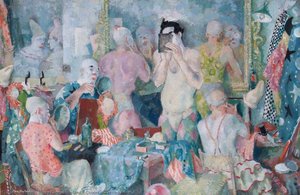
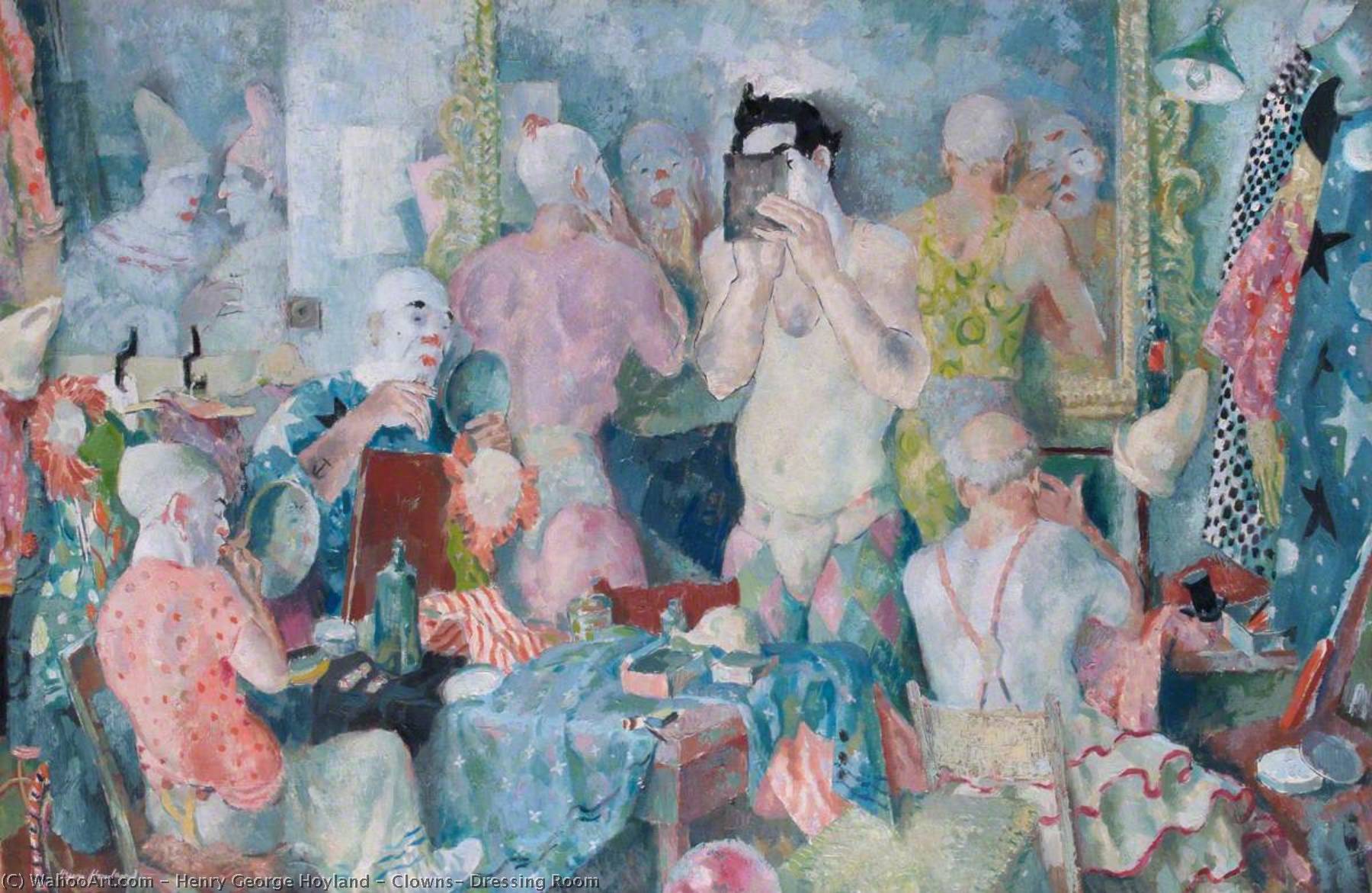
Clowns' Dressing Room
 1940
1940 68.0 x 102.0 cm
 Read More
Hand Made Oil Reproduction
Hand-painted oil on canvas in your size and frame, made to order by our artists. ( Buy Print Buy Image)




































Pick from our preset sizes that match the artwork's original proportions.

You may enter your own dimensions to fit a specific frame or space. If your selected size does not match the original image's proportions, we will either crop the artwork or extend the painting with additional hand-painted elements. A digital mockup will be sent for your approval before production begins.
Please note that the on-screen preview does not reflect the actual cropping or extension. Only the mockup will accurately show the final composition.
While custom sizes are available, we recommend selecting a dimension from the predefined list to preserve the original proportions.
After order, ArtsDot.com team will email client for instructions and provide a mockup preview
Worldwide Delivery () in 3/4 weeks instead of standard 5 weeks. (29 August). No compromise on quality.

Free Worldwide Express Shipping

High-Quality Linen Canvas

Full Shipping Insurance

Customs Tax Refund Guarantee

True Color Matching Guarantee

60-Day Return Policy (Defects Only)

100% Money-Back Guarantee

Bulk Discount Offer
 Glass option is only available in size under 110 CM

Clowns' Dressing Room
Reproduction Medium
Reproduction Size
-


Total Price
$ 263
A Glimpse into the Artist's World
Henry George Hoyland's work is a testament to his fascination with the human experience. In Clowns' Dressing Room, he invites viewers to step into a vibrant and lively setting, where clowns and other performers prepare for their acts. The painting is a kaleidoscope of colors, with bold brushstrokes and textures that add depth and emotion to the scene. Key elements of the painting include the use of warm colors, which create a sense of comfort and intimacy, and the depiction of clowns in various states of preparation, from applying makeup to adjusting their costumes. The Royal Academy of Arts is renowned for its extensive collection of artworks, and Clowns' Dressing Room is a notable example of the artist's contribution to the world of art.Exploring Similar Works
For those interested in exploring similar works, Henry George Hoyland's "Clowns' Dressing Room" is a great starting point. Other notable works include Antonio Ferrigno's Rua 25 de março, which can be found on ArtsDot.com. Additionally, Theophrastos Triantafyllidis' Nannies in the National Garden and Pavel Filonov's Faces are also worth exploring.The world of art is full of hidden gems, and Henry George Hoyland's Clowns' Dressing Room is a testament to the power of creativity and imagination. As a masterpiece of oil painting, it continues to inspire and captivate audiences today. For those interested in learning more about the artist and his work, ArtsDot.com offers a wealth of information and resources.
Related Artworks







Artist Biography
Henry George Hoyland: A Quiet Observer of British Life
Henry George Hoyland (January 1895 – October 29, 1947) remains a somewhat enigmatic figure in the annals of British Impressionism. Born in Sheffield, Yorkshire, his artistic journey unfolded against the backdrop of a rapidly changing nation—a period marked by both fervent optimism and looming anxieties about the impending Second World War. While not achieving the widespread fame enjoyed by contemporaries like Walter Sickert or Stanley Spencer, Hoyland carved out a distinctive niche within the art world, producing evocative landscapes and portraits that capture subtle nuances of everyday life and imbued with an understated emotional resonance.- Early Life and Education: Hoyland’s formative years were spent in Sheffield, where he absorbed the industrial spirit of his surroundings—a spirit that would subtly permeate his artistic vision. Studying initially at Sheffield School of Art, followed by stints in London and Paris, provided him with a grounding in traditional techniques alongside exposure to the burgeoning Impressionist movement. This dual influence shaped his approach to painting, blending meticulous observation with expressive brushwork.
- The Influence of Landscape Painting: Hoyland’s landscapes—particularly those depicting Yorkshire countryside—are characterized by a remarkable sensitivity to light and atmosphere. Unlike some Impressionists who sought dramatic effects, Hoyland favored a quieter aesthetic, prioritizing the depiction of serene scenes bathed in soft hues. His canvases convey not merely visual beauty but also a palpable sense of place, reflecting the rhythms of rural life and capturing fleeting moments of tranquility.
- Portraiture and Psychological Depth: Beyond landscapes, Hoyland excelled as a portrait artist. He possessed an uncanny ability to distill the essence of his subjects—often capturing their inner lives with remarkable psychological insight. His portraits are notable for their understated elegance and subtle expressions of emotion, demonstrating Hoyland’s mastery of tonal gradations and capturing fleeting gestures that reveal character.
A Career Dedicated to Art and Teaching
Hoyland's professional life was inextricably linked with his artistic pursuits. He established himself as a respected teacher at Sheffield School of Art from 1921 until 1929, nurturing the talents of aspiring artists and fostering a commitment to artistic excellence. This role instilled in him not only pedagogical skills but also a deep understanding of the creative process—insights that undoubtedly informed his own work. Furthermore, Hoyland’s involvement with organizations like Chelsea Arts Club and the Arts Club cemented his position within the British art community.- Exhibitions and Recognition: Hoyland's paintings graced numerous galleries across Britain, including the Walker Art Gallery in Liverpool and Leeds Gallery. His work was recognized by prestigious institutions such as the Royal Academy and the Society of Graphic Artists, reflecting his unwavering dedication to artistic standards.
- Notable Works: Among Hoyland’s most celebrated pieces are “The First Violins,” a woodcut depicting musicians performing at Sheffield Philharmonic Hall in 1931; portraits of Sir Henry Hadlow, capturing the dignified countenance of a prominent figure; and evocative depictions of circus horses and the Cruft's Dog Show. These paintings exemplify Hoyland’s distinctive style—characterized by meticulous detail combined with expressive brushwork.
A Legacy of Quiet Observation
Henry George Hoyland died in London in 1947, leaving behind a body of work that continues to resonate with admirers. His paintings stand apart from the more flamboyant expressions of Impressionism, prioritizing subtlety and psychological depth over grand spectacle. Hoyland’s legacy resides not in monumental achievements but rather in his unwavering commitment to capturing the beauty of ordinary life—a quiet testament to the power of observation and artistic sensitivity. Today, his canvases reside in museums and private collections across Britain, ensuring that his distinctive vision persists as a reminder of British art's capacity for understated elegance and profound emotional truth.
Quick Facts
- Artistic Movement Or Style: American Impressionism
- Artists Who Influenced This Artist:
- Claude Monet
- Vincent van Gogh
- Date Of Death: 29 October 1947
- Full Name: Henry George Hoyland
- Nationality: British
- Notable Artworks:
- The First Violins
- Sir Henry Hadlow
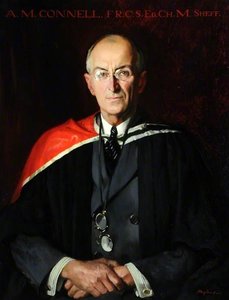
- A. M. Connell
- The Tub Spinner
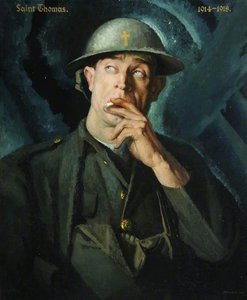
- Saint Thomas
- Place Of Birth: Sheffield, England