 Preview
 Send
Send Share
Share
 Details

 Download
 Similars
 X-Ray
X-Ray Diaporama
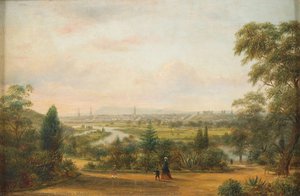
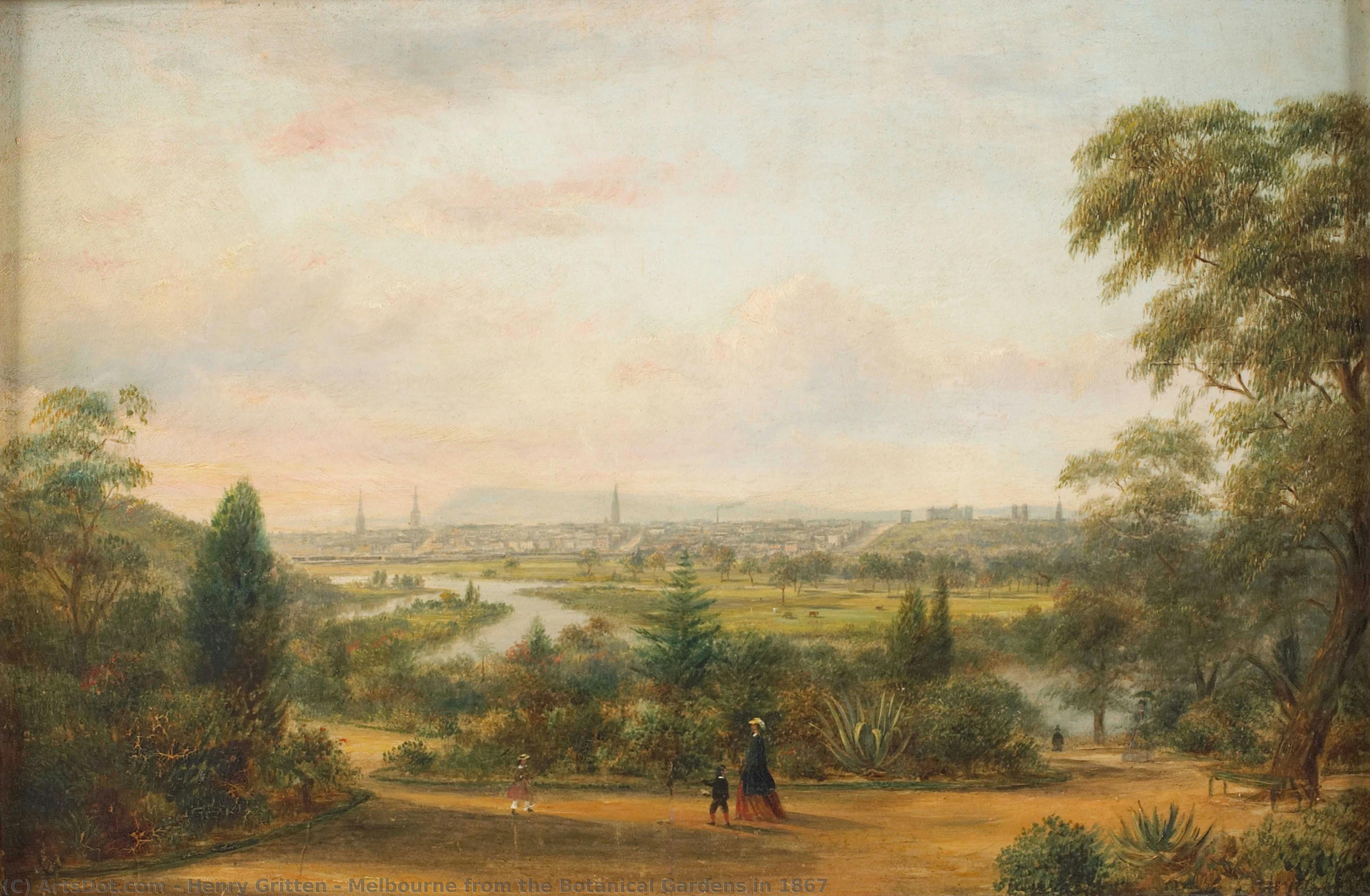
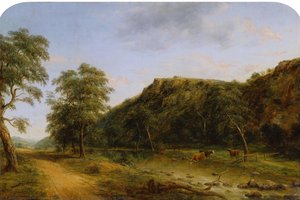
Melbourne from the Botanical Gardens in 1867

 Read More
Hand Made Oil Reproduction
Hand-painted oil on canvas in your size and frame, made to order by our artists. ( Buy Print Buy Image)




































Pick from our preset sizes that match the artwork's original proportions.

You may enter your own dimensions to fit a specific frame or space. If your selected size does not match the original image's proportions, we will either crop the artwork or extend the painting with additional hand-painted elements. A digital mockup will be sent for your approval before production begins.
Please note that the on-screen preview does not reflect the actual cropping or extension. Only the mockup will accurately show the final composition.
While custom sizes are available, we recommend selecting a dimension from the predefined list to preserve the original proportions.
After order, ArtsDot.com team will email client for instructions and provide a mockup preview
Worldwide Delivery () in 3/4 weeks instead of standard 5 weeks. (17 August). No compromise on quality.

Free Worldwide Express Shipping

High-Quality Linen Canvas

Full Shipping Insurance

Customs Tax Refund Guarantee

True Color Matching Guarantee

60-Day Return Policy (Defects Only)

100% Money-Back Guarantee

Bulk Discount Offer
 Glass option is only available in size under 110 CM

Melbourne from the Botanical Gardens in 1867
Reproduction Medium
Reproduction Size
-


Total Price
$ 263
Artwork Description
Related Artworks


Artist Biography
The London Foundations of an Academic Master
Born into the vibrant atmosphere of the nineteenth-century London art trade as the son of a respected picture dealer, Henry Gritten was destined to be shaped by the brush and the canvas from his earliest years. His formative training at the Royal Academy instilled in him a profound respect for the classical techniques that defined the Victorian era, providing him with a rigorous foundation in anatomical precision and meticulous detail. During his early career, between 1835 and 1848, Gritten established himself as a formidable presence in the prestigious halls of the Royal Academy and the British Institution. His works from this period reflect the disciplined spirit of British academic painting, characterized by an unwavering commitment to accurate representation and a mastery of traditional oil methods that captured the structured beauty of his native England with remarkable clarity.As he navigated the competitive London art scene, Gritten began to develop a reputation for technical excellence, yet there was an underlying restlessness in his approach—a desire to move beyond the rigid boundaries of tradition and explore the more ephemeral qualities of the natural world.
Transatlantic Wanderings and the Discovery of Light
The trajectory of Gritten’s artistic journey underwent a breathtaking transformation when he embarked on a transatlantic voyage in 1848, settling in Brooklyn, New York. This period of American residency proved to be a pivotal chapter in his development, as exposure to the burgeoning landscape movements of the New World began to soften the academic edges of his style. Exhibiting at the American Art Union and the National Academy of Design, Gritten found himself immersed in a landscape of shifting light and atmospheric drama. His celebrated New Hampshire scenes, such as Kearsarge Mountain and Recollection of New Hampshire Scenery, reveal a painter in transition; here, the meticulous detail of his London training began to merge with a newfound sensitivity to the fleeting effects of color and atmosphere. This evolution toward capturing the ephemeral essence of nature foreshadowed the stylistic innovations that would eventually define the Impressionist movement, marking Gritten as an artist who was truly looking toward the future of landscape painting.The American experience served not merely as a change in geography, but as a profound shift in perception, allowing him to experiment with the way light interacts with the rugged textures of the wilderness.
The Australian Frontier and a Lasting Legacy
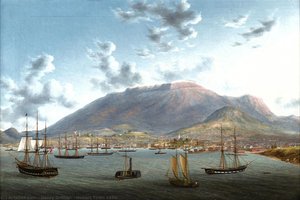
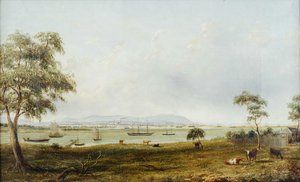
In 1853, Gritten’s path led him to the sun-drenched landscapes of Australia, an arrival that coincided with the feverish energy of the Bendigo goldfields. While he briefly engaged in the arduous life of a prospector, his true calling remained the canvas, and he soon resumed his pursuit of art across Victoria and Tasmania. Gritten became a vital chronicler of the Australian landscape during its formative years, bringing his sophisticated European training to bear on the unique, often harsh, beauty of the Southern Hemisphere. His depictions of Hobart Town and the Yarra River in Melbourne are more than mere topographical records; they are evocative windows into a developing continent, blending classical structure with an intimate understanding of the local light.Today, the historical significance of Henry Gritten lies in his role as a bridge between the formal traditions of the Old World and the burgeoning spirit of Australian landscape art. His works, now held in esteemed collections such as the National Gallery of Victoria and the Mitchell Library, stand as enduring testaments to a life spent chasing the light across three continents. Through his ability to marry academic precision with an atmospheric soul, Gritten left an indelible mark on the annals of nineteenth-century art history.
Henry Gritten
1818 - 1873 , United Kingdom
Quick Facts
- Artistic Movement Or Style: Landscape Painting
- Date Of Birth: 1818
- Full Name: Henry Gritten
- Nationality: English
- Notable Artworks:
- Hobart Town 1856
- Melbourne from the Botanical Gardens in 1867
- Place Of Birth: London, United Kingdom