 Preview
 Send
Send Share
Share
 Details

 Download
 Similars
 X-Ray
X-Ray Diaporama
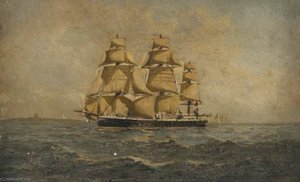
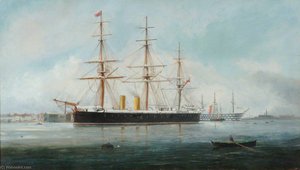
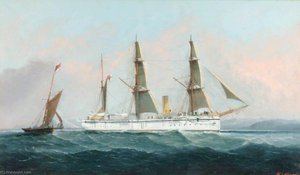
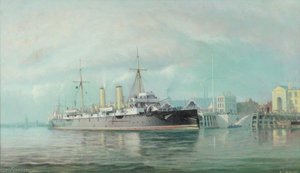
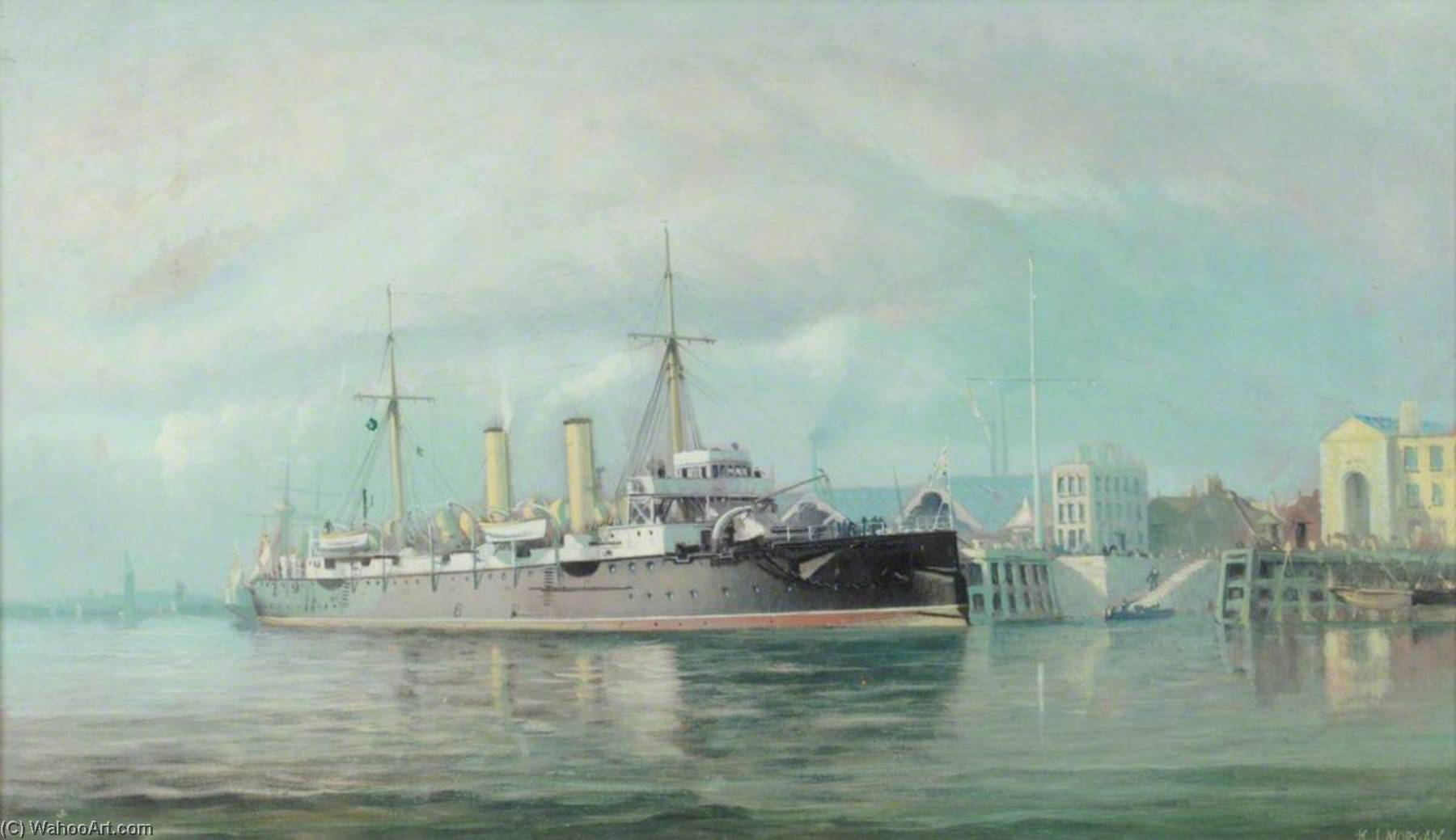
HMS 'Fox', 1896–1898
 34.0 x 59.0 cm
 Read More
Hand Made Oil Reproduction
Hand-painted oil on canvas in your size and frame, made to order by our artists. ( Buy Print Buy Image)




































Pick from our preset sizes that match the artwork's original proportions.

You may enter your own dimensions to fit a specific frame or space. If your selected size does not match the original image's proportions, we will either crop the artwork or extend the painting with additional hand-painted elements. A digital mockup will be sent for your approval before production begins.
Please note that the on-screen preview does not reflect the actual cropping or extension. Only the mockup will accurately show the final composition.
While custom sizes are available, we recommend selecting a dimension from the predefined list to preserve the original proportions.
After order, ArtsDot.com team will email client for instructions and provide a mockup preview
Worldwide Delivery () in 3/4 weeks instead of standard 5 weeks. (20 August). No compromise on quality.

Free Worldwide Express Shipping

High-Quality Linen Canvas

Full Shipping Insurance

Customs Tax Refund Guarantee

True Color Matching Guarantee

60-Day Return Policy (Defects Only)

100% Money-Back Guarantee

Bulk Discount Offer
 Glass option is only available in size under 110 CM

HMS 'Fox', 1896–1898
Reproduction Medium
Reproduction Size
-


Total Price
$ 263
Related Artworks





Artist Biography
The Master of Naval Impressionism: The Life and Legacy of Henry J. Morgan
In the grand tapestry of British maritime art, few threads shimmer with as much atmospheric brilliance as those woven by Henry J. Morgan. Born in London in 1839, Morgan emerged during a transformative era when Britain’s naval supremacy was both a political reality and a profound cultural symbol. While his early years remain somewhat veiled in the mists of history, his artistic trajectory reveals a man deeply enamored with the salt spray and the structural majesty of the sea. His journey began not merely as an observer of ships, but as a student of light and shadow, driven by a lifelong vocation to capture the pulse of the ocean through the lens of Naval Impressionism.
Morgan’s formal education provided the technical bedrock upon which his more fluid, emotive style would later flourish. At the prestigious Slade School of Fine Art, he mastered the rigors of composition and perspective, yet it was his mentorship under luminaries such as George Frederic Watts and William Holman Hunt that truly shaped his artistic soul. From these masters, Morgan inherited a unique duality: the meticulous, almost scientific attention to detail characteristic of the Pre-Raphaelite influence, balanced against an intense desire to evoke emotional resonance. This tension between precision and feeling became the hallmark of his work, allowing him to render the intricate rigging of a warship with absolute clarity while simultaneously capturing the fleeting, ethereal quality of a morning mist over Portsmouth harbor.
A Symphony of Ships and Sea
The oeuvre of Henry J. Morgan is a profound exploration of maritime power and the romanticism of naval life. His canvases serve as historical windows into the Victorian and Edwardian eras, documenting the transition from majestic sailing vessels to the formidable steel-clad warships of a new age. Unlike many of his contemporaries who sought to produce mere photographic records of naval engagements, Morgan sought the spirit of the sea. He utilized loose, impressionistic brushstrokes and a subtle, nuanced palette to convey the movement of turbulent waters and the shifting moods of the sky.
His subject matter frequently centered on the iconic vessels that defined British maritime identity. Through his eyes, we witness:
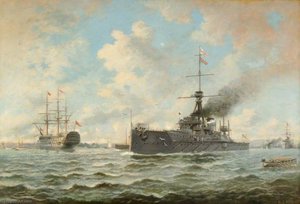
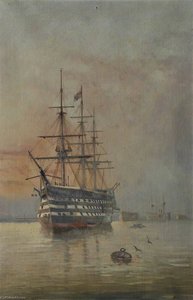
- The Majesty of the Fleet: Notable works such as 'Dreadnought' and 'Victory' at Portsmouth showcase his ability to place legendary ships within a harmonious, atmospheric composition, highlighting their historical weight.
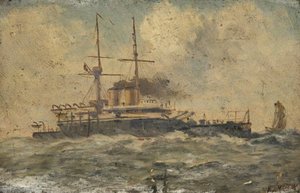
- The Drama of the Elements: In pieces like 'HMS Wanderer' (1887–1891), Morgan captures the raw, untamed energy of warships battling tempestuous seas, using light and shadow to heighten the sense of peril and adventure.
- Serene Naval Life: Beyond the heat of battle, his work often retreats into the quiet dignity of harbor scenes, such as 'HMS Comus' (1899), where the play of light on still water evokes a sense of nostalgic peace.
Historical Significance and Artistic Triumph
The enduring significance of Henry J. Morgan lies in his ability to elevate maritime painting from documentation to high art. By integrating Impressionistic techniques into the traditionally rigid genre of naval art, he bridged the gap between the literal and the lyrical. His work does not simply show us what a ship looked like; it tells us how the sea felt as it surged against the hull. This emotional depth ensured that his paintings remained powerful expressions of historical significance long after the ships themselves had been decommissioned.
As we look back upon his life, which concluded in 1917, we see an artist who successfully captured the twilight of a great maritime era. His legacy is preserved not only in museum collections but in the way he taught us to perceive the sea—not as a static backdrop, but as a living, breathing protagonist in the drama of human history. Through his masterful use of color, light, and motion, Morgan remains a pivotal figure whose work continues to resonate with anyone moved by the timeless allure of the ocean.

henry j morgan
1839 - 1917
Quick Facts
- Artistic Movement Or Style: Maritime painting
- Date Of Birth: 1839
- Date Of Death: 1917
- Full Name: Henry J. Morgan
- Nationality: British
- Notable Artworks:
- Rover
- 'Dreadnought' and 'Victory' at Portsmouth
- Place Of Birth: England