 Send
Send Share
Share
 Details

 Download
 Similars
 Diaporama
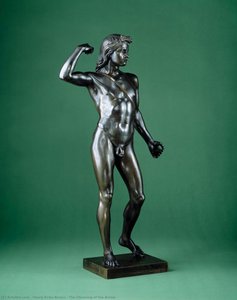
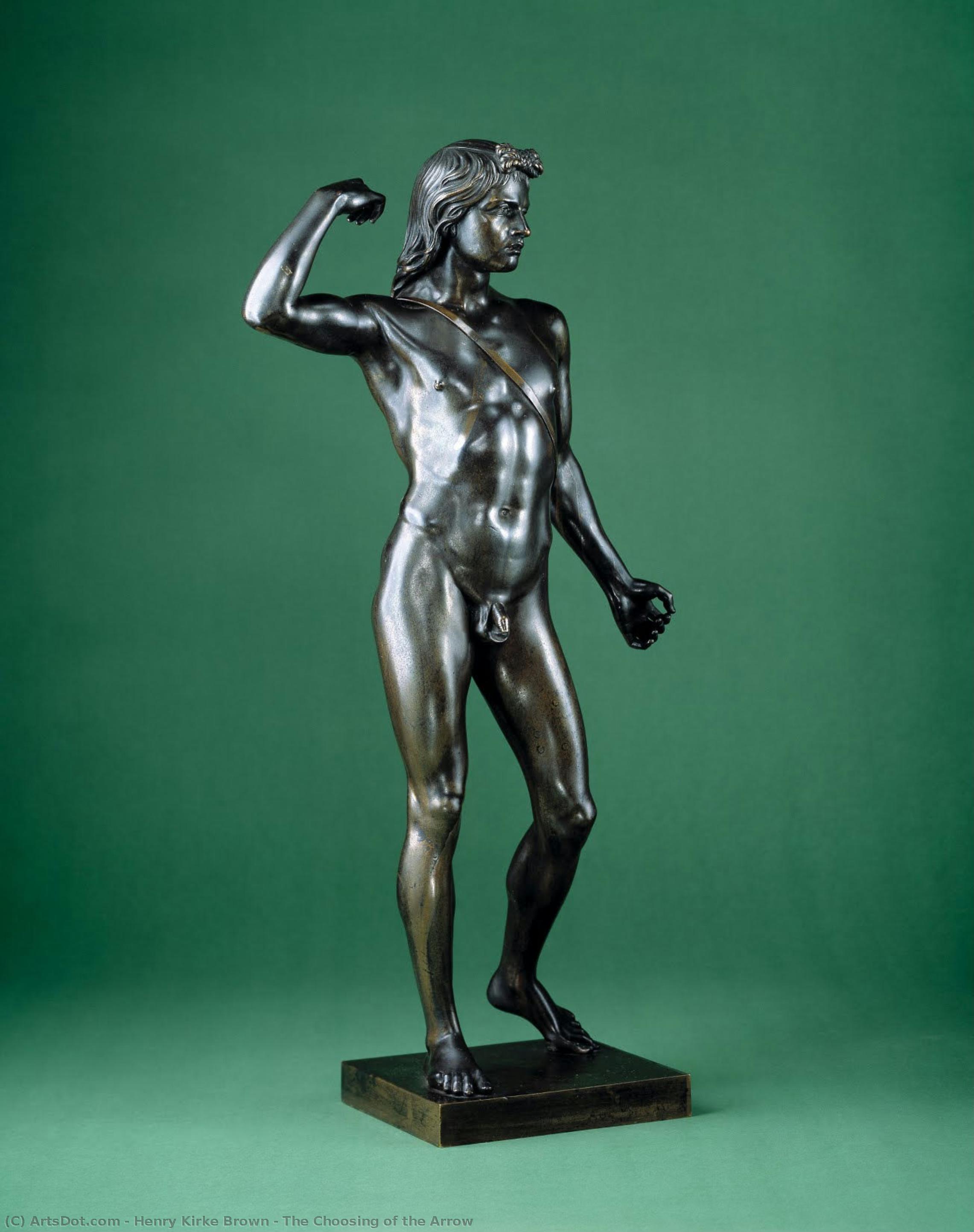
The Choosing of the Arrow


 Read More
Hand Made Oil Reproduction
Hand-painted oil on canvas in your size and frame, made to order by our artists. ( Buy Print Buy Image)




































Pick from our preset sizes that match the artwork's original proportions.

You may enter your own dimensions to fit a specific frame or space. If your selected size does not match the original image's proportions, we will either crop the artwork or extend the painting with additional hand-painted elements. A digital mockup will be sent for your approval before production begins.
Please note that the on-screen preview does not reflect the actual cropping or extension. Only the mockup will accurately show the final composition.
While custom sizes are available, we recommend selecting a dimension from the predefined list to preserve the original proportions.
After order, ArtsDot.com team will email client for instructions and provide a mockup preview
Worldwide Delivery () in 3/4 weeks instead of standard 5 weeks. (27 August). No compromise on quality.

Free Worldwide Express Shipping

High-Quality Linen Canvas

Full Shipping Insurance

Customs Tax Refund Guarantee

True Color Matching Guarantee

60-Day Return Policy (Defects Only)

100% Money-Back Guarantee

Bulk Discount Offer
 Glass option is only available in size under 110 CM

The Choosing of the Arrow
Reproduction Medium
Reproduction Size
-


Total Price
$ 263
Henry Kirke Brown’s “The Choosing of the Arrow”: Bridging Renaissance Ideals with American Spirit
Henry Kirke Brown (1814-1886) stands as a pivotal figure in the history of American sculpture, recognized not merely for his prolific output but also for his pioneering approach to artistic expression—a synthesis of Italian Renaissance ideals with distinctly American sensibilities. Born in Leiden, Massachusetts, he embarked on an artistic journey marked by early talent and unwavering dedication, ultimately establishing himself as one of the nation’s foremost sculptors and a champion of bronze casting techniques. This remarkable achievement cemented his legacy as a sculptor who successfully blended European artistic traditions with uniquely American themes and perspectives.A Vision Inspired by Italy
Brown's formative years were spent honing his craft under the tutelage of Chester Harding in Boston, where he gained foundational knowledge of painting. However, it was his summers working as a railroad engineer—a practical endeavor that simultaneously provided financial stability and instilled a disciplined work ethic—that fueled his ambition to pursue formal artistic training. This dual experience profoundly shaped his worldview and informed his artistic sensibilities, grounding him in both observation and meticulous craftsmanship. Notably, he traveled extensively throughout Europe, immersing himself in the artistic fervor of the Italian Renaissance, specifically Milanese sculpture under Giuseppe Antonio Sant’Anna, which greatly influenced his stylistic choices. Sant’Anna's mastery of idealized human form and dramatic composition served as a cornerstone for Brown’s own sculptural endeavors.The Genesis of “Choosing of the Arrow”
The creation of “The Choosing of the Arrow,” commissioned in 1848 by the American-Art Union, represents a pivotal moment in Brown's artistic career. Driven by a desire to capture the essence of Native American culture and spirituality—a burgeoning interest within the American art scene at the time—Brown undertook a journey to Michigan’s Mackinac Island during the summer of 1848. This expedition coincided with a gathering of Chippewa and Ottawa peoples, providing him with invaluable firsthand observation material. He meticulously sketched these individuals, capturing their postures and expressions with remarkable accuracy – an approach that would become characteristic of his oeuvre.Technical Brilliance: Bronze Casting Innovation
“The Choosing of the Arrow” exemplifies Brown’s dedication to mastering bronze casting techniques—a craft largely absent in America at the time. Recognizing the limitations of traditional methods, he championed innovative approaches that prioritized detail and precision. The statue's polished surface reflects not only the skill of the sculptor but also the burgeoning advancements in metallurgy during this period. This meticulous attention to material science underscores Brown’s commitment to pushing artistic boundaries and elevating sculpture as a medium for conveying profound ideas.Symbolism and Emotional Resonance
The sculpture itself embodies powerful symbolism rooted in Renaissance humanist ideals. The nude male figure, reaching for an arrow from his quiver—a gesture signifying courage, determination, and connection to the natural world—represents a deliberate invocation of classical iconography. Brown’s depiction transcends mere representation; it aspires to evoke contemplation on themes of resilience, spirituality, and the harmonious relationship between humanity and its environment. The statue's serene posture conveys an aura of quiet strength and dignity, inviting viewers to consider the enduring values of observation, discipline, and artistic excellence—values that continue to resonate with audiences today.A Legacy Enduring Through Reproduction
Today, “The Choosing of the Arrow” resides in the Colby College Museum of Art, where it continues to inspire admiration for its technical prowess and artistic vision. ArtsDot.com offers high-quality reproductions that allow enthusiasts worldwide to experience this masterpiece firsthand—a testament to Brown’s enduring contribution to American sculpture and a celebration of the transformative power of art.Related Artworks

Artist Biography
The Sculptor Who Bridged Italy and America
Henry Kirke Brown stands as a pivotal figure in the history of American sculpture, recognized not merely for his prolific output but also for his pioneering approach to artistic expression—a synthesis of Italian Renaissance ideals with distinctly American sensibilities. Born in 1814 in Leyden, Massachusetts, he embarked on an artistic journey marked by early talent and unwavering dedication, ultimately establishing himself as one of the nation’s foremost sculptors and a champion of bronze casting techniques. His life was a testament to the pursuit of a unique national identity through the medium of stone and metal.
Brown's formative years were spent honing his craft under the tutelage of Chester Harding in Boston, where he gained foundational knowledge of painting. However, his path to mastery was far from traditional; his summers working as a railroad engineer provided a practical endeavor that simultaneously offered financial stability and instilled a disciplined work ethic. This unique background would prove invaluable later in his life, informing his deep understanding of form, structure, and the physical demands of monumental sculpture. Through extensive study of modeling, he prepared himself for the rigorous process of bringing massive, enduring works to life.
A Pilgrimage of Style and Substance
Between 1842 and 1846, Brown immersed himself in Italy—a pilgrimage that profoundly shaped his artistic vision. He sought inspiration from the masters of the Renaissance, particularly Donatello, whose meticulous attention to detail and expressive realism served as a guiding principle for his own work. During this period, he also studied Milanese sculpture under Giuseppe Antonio Sant’Anna, whose mastery of the idealized human form and dramatic composition became a cornerstone of Brown’s sculptural endeavors. This European immersion provided him with a sophisticated vocabulary of classical beauty.
Yet, upon returning to New York City, Brown did not merely replicate what he had seen abroad. He consciously endeavored to differentiate his style from prevailing Italian trends, asserting that American sculptors needed to forge their own distinctive identity. This desire for originality fueled his commitment to exploring themes rooted in the American experience. His work began to bridge the gap between the old world and the new, moving away from purely classical tropes toward subjects ranging from portraits of prominent statesmen to poignant depictions of indigenous cultures.
Legacy in Bronze and Stone
The historical significance of Henry Kirke Brown lies in his ability to redefine American aesthetics through his choice of materials and subject matter. He was a pioneer of bronze casting in the United States, a technique that allowed for greater detail and durability in public monuments. His achievements are marked by several monumental contributions to the American landscape:
- Equestrian Mastery: He is celebrated for his commanding equestrian statues, including iconic depictions of figures such as George Washington and Abraham Lincoln, which helped establish a tradition of heroic public sculpture in America.
- Cultural Exploration: Through works like The Choosing of the Arrow, he captured the essence of Native American culture and spirituality, demonstrating a profound engagement with the American spirit.
- Institutional Impact: As a member of the National Academy, his influence extended through his mentorship of other sculptors, such as Larkin Goldsmith Mead Jr., ensuring that his blend of realism and classical technique would endure.
Ultimately, Brown’s career was a bridge between eras. By blending the technical precision of the Italian masters with the raw, burgeoning identity of a young United States, he helped create a sculptural language that was both sophisticated and uniquely American. His legacy remains etched in the bronze and stone of the nation's most significant monuments.
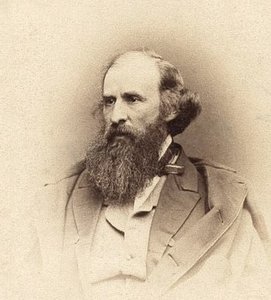
Henry Kirke Brown
1814 - 1886 , United States of America
Quick Facts
- Artistic Movement Or Style: Neoclassical
- Artists Or Movements Influenced By This Artist: ['Italian Masters']
- Artists Who Influenced This Artist:
- Donatello
- Chester Harding
- Date Of Birth: February 24, 1814
- Date Of Death: July 10, 1886
- Full Name: Henry Kirke Brown
- Nationality: American
- Notable Artworks:
- The Choosing of the Arrow
- La Grazia
- Mischief
- George Washington
- Abraham Lincoln
- Dewitt Clinton
- Place Of Birth: Leyden, Massachusetts
Related Articles

Bronze Age to Modern Masters: 10 Sculptures That Redefined Art | ArtsDot
Journey through art history with 10 legendary bronze sculptures – from Michelangelo's David to Rodin’s Thinker. Explore the stories, techniques & timeless beauty of these masterpieces. Find museum-quality reproductions & elevate your home decor on ArtsDot.com.

Bronze Sculptures That Defined Art History | ArtsDot
Journey through art history with our Top 10 bronze sculptures! Explore masterpieces by Rodin, Michelangelo & more. Discover stories behind iconic statues and find museum-quality reproductions for your home decor at ArtsDot.com.

The Enduring Legacy of Bronze: A Historical & Artistic Exploration for the Collector
Explore the rich history & enduring appeal of bronze sculpture with expert insights for collectors at ArtsDot. Learn about casting techniques, iconic artists, collecting tips & contemporary interpretations.
The Enduring Legacy of Bronze: History, Technique & Artistic Expression for the Collector
Explore the rich history & enduring appeal of bronze sculpture with expert insights for collectors at ArtsDot. Learn about casting techniques, iconic artists, and collecting tips.
The Enduring Legacy of Bronze Sculpture: History, Techniques & Contemporary Interpretations
Explore the rich history & enduring appeal of bronze sculpture. Learn about casting techniques, iconic artists, collecting tips, & contemporary interpretations. Expert insights for discerning art collectors.