

 Preview
 Send
Send Share
Share
 Details

 Download
 Similars
 X-Ray
X-Ray Diaporama
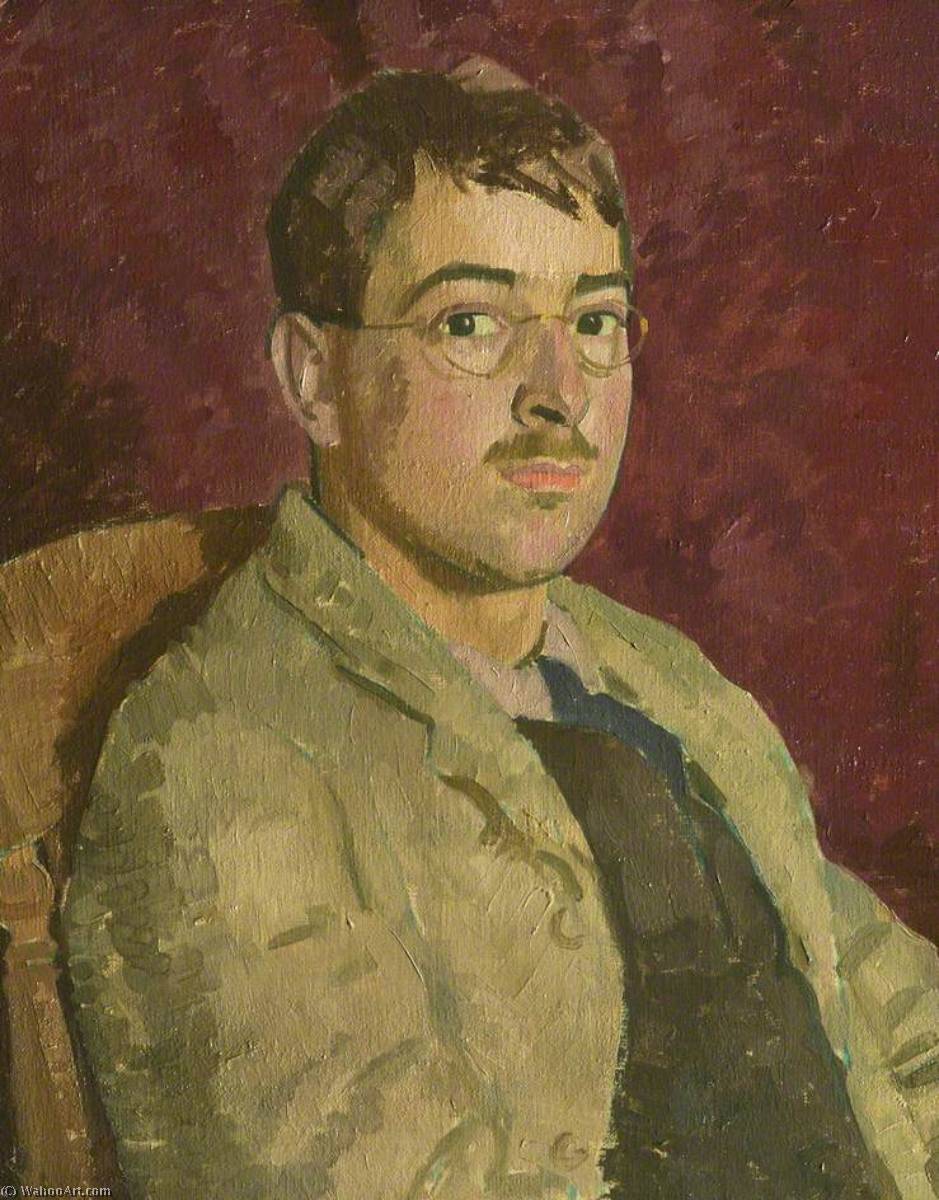
George Lawrence Kennedy (1882–1954), Commoner (1901), Designed and Built Holywell Manor (1931–1932)
 Acrylic On Canvas
- WallArt
- Early 20th Century
 1913
1913 61.0 x 51.0 cm
 Balliol College
 Read More
Purchase a high-resolution, enhanced digital image, far superior to the online preview.
Each file is meticulously prepared by our in-house specialists using advanced tools and expert manual retouching. We ensure every image has exceptional clarity, precise color accuracy, and fine detail.
The final file is delivered via email within 72 hours, optimized for immediate use in professional, editorial, and print environments. This is the same quality trusted by top-tier design studios, publishers, and galleries.
Digital Image
Download a high-resolution file for personal display, printing, and creative projects. ( Buy Print Buy Hand Made Painting)
Included in Every Digital Image Order
Expert Digital Delivery, Guaranteed
When you choose ArtsDot.com, you're not just getting an image - you're receiving a professionally enhanced digital artwork, crafted with precision and backed by a satisfaction guarantee. Here's everything that comes with your order, automatically:

Fast Email Delivery
Your high-resolution digital image file will be emailed to you within 72 hours of ordering - ready for immediate use.

AI-Enhanced Digital File
Your artwork is professionally optimized using advanced AI tools and manual editing, ensuring maximum detail, clarity, and color accuracy.

Free Lifetime Re-Delivery
Accidentally deleted or lost your file? No worries - we'll resend it to you anytime, free of charge.

No Import Fees - Ever
Enjoy your artwork instantly with zero customs, duties, or delivery fees - digital downloads are always tax-free.

Color Accuracy Guarantee
We ensure your digital image reflects the original colors as closely as possible using professional tools and color management.

60-Day Satisfaction Guarantee
If you're not satisfied with your digital image, we'll revise it or refund 100% within 60 days - no questions asked.

100% Money-Back Guarantee
Not satisfied? Get a full refund within 60 days of receiving your digital file - no questions asked.

Bulk Order Discounts
Buy 3 images, save 10% - Buy 5, save 15% - Buy 10+, save 20%. Great for creative projects, galleries, and agencies.
Collectible Description
George Lawrence Kennedy’s “The Commoner”: A Portrait of Idealism in Early Modernity
Henry Lamb's 1913 painting, "The Commoner," isn’t merely a likeness; it’s a carefully constructed embodiment of the burgeoning ideals surrounding American citizenship and reform during a pivotal moment in history. The subject, George Lawrence Kennedy – a prominent figure known for his advocacy of common rights and his ambitious project to build Holywell Manor – is presented with an arresting directness that immediately commands attention. Lamb, deeply influenced by the artistic currents of the Camden Town Group and later the London Group, masterfully captures Kennedy’s intellectual intensity through a restrained yet profoundly expressive palette and a subtly dynamic composition.
The painting's style leans heavily into early modernist principles, exhibiting characteristics reminiscent of both John Singer Sargent and William Orpen. Lamb skillfully employs loose brushstrokes and a muted color scheme—primarily browns, grays, and ochres—to create an atmosphere of thoughtful contemplation rather than overt grandeur. This deliberate choice reflects the era’s shift away from academic realism towards capturing psychological depth and emotional resonance. The lighting is particularly effective, casting a soft, diffused glow that highlights Kennedy's face and hands, drawing the viewer into his gaze.
A Study in Form and Gesture
Lamb’s technical prowess is evident in his meticulous rendering of detail, particularly in the textures of Kennedy’s clothing – the subtle folds of his jacket, the worn fabric of his trousers. However, he avoids excessive realism, opting instead for a more suggestive approach. The hands, resting thoughtfully on his chin, are rendered with remarkable sensitivity, conveying both intelligence and a quiet determination. The chair itself—a simple, sturdy piece of furniture—provides an anchor for the composition, grounding Kennedy within a domestic setting while simultaneously suggesting a life dedicated to public service.
Noticeably, Lamb utilizes a slightly unconventional pose; Kennedy isn’t formally upright but leans forward with a relaxed posture. This subtle gesture hints at his engagement with ideas and his willingness to challenge established norms. The composition is carefully balanced, creating a sense of visual harmony that reinforces the painting's overall message of quiet strength and unwavering conviction.
Symbolism and Historical Context
“The Commoner” was painted during a period of intense social and political upheaval in America—the early 20th century. The rise of populism, labor movements, and progressive reforms fueled a widespread desire for greater citizen participation and accountability. George Lawrence Kennedy himself embodied this spirit, advocating for land reform, fair wages, and democratic governance through his ambitious building project, Holywell Manor. The painting, therefore, serves as a visual representation of these ideals—a portrait not just of an individual but of a movement.
Furthermore, the title itself is laden with symbolic weight. “The Commoner” refers to William Jennings Bryan, a prominent figure in American politics and a champion of populist causes. Lamb’s decision to depict Kennedy alongside this iconic figure suggests a shared commitment to democratic principles and a belief in the power of ordinary citizens to shape their own destiny. The painting can be interpreted as an endorsement of Bryan's vision and a celebration of the values he espoused.
A Legacy of Idealism
“The Commoner” remains a powerful testament to the enduring appeal of democratic ideals. Lamb’s masterful execution, combined with the painting’s rich historical context and symbolic resonance, ensures its continued relevance as a work of art that speaks to the core values of citizenship, justice, and social responsibility. Reproductions of this compelling portrait offer a valuable window into a transformative era in American history—a reminder of the ongoing struggle to realize the promise of a truly democratic society.
Related Artworks
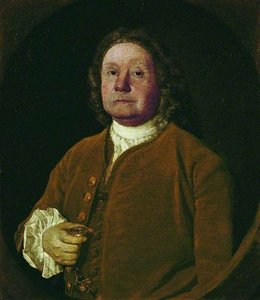
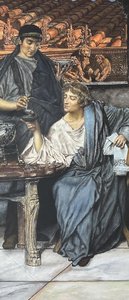
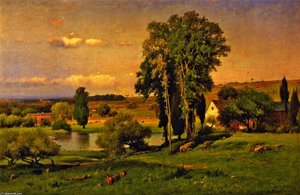
Artist Biography
A Life Bridging Continents and Eras
Henry Lamb, born in Adelaide, Australia, in 1883, was an artist whose life unfolded as a fascinating intersection of cultures and historical upheaval. The son of Sir Horace Lamb, a renowned mathematician, young Henry’s early years were steeped in intellectual stimulation. However, his path diverged from the purely academic when the family relocated to Manchester, England, in 1885—a move that proved pivotal, exposing him to a burgeoning artistic scene that would ultimately claim his allegiance. Initially pursuing medical studies at both Manchester University and Guy's Hospital, Lamb found himself increasingly drawn to the world of art, an irresistible pull he could no longer deny. By 1906, he decisively abandoned medicine, enrolling at Chelsea School of Art under the tutelage of Augustus John and William Orpen—a decision that would define his creative destiny. Subsequent studies at the Académie de la Palette in Paris further honed his skills, immersing him in the avant-garde currents of early 20th-century European art and introducing him to influential figures like Jean Metzinger and Henri Le Fauconnier.Formative Influences and Artistic Awakening
The influence of Augustus John on Lamb’s artistic development was profound. John's emphasis on drawing from life, a direct lineage from the Slade School tradition, instilled in Lamb a commitment to observation and expressive line work. This foundation became central to his unique style—a style that favored capturing the essence of a subject rather than mere photographic representation. Lamb’s early years were also deeply intertwined with the bohemian circles of London, where he encountered and befriended prominent figures like Lytton Strachey, whose penetrating portrait would become one of Lamb's most celebrated achievements. His relationship with Nina Forrest, known affectionately as “Euphemia,” proved equally significant; she became his muse, model, and a constant source of inspiration—a figure who embodied the spirit of artistic freedom and unconventional beauty that permeated the era. Lamb’s involvement in the Camden Town Group in 1911 and later the London Group in 1913 solidified his position within the progressive art movement challenging conventional artistic norms. These groups provided a platform for experimentation and fostered a spirit of collaboration that shaped Lamb's evolving aesthetic, pushing him to explore new forms of expression and challenge established conventions.War, Witness, and Remembrance
The outbreak of World War I dramatically altered the course of Lamb’s life. Returning to his medical training, he served as a battalion medical officer with the 5th Battalion, Royal Inniskilling Fusiliers, witnessing firsthand the horrors of conflict. Awarded the Military Cross for his bravery, Lamb was also appointed an official war artist, tasked with documenting the realities of warfare. This dual role—healer and observer—profoundly impacted his artistic vision. His wartime paintings, such as “Irish Troops in the Judaean Hills Surprised by a Turkish Bombardment,” are not merely depictions of battle but poignant reflections on the psychological toll of war, capturing moments of vulnerability and unexpected beauty amidst chaos. These works stand as powerful testaments to the human cost of conflict and remain significant historical documents—a stark reminder of the brutality and senselessness of war. The experience imbued his work with a newfound depth and emotional resonance, forever shaping his artistic perspective.A Legacy in Portraiture and Beyond
While Lamb’s wartime experiences left an indelible mark on his work, he is perhaps best known for his evocative portraits. He possessed a remarkable ability to capture not just the physical likeness but also the inner character of his subjects—their thoughts, their emotions, their very souls. His portrait of Lytton Strachey, with its penetrating gaze and psychological depth, remains a masterpiece of 20th-century British portraiture. Throughout his career, Lamb continued to paint portraits, extending his practice to include high-ranking military commanders during World War II. His later years saw him appointed a Trustee of both the National Portrait Gallery and the Tate Gallery, demonstrating his respected position within the art world. Elected an Associate of the Royal Academy in 1940 and a full member in 1949, Lamb continued to paint until arthritis curtailed his ability to work. He died in 1960, leaving behind a rich artistic legacy that continues to resonate with audiences today. His contribution lies not only in his technical skill but also in his profound sensitivity to the human condition and his ability to translate complex emotions onto canvas. Lamb’s art serves as a compelling reminder of the power of observation, empathy, and the enduring relevance of portraiture.Key Characteristics & Artistic Style
- Expressive Line Work: Heavily influenced by Augustus John, Lamb’s work is characterized by a dynamic and expressive use of line, creating a sense of movement and energy.
- Psychological Depth: His portraits are renowned for their ability to capture the inner lives of his subjects, revealing their personalities and emotions with remarkable sensitivity.
- Post-Impressionist Influences: While rooted in traditional techniques, Lamb’s work also exhibits elements of Post-Impressionism, particularly in his use of color and form.
- War Art as Testimony: His wartime paintings are not simply depictions of conflict but powerful statements about the human cost of war, imbued with a sense of empathy and realism.
- Bohemian Spirit: Lamb’s association with the Camden Town Group and his personal life reflect a bohemian spirit—a rejection of conventional norms and an embrace of artistic freedom.
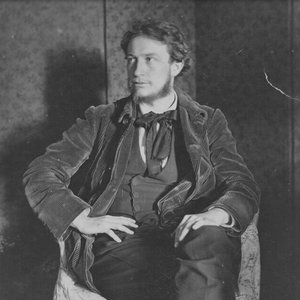
Henry Lamb
1883 - 1960 , Australia
Quick Facts
- Artistic Movement Or Style: Post-Impressionism
- Artists Who Influenced This Artist:
- Augustus John
- William Orpen
- Date Of Birth: 1883
- Date Of Death: 1960
- Full Name: Henry Lamb
- Nationality: British
- Notable Artworks:
- Lytton Strachey
- Irish Troops in the Judean Hills
- Place Of Birth: Adelaide, Australia

