

 Preview
 Send
Send Share
Share
 Details

 Download
 Similars
 X-Ray
X-Ray Diaporama
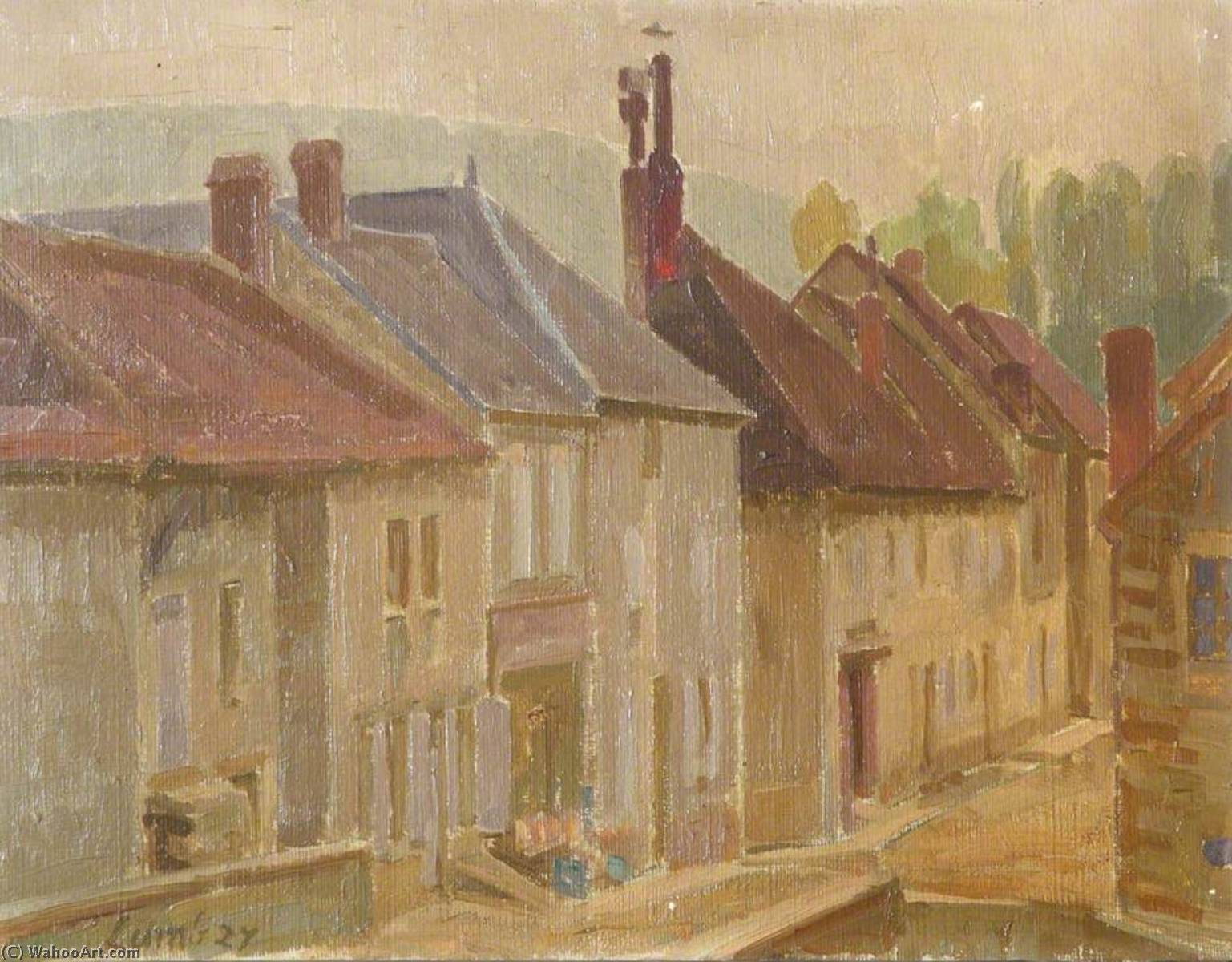
Village in Burgundy
 Acrylic On Canvas
- WallArt
- Post-Impressionism
 1927
1927 25.0 x 33.0 cm
 Wadham College
 Read More
Purchase a high-resolution, enhanced digital image, far superior to the online preview.
Each file is meticulously prepared by our in-house specialists using advanced tools and expert manual retouching. We ensure every image has exceptional clarity, precise color accuracy, and fine detail.
The final file is delivered via email within 72 hours, optimized for immediate use in professional, editorial, and print environments. This is the same quality trusted by top-tier design studios, publishers, and galleries.
Digital Image
Download a high-resolution file for personal display, printing, and creative projects. ( Buy Print Buy Hand Made Painting)
Included in Every Digital Image Order
Expert Digital Delivery, Guaranteed
When you choose ArtsDot.com, you're not just getting an image - you're receiving a professionally enhanced digital artwork, crafted with precision and backed by a satisfaction guarantee. Here's everything that comes with your order, automatically:

Fast Email Delivery
Your high-resolution digital image file will be emailed to you within 72 hours of ordering - ready for immediate use.

AI-Enhanced Digital File
Your artwork is professionally optimized using advanced AI tools and manual editing, ensuring maximum detail, clarity, and color accuracy.

Free Lifetime Re-Delivery
Accidentally deleted or lost your file? No worries - we'll resend it to you anytime, free of charge.

No Import Fees - Ever
Enjoy your artwork instantly with zero customs, duties, or delivery fees - digital downloads are always tax-free.

Color Accuracy Guarantee
We ensure your digital image reflects the original colors as closely as possible using professional tools and color management.

60-Day Satisfaction Guarantee
If you're not satisfied with your digital image, we'll revise it or refund 100% within 60 days - no questions asked.

100% Money-Back Guarantee
Not satisfied? Get a full refund within 60 days of receiving your digital file - no questions asked.

Bulk Order Discounts
Buy 3 images, save 10% - Buy 5, save 15% - Buy 10+, save 20%. Great for creative projects, galleries, and agencies.
Collectible Description
A Window on Burgundy: Henry Lamb’s “Village in Burgundy”
Henry Lamb's "Village in Burgundy" isn’t merely a depiction of a quaint French hamlet; it’s a carefully constructed tableau brimming with the quiet dignity and subtle melancholy characteristic of his oeuvre. Painted in 1927, this work offers a poignant glimpse into a bygone era, capturing not just the visual landscape but also an underlying sense of timelessness—a feeling that resonates deeply within the viewer long after the initial observation. The scene unfolds on a gently sloping hillside, bathed in the soft, diffused light typical of the Burgundian countryside. The village itself is rendered with a deliberate restraint, its houses – a collection of modest dwellings painted in earthy browns and ochres – arranged with an almost architectural precision that speaks to Lamb’s keen eye for composition. Notice the subtle variations in roofline and window placement; these aren't haphazard details but rather carefully considered elements contributing to the overall harmony of the scene.
Lamb’s style, firmly rooted in Post-Impressionism yet infused with a uniquely personal sensibility, is immediately apparent. He eschews photographic realism, instead prioritizing emotional resonance and expressive brushwork. The paint itself seems to shimmer—a testament to his layering technique, building up texture and depth through multiple applications of color. The use of broken color – small, distinct patches of hue rather than blended tones – creates a luminous quality, mimicking the dappled sunlight filtering through the trees. This deliberate manipulation of light and shadow isn’t simply decorative; it serves to imbue the scene with an atmosphere of quiet contemplation, inviting the viewer to linger and absorb its subtle nuances.
The Artist's Context: Henry Lamb and the Camden Town Group
To fully appreciate “Village in Burgundy,” one must understand the artistic landscape from which it emerged. Henry Lamb was a pivotal figure within the Camden Town Group, a collective of British artists who rejected the prevailing academic traditions of the early 20th century. This group, centered around Walter Sickert’s studio, championed a more direct and emotionally charged approach to painting—a rejection of idealized beauty in favor of capturing the gritty realities of modern life. Lamb's association with Camden Town profoundly influenced his artistic development, shaping his interest in portraying ordinary subjects with honesty and vulnerability.
Born in Adelaide, Australia, in 1883, Lamb’s journey to England was transformative. His father, Sir Horace Lamb, a renowned mathematician, provided an intellectually stimulating environment during his formative years, but it was the vibrant artistic scene of Manchester that truly ignited Lamb's passion. He initially pursued medicine, demonstrating a pragmatic streak, yet ultimately succumbed to the irresistible pull of art. His relocation to London and subsequent studies at Chelsea School of Art under the tutelage of Augustus John and William Orpen solidified his commitment to painting as his primary vocation. The influence of these mentors is palpable in Lamb’s work—a blend of John's expressive brushwork and Orpen’s meticulous attention to detail.
Symbolism and Emotional Resonance
Beyond its picturesque subject matter, “Village in Burgundy” carries a subtle undercurrent of melancholy. The muted color palette, the slightly overcast sky, and the quiet stillness of the scene all contribute to this sense of wistful contemplation. The village itself seems almost suspended in time—a moment captured before the relentless march of modernity encroaches upon its idyllic existence. Consider the two chimneys prominently displayed; they aren’t merely architectural features but rather symbols of domesticity, warmth, and perhaps even a fading tradition.
Lamb's portraits, particularly his wartime works, often explored themes of loss, resilience, and the psychological impact of conflict. While “Village in Burgundy” lacks the overt drama of these later pieces, it shares a similar emotional depth—a quiet acknowledgment of the fragility of human existence and the enduring beauty of the natural world. The painting invites us to reflect on our own place within history and the fleeting nature of time.
A Reproduction for Your Space
ArtsDot offers meticulously crafted hand-painted reproductions of Henry Lamb’s “Village in Burgundy,” ensuring that you can bring this evocative artwork into your home or office. Our skilled artisans employ traditional techniques, carefully matching the original's color palette and brushwork to create a faithful representation of Lamb’s artistic vision. Available in various sizes, from intimate 25x33 cm prints to larger statement pieces, our reproductions are printed on archival-quality canvas for lasting beauty and durability. “Village in Burgundy” is more than just a painting; it's an invitation to slow down, appreciate the simple pleasures of life, and connect with the timeless artistry of Henry Lamb.
Related Artworks
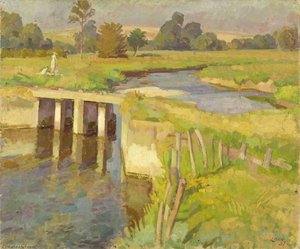
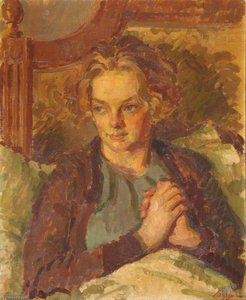
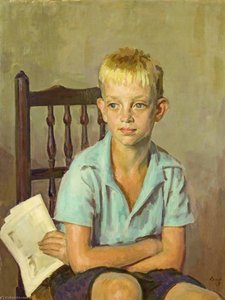
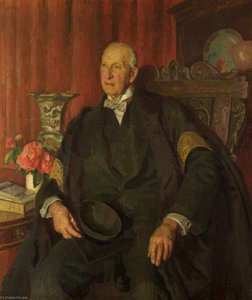
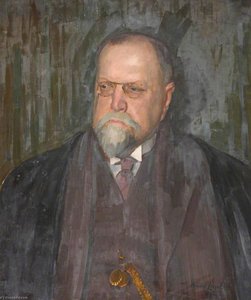
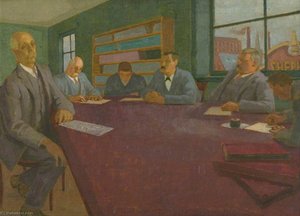
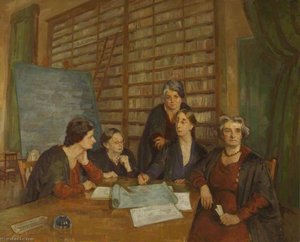
Artist Biography
A Life Bridging Continents and Eras
Henry Lamb, born in Adelaide, Australia, in 1883, was an artist whose life unfolded as a fascinating intersection of cultures and historical upheaval. The son of Sir Horace Lamb, a renowned mathematician, young Henry’s early years were steeped in intellectual stimulation. However, his path diverged from the purely academic when the family relocated to Manchester, England, in 1885—a move that proved pivotal, exposing him to a burgeoning artistic scene that would ultimately claim his allegiance. Initially pursuing medical studies at both Manchester University and Guy's Hospital, Lamb found himself increasingly drawn to the world of art, an irresistible pull he could no longer deny. By 1906, he decisively abandoned medicine, enrolling at Chelsea School of Art under the tutelage of Augustus John and William Orpen—a decision that would define his creative destiny. Subsequent studies at the Académie de la Palette in Paris further honed his skills, immersing him in the avant-garde currents of early 20th-century European art and introducing him to influential figures like Jean Metzinger and Henri Le Fauconnier.Formative Influences and Artistic Awakening
The influence of Augustus John on Lamb’s artistic development was profound. John's emphasis on drawing from life, a direct lineage from the Slade School tradition, instilled in Lamb a commitment to observation and expressive line work. This foundation became central to his unique style—a style that favored capturing the essence of a subject rather than mere photographic representation. Lamb’s early years were also deeply intertwined with the bohemian circles of London, where he encountered and befriended prominent figures like Lytton Strachey, whose penetrating portrait would become one of Lamb's most celebrated achievements. His relationship with Nina Forrest, known affectionately as “Euphemia,” proved equally significant; she became his muse, model, and a constant source of inspiration—a figure who embodied the spirit of artistic freedom and unconventional beauty that permeated the era. Lamb’s involvement in the Camden Town Group in 1911 and later the London Group in 1913 solidified his position within the progressive art movement challenging conventional artistic norms. These groups provided a platform for experimentation and fostered a spirit of collaboration that shaped Lamb's evolving aesthetic, pushing him to explore new forms of expression and challenge established conventions.War, Witness, and Remembrance
The outbreak of World War I dramatically altered the course of Lamb’s life. Returning to his medical training, he served as a battalion medical officer with the 5th Battalion, Royal Inniskilling Fusiliers, witnessing firsthand the horrors of conflict. Awarded the Military Cross for his bravery, Lamb was also appointed an official war artist, tasked with documenting the realities of warfare. This dual role—healer and observer—profoundly impacted his artistic vision. His wartime paintings, such as “Irish Troops in the Judaean Hills Surprised by a Turkish Bombardment,” are not merely depictions of battle but poignant reflections on the psychological toll of war, capturing moments of vulnerability and unexpected beauty amidst chaos. These works stand as powerful testaments to the human cost of conflict and remain significant historical documents—a stark reminder of the brutality and senselessness of war. The experience imbued his work with a newfound depth and emotional resonance, forever shaping his artistic perspective.A Legacy in Portraiture and Beyond
While Lamb’s wartime experiences left an indelible mark on his work, he is perhaps best known for his evocative portraits. He possessed a remarkable ability to capture not just the physical likeness but also the inner character of his subjects—their thoughts, their emotions, their very souls. His portrait of Lytton Strachey, with its penetrating gaze and psychological depth, remains a masterpiece of 20th-century British portraiture. Throughout his career, Lamb continued to paint portraits, extending his practice to include high-ranking military commanders during World War II. His later years saw him appointed a Trustee of both the National Portrait Gallery and the Tate Gallery, demonstrating his respected position within the art world. Elected an Associate of the Royal Academy in 1940 and a full member in 1949, Lamb continued to paint until arthritis curtailed his ability to work. He died in 1960, leaving behind a rich artistic legacy that continues to resonate with audiences today. His contribution lies not only in his technical skill but also in his profound sensitivity to the human condition and his ability to translate complex emotions onto canvas. Lamb’s art serves as a compelling reminder of the power of observation, empathy, and the enduring relevance of portraiture.Key Characteristics & Artistic Style
- Expressive Line Work: Heavily influenced by Augustus John, Lamb’s work is characterized by a dynamic and expressive use of line, creating a sense of movement and energy.
- Psychological Depth: His portraits are renowned for their ability to capture the inner lives of his subjects, revealing their personalities and emotions with remarkable sensitivity.
- Post-Impressionist Influences: While rooted in traditional techniques, Lamb’s work also exhibits elements of Post-Impressionism, particularly in his use of color and form.
- War Art as Testimony: His wartime paintings are not simply depictions of conflict but powerful statements about the human cost of war, imbued with a sense of empathy and realism.
- Bohemian Spirit: Lamb’s association with the Camden Town Group and his personal life reflect a bohemian spirit—a rejection of conventional norms and an embrace of artistic freedom.
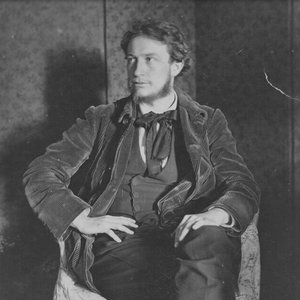
Henry Lamb
1883 - 1960 , Australia
Quick Facts
- Artistic Movement Or Style: Post-Impressionism
- Artists Who Influenced This Artist:
- Augustus John
- William Orpen
- Date Of Birth: 1883
- Date Of Death: 1960
- Full Name: Henry Lamb
- Nationality: British
- Notable Artworks:
- Lytton Strachey
- Irish Troops in the Judean Hills
- Place Of Birth: Adelaide, Australia

