

 Preview
 Send
Send Share
Share
 Details

 Download
 Similars
 X-Ray
X-Ray Diaporama
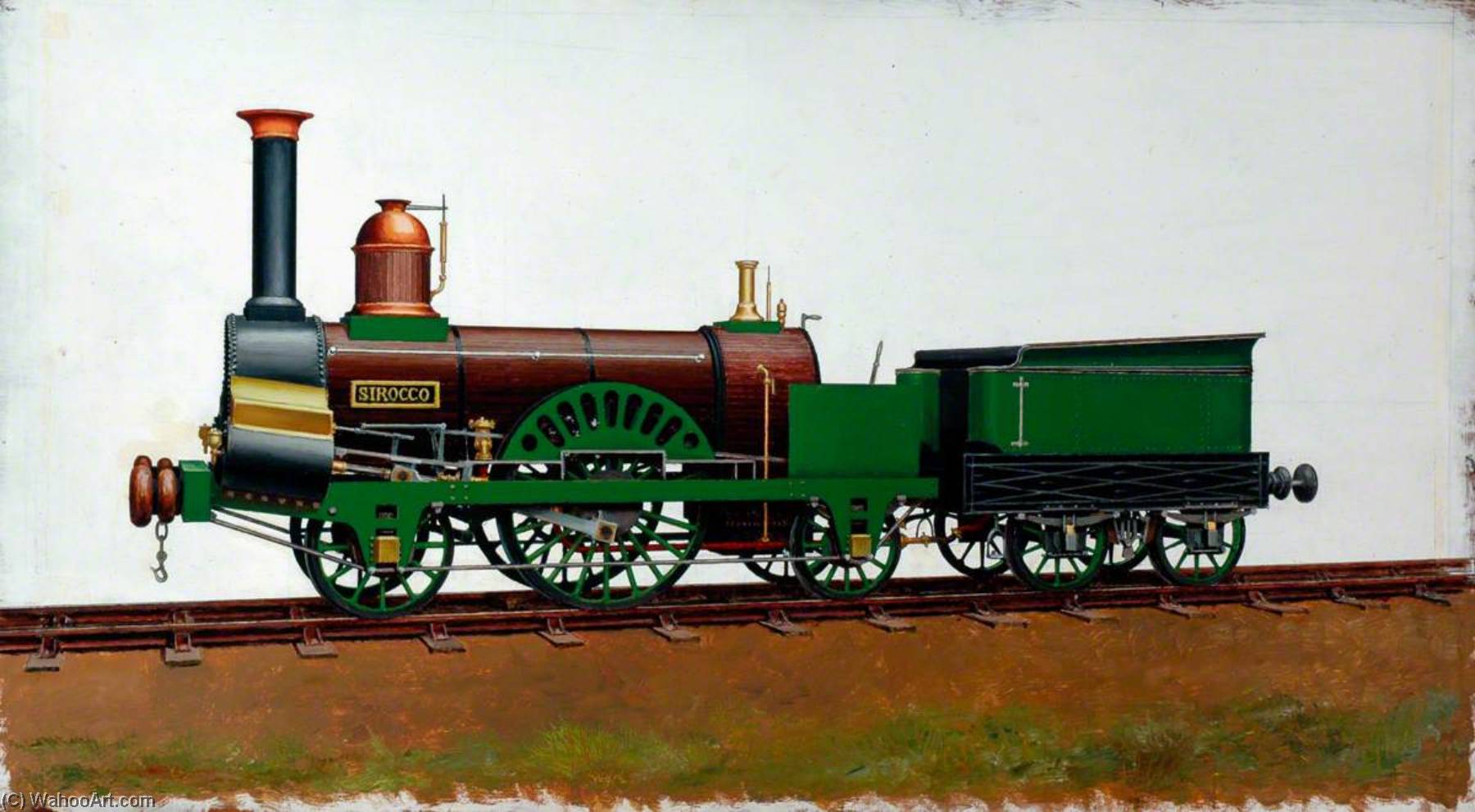
Grand Junction Railway 2–2–2 Locomotive 'Sirocco'
 41.0 x 71.0 cm
 Read More
Purchase a high-resolution, enhanced digital image, far superior to the online preview.
Each file is meticulously prepared by our in-house specialists using advanced tools and expert manual retouching. We ensure every image has exceptional clarity, precise color accuracy, and fine detail.
The final file is delivered via email within 72 hours, optimized for immediate use in professional, editorial, and print environments. This is the same quality trusted by top-tier design studios, publishers, and galleries.
Digital Image
Download a high-resolution file for personal display, printing, and creative projects. ( Buy Print Buy Hand Made Painting)
Included in Every Digital Image Order
Expert Digital Delivery, Guaranteed
When you choose ArtsDot.com, you're not just getting an image - you're receiving a professionally enhanced digital artwork, crafted with precision and backed by a satisfaction guarantee. Here's everything that comes with your order, automatically:

Fast Email Delivery
Your high-resolution digital image file will be emailed to you within 72 hours of ordering - ready for immediate use.

AI-Enhanced Digital File
Your artwork is professionally optimized using advanced AI tools and manual editing, ensuring maximum detail, clarity, and color accuracy.

Free Lifetime Re-Delivery
Accidentally deleted or lost your file? No worries - we'll resend it to you anytime, free of charge.

No Import Fees - Ever
Enjoy your artwork instantly with zero customs, duties, or delivery fees - digital downloads are always tax-free.

Color Accuracy Guarantee
We ensure your digital image reflects the original colors as closely as possible using professional tools and color management.

60-Day Satisfaction Guarantee
If you're not satisfied with your digital image, we'll revise it or refund 100% within 60 days - no questions asked.

100% Money-Back Guarantee
Not satisfied? Get a full refund within 60 days of receiving your digital file - no questions asked.

Bulk Order Discounts
Buy 3 images, save 10% - Buy 5, save 15% - Buy 10+, save 20%. Great for creative projects, galleries, and agencies.
Related Artworks









Artist Biography
The Railway Visionary: The Life and Art of Henry Maurice Whitcombe
In the grand tapestry of twentieth-century British art, few figures captured the rhythmic pulse of industrial progress as intimately as Henry Maurice Whitcombe. Born on August 15th, 1900, in Hardwick, Buckinghamshire, Whitcombe’s life was a remarkable convergence of military discipline, athletic prowess, and an evocative, watercolor-driven passion for the locomotive. While history may remember him as a colonel in the Royal Engineers or a cricketer for Essex, his true legacy resides in the delicate, atmospheric washes of color that brought the vanished era of steam back to life. His journey was not merely one of artistic evolution, but a profound meditation on the beauty found within the iron and steel of a rapidly changing world.
Whitcombe’s early years were shaped by a rigorous intellectual foundation in mathematics and science, a background that would later serve as the bedrock for his technical precision. His service during the Great War and subsequent deployment to Burma with the Royal Engineers instilled in him a keen eye for structural detail and an appreciation for the complex mechanics of engineering. This period of observation was crucial; it taught him to see the world through a lens of meticulous accuracy, a trait that would define his later masterpieces. As he transitioned from the structured life of an army officer to the fluid medium of watercolor, he carried with him this unique ability to marry scientific exactitude with an Impressionist’s sensitivity to light and atmosphere.
A Symphony of Steam and Light
The true emergence of Whitcombe as a master of railway artistry began in earnest during the 1930s. Moving away from purely architectural sketches, he embraced the loose, expressive brushstrokes characteristic of the Impressionist movement, heavily influenced by the way Claude Monet captured the ephemeral nature of light. For Whitcombe, a locomotive was never just a machine; it was a vessel of motion, a symbol of human ambition, and a subject capable of extraordinary aesthetic grace. He possessed a rare talent for capturing the way steam billowed against a twilight sky or how the sun glinted off a polished brass boiler, creating works that felt less like technical illustrations and more like living memories.
His dedication to historical accuracy was unparalleled. Whitcombe did not merely paint trains; he resurrected them. Through exhaustive research into locomotive designs, he painstakingly recreated legendary engines such as the 'Snake' of the London and South Western Railway and the 'Liverpool'* of the London and North Western Railway. His work often focused on the "vanished" era—the period between 1830 and 1870—recreating a sense of Victorian grandeur that had long since faded from the tracks of Britain. This commitment to historical preservation through art ensured that his paintings served as both aesthetic triumphs and vital historical documents.
Legacy and Historical Significance
The significance of Whitcombe’s oeuvre extends far beyond the realm of railway enthusiasts. His work represents a poignant intersection of industrial history and fine art, capturing the transition from the Victorian age of steam to the modern era. By focusing on the beauty of the machine, he elevated the industrial landscape to the status of high art, finding poetry in the soot, smoke, and steel of the British rail network. His ability to convey a palpable sense of movement and grandeur allowed viewers to experience the transformative power of engineering innovation through a deeply emotional lens.
Today, the works of Henry Maurice Whitcombe continue to resonate within prestigious collections, including the Science Museum Group, where his depictions of nineteenth-century locomotives serve as windows into a bygone age. His life remains a testament to the idea that passion can bridge disparate worlds—from the battlefield and the cricket pitch to the quiet, focused solitude of the artist's studio. Through his brush, the rhythmic clatter of the tracks and the majestic plumes of steam are preserved forever in a timeless, watercolor embrace.
henry maurice whitcombe
1900 - 1984
Quick Facts
- Artistic Movement Or Style: Railway Art
- Artists Or Movements Influenced By This Artist: ['American Rail Art']
- Artists Who Influenced This Artist: ['Maurice Kaufmann']
- Date Of Birth: 15 August 1900
- Date Of Death: 1984
- Full Name: Henry Maurice Whitcombe
- Nationality: British
- Notable Artworks:
- London and North Western Railway 6–2–0 Locomotive 'Liverpool'
- London and South Western Railway 2–4–0 Well Tank Locomotive
- Place Of Birth: England

