

 Preview
 Send
Send Share
Share
 Details

 Download
 Similars
 X-Ray
X-Ray Diaporama
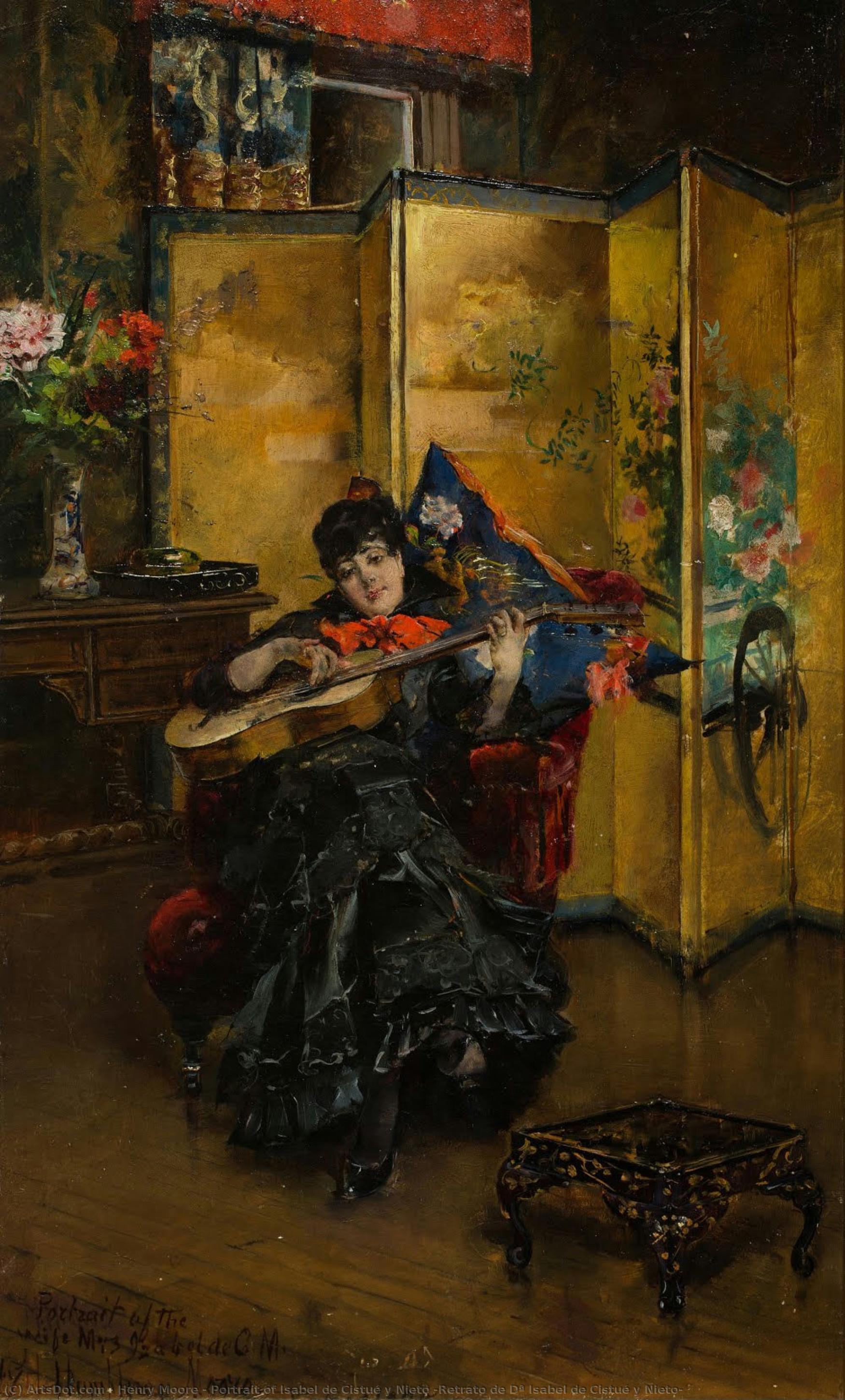
Portrait of Isabel de Cistué y Nieto (Retrato de Dª Isabel de Cistué y Nieto)
 Oil On Panel
- Henry Moore
 21.0 x 36.0 cm
 Zaragoza Museum
 Read More
Purchase a high-resolution, enhanced digital image, far superior to the online preview.
Each file is meticulously prepared by our in-house specialists using advanced tools and expert manual retouching. We ensure every image has exceptional clarity, precise color accuracy, and fine detail.
The final file is delivered via email within 72 hours, optimized for immediate use in professional, editorial, and print environments. This is the same quality trusted by top-tier design studios, publishers, and galleries.
Digital Image
Download a high-resolution file for personal display, printing, and creative projects. ( Buy Print Buy Hand Made Painting)
Included in Every Digital Image Order
Expert Digital Delivery, Guaranteed
When you choose ArtsDot.com, you're not just getting an image - you're receiving a professionally enhanced digital artwork, crafted with precision and backed by a satisfaction guarantee. Here's everything that comes with your order, automatically:

Fast Email Delivery
Your high-resolution digital image file will be emailed to you within 72 hours of ordering - ready for immediate use.

AI-Enhanced Digital File
Your artwork is professionally optimized using advanced AI tools and manual editing, ensuring maximum detail, clarity, and color accuracy.

Free Lifetime Re-Delivery
Accidentally deleted or lost your file? No worries - we'll resend it to you anytime, free of charge.

No Import Fees - Ever
Enjoy your artwork instantly with zero customs, duties, or delivery fees - digital downloads are always tax-free.

Color Accuracy Guarantee
We ensure your digital image reflects the original colors as closely as possible using professional tools and color management.

60-Day Satisfaction Guarantee
If you're not satisfied with your digital image, we'll revise it or refund 100% within 60 days - no questions asked.

100% Money-Back Guarantee
Not satisfied? Get a full refund within 60 days of receiving your digital file - no questions asked.

Bulk Order Discounts
Buy 3 images, save 10% - Buy 5, save 15% - Buy 10+, save 20%. Great for creative projects, galleries, and agencies.
The Enigmatic Gaze: Henry Moore’s Portrait of Isabel de Cistué y Nieto
Henry Moore's “Portrait of Isabel de Cistué y Nieto” isn’t merely a depiction of a woman; it’s an intimate exploration of light, form, and the quiet dignity of a life lived within a richly textured world. Painted in 1895, this oil-on-panel work offers a glimpse into the private sphere of a noblewoman – Isabel de Cistué y Nieto – from Aragon, rendered with a sensitivity that transcends simple representation. The painting immediately draws the eye to her face, framed by a cascade of dark hair and shadowed eyes that hold both intelligence and a subtle melancholy. Moore masterfully employs chiaroscuro, utilizing dramatic contrasts between light and shadow to sculpt Isabel’s features and imbue the scene with an almost theatrical quality. This technique wasn't entirely new at the time, but Moore used it in a way that felt uniquely his own – prioritizing mood and atmosphere over photographic realism.
The setting itself is crucial to understanding the portrait’s emotional depth. Isabel sits within a room defined by its oriental influences: a vibrant red wall provides a bold backdrop, while intricate details like vases scattered around suggest an appreciation for decorative arts. The inclusion of these elements hints at Isabel's social standing and her engagement with the aesthetic sensibilities of her era. Noticeably, the room is bathed in soft, diffused light, creating a sense of warmth and tranquility – a deliberate choice that invites the viewer to linger and contemplate the subject’s inner world. The composition feels deliberately restrained; there are no overt displays of wealth or grandeur, focusing instead on the quiet beauty of the individual.
A Master of Form: Moore's Sculptural Approach to Painting
While often celebrated for his monumental bronze sculptures, Henry Moore’s early work reveals a profound understanding of form and space. “Portrait of Isabel de Cistué y Nieto” demonstrates this skill remarkably well. Moore approached painting with the same tactile sensibility he brought to sculpture – an emphasis on three-dimensionality and the interplay of light and shadow. He wasn't interested in creating a flat, static image; instead, he sought to capture the essence of his subject through carefully considered modeling and layering of paint. The way he renders Isabel’s clothing, for instance, isn’t simply painted; it appears to be sculpted from the surface itself, adding volume and depth to the composition.
The influence of Fortuny is evident in the painting's color palette and decorative elements – a Spanish artist known for his evocative use of light and shadow. Moore clearly admired Fortuny’s ability to capture fleeting moments of beauty and emotion, and he adopted this approach in his own work. The subtle gradations of color, the delicate modeling of Isabel’s features, and the overall sense of intimacy all contribute to a powerful emotional impact.
Symbolism and Intimacy: Unpacking the Portrait's Layers
Beyond its technical brilliance, “Portrait of Isabel de Cistué y Nieto” is rich in symbolic meaning. The guitar resting in her hands suggests a cultivated intellect and perhaps a refined sensibility – a woman comfortable with both beauty and intellectual pursuits. The pose itself—seated, relaxed, yet alert—conveys a sense of self-possession and quiet confidence. It’s not a grand, heroic portrait; rather, it's an intimate study of a single individual, revealing her character through subtle gestures and expressions.
Furthermore, the room itself can be interpreted as a reflection of Isabel’s inner world – a space filled with beauty, comfort, and perhaps a hint of melancholy. The oriental details evoke a sense of exoticism and sophistication, while the red wall adds a touch of drama and intensity. Ultimately, Moore's portrait invites us to step into Isabel’s world and contemplate her life, her thoughts, and her enduring presence.
Related Artworks
Artist Biography
A Life Sculpted in Form: The World of Henry Moore
Henry Spencer Moore, born in the Yorkshire mining town of Castleford in 1898, emerged as one of Britain’s most significant and internationally celebrated sculptors of the twentieth century. His journey from humble beginnings to global recognition is a testament to his unwavering dedication to artistic exploration and his profound connection to the human form and the natural world. Moore's father, a self-taught man with a passion for learning, instilled in him a belief in the power of education, steering him away from the life of a miner towards formal schooling. Even as a young boy, Moore demonstrated an innate talent for modeling clay and carving wood, foreshadowing the path his life would take. This early engagement with tactile materials laid the foundation for a career defined by three-dimensional form. His experiences growing up amidst the rolling hills of Yorkshire deeply influenced his aesthetic sensibility, imbuing his work with a sense of organic fluidity that echoes the landscape of his birthplace.Early Influences and Artistic Development
Moore’s artistic education began at Castleford Secondary School, where his art teacher recognized and nurtured his talent. He later attended Leeds School of Art and then the Royal College of Art in London, immersing himself in the study of classical sculpture and modern movements like Cubism. However, Moore wasn't simply a follower of trends; he synthesized these influences into something uniquely his own. A pivotal moment came during a visit to Mexico in 1925, where he encountered pre-Columbian sculptures – particularly those of the Aztec civilization. The powerful simplicity and abstract forms of these works resonated deeply with Moore, liberating him from conventional representational constraints. He began to explore abstraction more fully, focusing on the human figure as a source of inspiration but moving away from strict anatomical accuracy. This period saw the development of his signature style: semi-abstract sculptures characterized by rounded, organic shapes and often featuring openings or voids that played with light and space.The Reclining Figure and Mother and Child
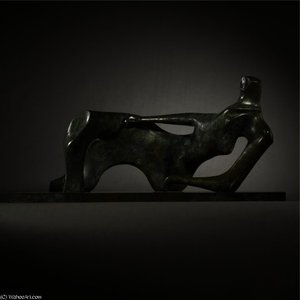
Throughout his career, two recurring motifs dominated Moore’s oeuvre: the reclining figure and the mother and child. The *reclining figure*, in particular, became synonymous with his name. These sculptures are not merely depictions of the human body at rest; they are explorations of form, volume, and the relationship between the figure and its surrounding space. Their undulating curves evoke a sense of timelessness and serenity, while their often fragmented or pierced forms suggest vulnerability and resilience. The *mother and child* theme, equally prevalent in his work, speaks to universal themes of love, protection, and nurturing. Moore’s depictions of mothers and children are imbued with a profound emotional depth, capturing the intimate bond between parent and offspring. These sculptures were not idealized representations but rather honest portrayals of human connection, often reflecting the anxieties and uncertainties of the era in which they were created.Wartime Reflections and Public Commissions
The outbreak of World War II profoundly impacted Moore’s work. He began documenting Londoners sheltering from the Blitz in the Underground stations, creating a series of powerful drawings that captured the fear, resilience, and communal spirit of the time. These *Shelter Drawings* are not only important historical documents but also demonstrate Moore's ability to translate his sculptural sensibility into two-dimensional form. After the war, Moore received numerous public commissions, allowing him to create large-scale sculptures for schools, hospitals, and civic spaces. He believed that art should be accessible to all and actively sought opportunities to integrate his work into everyday life. These monumental bronzes became landmarks, transforming urban landscapes and inspiring generations of artists and viewers. His ability to fulfill these grand projects while remaining true to his artistic vision solidified his reputation as a leading figure in modern sculpture.Legacy and Enduring Influence
Henry Moore’s influence on twentieth-century art is undeniable. He paved the way for subsequent generations of sculptors, challenging conventional notions of form and space and demonstrating the power of abstraction. His work continues to resonate with audiences today, inspiring awe and contemplation. In 1977, Moore established the Henry Moore Foundation, ensuring that his legacy would endure through education and the promotion of the arts. The foundation supports artists, scholars, and institutions worldwide, furthering Moore’s commitment to fostering creativity and artistic innovation. His sculptures stand as enduring monuments to human ingenuity and a testament to the transformative power of art.- Major Themes: Human form, abstraction, mother and child, reclining figures, landscape.
- Key Influences: Classical sculpture, Cubism, pre-Columbian art, the Yorkshire landscape.
- Notable Works: *Reclining Figure: 1951*, *Family Group*, *Shelter Drawings*.
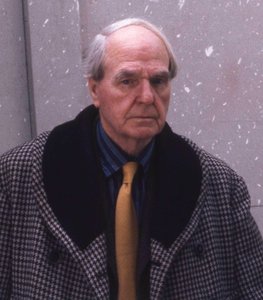
Henry Moore
1898 - 1986 , United Kingdom
Quick Facts
- Artistic Movement Or Style: Modernism, Abstract sculpture
- Date Of Birth: July 30, 1898
- Date Of Death: August 31, 1986
- Full Name: Henry Spencer Moore
- Nationality: British
- Notable Artworks:
- Reclining Figure
- Shelter Drawings
- Madonna and Child
- Pointed Torso
- Sheep 1
- Place Of Birth: Castleford, UK

