 Preview
 Send
Send Share
Share
 Details

 Download
 Similars
 X-Ray
X-Ray Diaporama
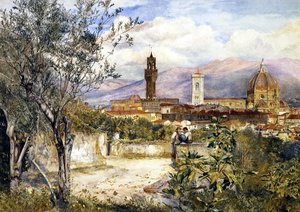
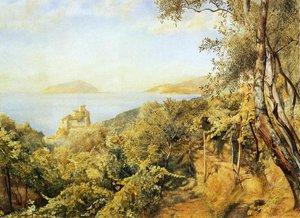
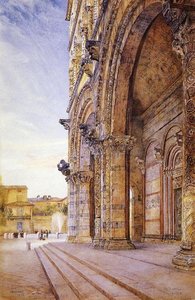
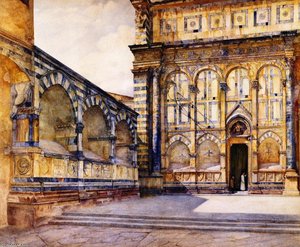
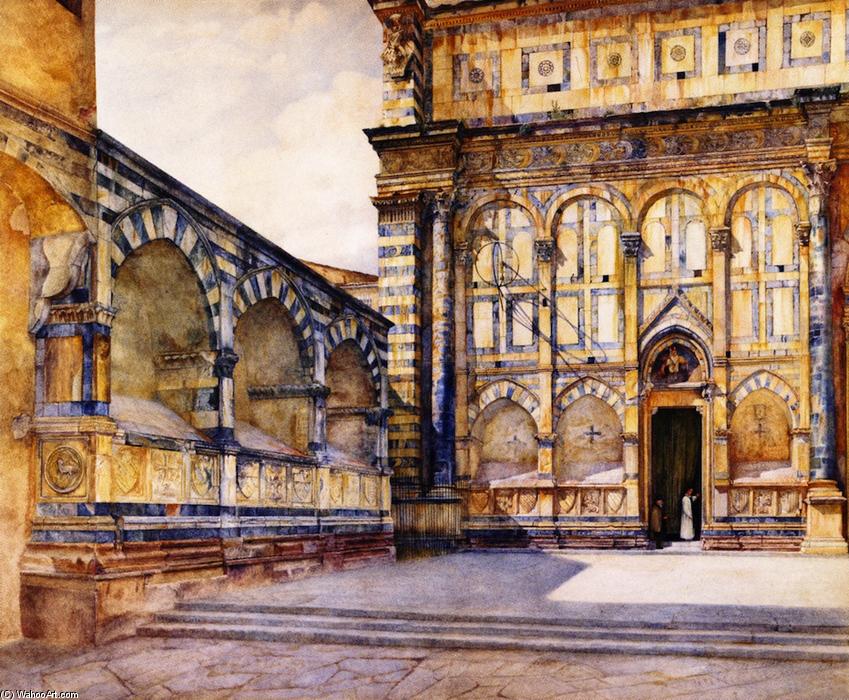
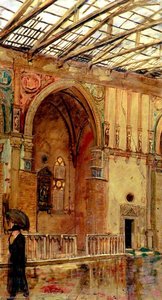
Santa Maria Novella, Florence, Italy

 Read More
Hand Made Oil Reproduction
Hand-painted oil on canvas in your size and frame, made to order by our artists. ( Buy Print Buy Image)




































Pick from our preset sizes that match the artwork's original proportions.

You may enter your own dimensions to fit a specific frame or space. If your selected size does not match the original image's proportions, we will either crop the artwork or extend the painting with additional hand-painted elements. A digital mockup will be sent for your approval before production begins.
Please note that the on-screen preview does not reflect the actual cropping or extension. Only the mockup will accurately show the final composition.
While custom sizes are available, we recommend selecting a dimension from the predefined list to preserve the original proportions.
After order, ArtsDot.com team will email client for instructions and provide a mockup preview
Worldwide Delivery () in 3/4 weeks instead of standard 5 weeks. (16 August). No compromise on quality.

Free Worldwide Express Shipping

High-Quality Linen Canvas

Full Shipping Insurance

Customs Tax Refund Guarantee

True Color Matching Guarantee

60-Day Return Policy (Defects Only)

100% Money-Back Guarantee

Bulk Discount Offer
 Glass option is only available in size under 110 CM

Santa Maria Novella, Florence, Italy
Reproduction Medium
Reproduction Size
-


Total Price
$ 263
Related Artworks


Artist Biography
A Visionary of Light and Line: The Life of Henry Roderick Newman
Born in the quiet landscape of Easton, New York, in 1833, Henry Roderick Newman emerged as a master of the watercolor medium, weaving together the meticulous precision of the Pre-Raphaelite tradition with the luminous, fleeting energy of Impressionism. His life and work represent a profound dialogue between the structured observation of nature and the emotional resonance of light. Influenced deeply by the American Transcendentalist movement during his formative years, Newman viewed the natural world not merely as a subject for documentation, but as a spiritual gateway. This philosophical foundation instilled in his art a sense of reverence for the botanical and the architectural, treating every petal and stone with an almost sacred attention to detail.
Newman’s artistic journey underwent a transformative metamorphosis when he departed the United States for Italy in 1879. This relocation to Florence served as the catalyst for his most celebrated period of creativity. Immersed in the vibrant artistic currents of Europe, he forged connections with Italian masters such as Giovanni Fattori and Giuseppe Mengoni. From these luminaries, Newman adopted a more fluid brushstroke and a heightened sensitivity to the way sunlight dances across surfaces. His work began to move beyond mere botanical accuracy toward a pursuit of atmosphere, capturing the ephemeral qualities of the Tuscan sun and the soft, hazy horizons of the Italian countryside.
Mastery of Medium and Subject
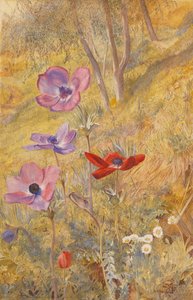
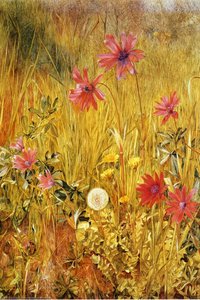
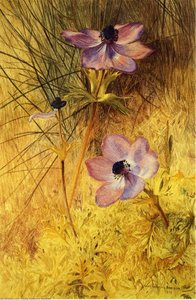
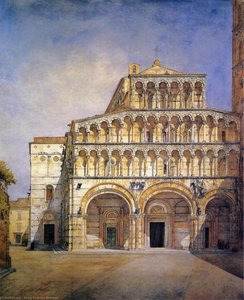
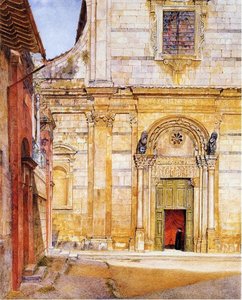
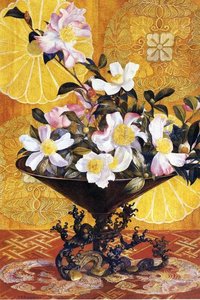
The breadth of Newman’s oeuvre is nothing short of extraordinary, spanning over 300 watercolors that traverse continents and cultures. His technical prowess allowed him to navigate between vastly different scales of observation, from the sweeping panoramic vistas of the Italian hills to the intimate, microscopic beauty of floral studies. In his architectural renderings, such as the stunning Facade of the Duomo at Lucca, one can witness a remarkable command of Romanesque forms, rendered with a soft light that breathes life into the ancient stone. Conversely, his botanical works, like the delicate Florentine Wild Anemones, showcase a meticulousness that honors his Pre-Raphaelite roots, capturing the vibrant, shimmering hues of nature in full bloom.
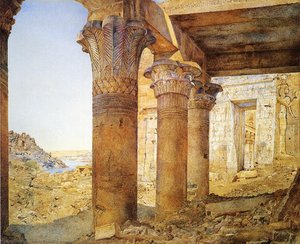
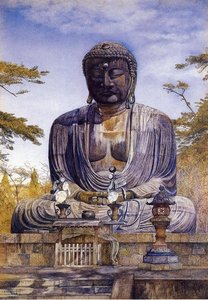
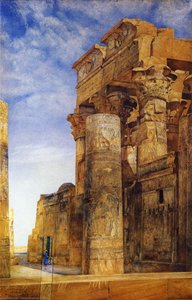
Beyond the borders of Italy, Newman’s wanderlust led him to explore the ancient wonders of Egypt and the delicate aesthetics of Japan. These travels expanded his visual vocabulary, allowing him to integrate exotic textures and unique light qualities into his repertoire. His ability to adapt his style—utilizing the tonal gradations of Luminism to create depth while employing Impressionistic color palettes to suggest movement—ensured that his work remained dynamic and emotionally engaging. Whether depicting the monumental Temple of Philae from the Outer Court or a quiet garden in Florence, Newman’s hand is always recognizable by its ability to evoke a specific sense of place and time.
Legacy and Artistic Significance
The historical significance of Henry Roderick Newman lies in his role as a bridge between eras. He stood at the intersection of the Victorian era's reverence for detail and the modern era's obsession with light and perception. His work serves as a vital record of the late 19th-century artistic evolution, documenting both the physical landscapes of the world and the shifting psychological landscape of art itself. Through his watercolors, he achieved a rare harmony:
- Technical Precision: A dedication to the structural integrity of his subjects, rooted in American Transcendentalist observation.
- Atmospheric Innovation: The adoption of European Impressionistic techniques to capture light and shadow.
- Global Perspective: An expansive subject matter that brought the beauty of Italy, Egypt, and Japan to a global audience.
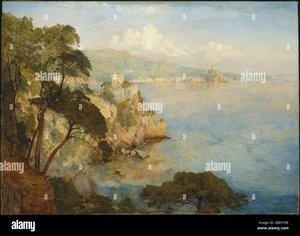
henry roderick newman
1833 - 1918 , United States of America
Quick Facts
- Artistic Movement Or Style: Pre-Raphaelite & Impressionism
- Artists Or Movements Influenced By This Artist: ['Impressionism']
- Artists Who Influenced This Artist:
- William Holman Hunt
- John Ruskin
- Date Of Birth: March 4, 1833
- Full Name: Henry Roderick Newman
- Nationality: American
- Notable Artworks:
- Temple of Philae from the Outer Court
- Florentine Wild Anemones
- Place Of Birth: Easton, New York