 Preview
 Send
Send Share
Share
 Details

 Download
 Similars
 X-Ray
X-Ray Diaporama
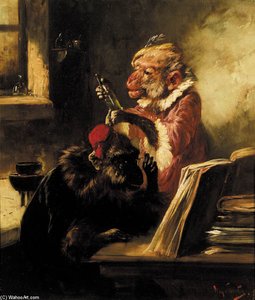
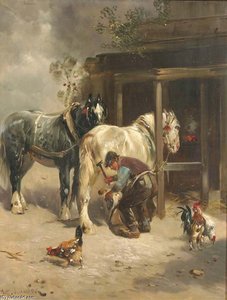
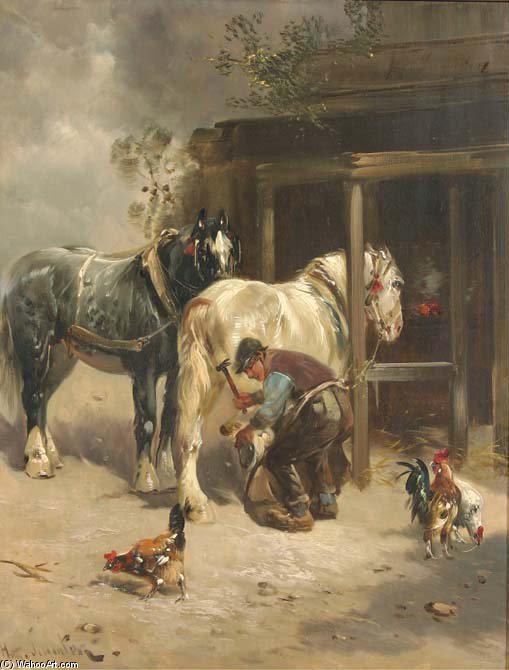
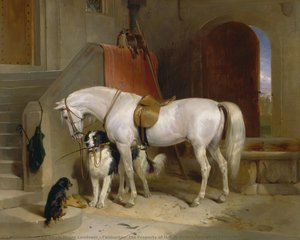
The Hoof Smith
 Read More
Hand Made Oil Reproduction
Hand-painted oil on canvas in your size and frame, made to order by our artists. ( Buy Print Buy Image)




































Pick from our preset sizes that match the artwork's original proportions.

You may enter your own dimensions to fit a specific frame or space. If your selected size does not match the original image's proportions, we will either crop the artwork or extend the painting with additional hand-painted elements. A digital mockup will be sent for your approval before production begins.
Please note that the on-screen preview does not reflect the actual cropping or extension. Only the mockup will accurately show the final composition.
While custom sizes are available, we recommend selecting a dimension from the predefined list to preserve the original proportions.
After order, ArtsDot.com team will email client for instructions and provide a mockup preview
Worldwide Delivery () in 3/4 weeks instead of standard 5 weeks. (17 August). No compromise on quality.

Free Worldwide Express Shipping

High-Quality Linen Canvas

Full Shipping Insurance

Customs Tax Refund Guarantee

True Color Matching Guarantee

60-Day Return Policy (Defects Only)

100% Money-Back Guarantee

Bulk Discount Offer
 Glass option is only available in size under 110 CM

The Hoof Smith
Reproduction Medium
Reproduction Size
-


Total Price
$ 263
Related Artworks

Artist Biography
Henry Schouten: A Belgian Master of Rural Realism
Henry Schouten (1857-1927) emerges from the rich artistic landscape of 19th-century Belgium as a quietly significant figure, celebrated for his evocative depictions of rural life and particularly, his intimate portrayals of animals within their natural habitats. While not always commanding the immediate attention of the most prominent art movements of his era, Schouten’s meticulous observation, skillful technique, and deeply rooted connection to the Belgian countryside have secured him a place as a respected realist painter whose work continues to resonate with viewers today.
Born in Ghent, Belgium, Schouten's early life unfolded amidst the agricultural heartland of his nation. His family history is somewhat complex; he was born in Indonesia, a detail often overlooked, reflecting the colonial realities of the time. Returning to Belgium, he enrolled at the prestigious Academy of Brussels in 1876, where he studied under Alfred Jacques Verwee, a renowned animal painter who profoundly influenced Schouten’s artistic trajectory. Verwee's emphasis on capturing the essence and character of animals – their posture, expression, and interaction with their environment – became a cornerstone of Schouten’s own approach.
The Palette of the Countryside
Schouten’s oeuvre is overwhelmingly defined by his subject matter: scenes from rural Belgium. He eschewed grand historical or mythological themes in favor of capturing the everyday lives of farmers, shepherds, and their livestock. His paintings are not merely representations of these figures; they are imbued with a palpable sense of atmosphere – the dampness of a misty morning, the warmth of a summer sun, the quiet dignity of a working animal. Schouten’s color palette is remarkably restrained yet effective, relying on earthy tones—ochres, browns, greens, and blues—to create a harmonious and believable representation of the Belgian landscape.
A key element of Schouten's style lies in his meticulous attention to detail. He painstakingly rendered the textures of fur, wool, and earth, capturing the subtle nuances of light and shadow. His compositions are often carefully balanced, drawing the viewer’s eye through the scene with a natural flow. He frequently employed a slightly elevated viewpoint, as if observing the action from a nearby farmhouse window – a technique that lends his paintings an intimate and engaging quality.
Animals as Subjects
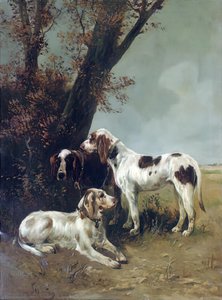
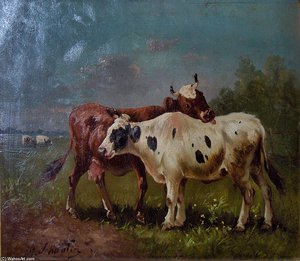
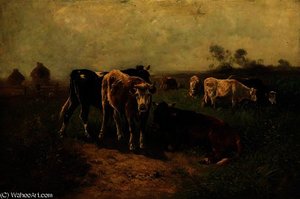
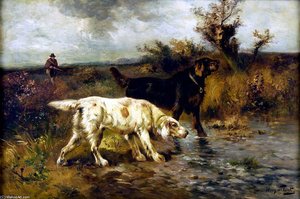
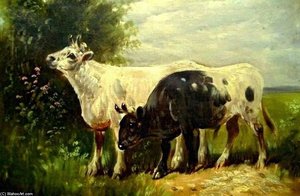
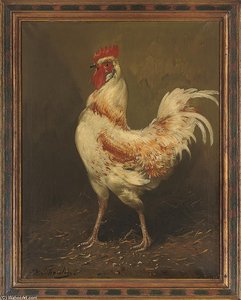
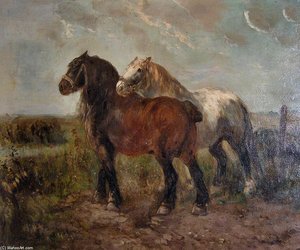
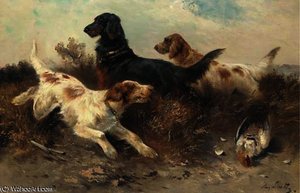
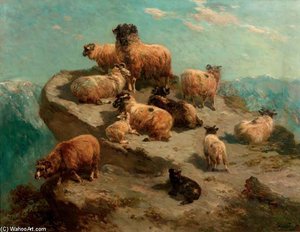
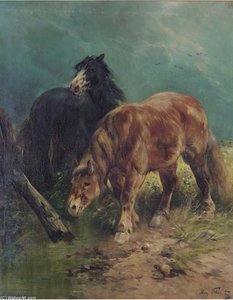
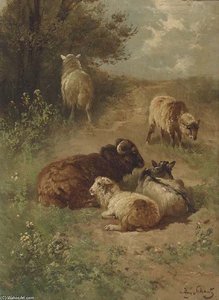
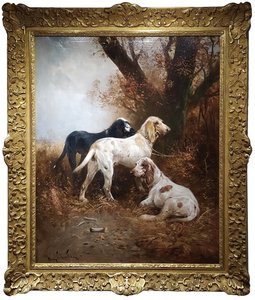
While Schouten painted a variety of subjects, it is undoubtedly his depictions of animals that define his artistic legacy. He possessed a remarkable ability to capture the personalities and behaviors of horses, dogs, cattle, sheep, and poultry. His paintings are not simply illustrations of animal anatomy; they reveal a deep understanding of their psychology and instincts. Schouten’s work demonstrates an empathy for these creatures, portraying them with dignity, grace, and a quiet sense of connection to the land.
Interestingly, Schouten often employed pseudonyms – Jos Klaus, Joseph Klass, Meulat, V. Marinus, and J. Remis – when signing his paintings. This practice suggests a desire to maintain anonymity or perhaps to explore different artistic identities. Despite these variations in signature, the consistent quality of his work remains remarkably uniform.
Legacy and Influence
Henry Schouten’s impact on Belgian art is subtle but enduring. He represents a vital link between the academic traditions of the Academy of Brussels and the emerging realism that would gain prominence in subsequent decades. His paintings offer a valuable glimpse into rural life during a period of significant social and economic change in Belgium. While he may not be as widely celebrated as some of his contemporaries, Schouten’s work continues to be appreciated for its technical skill, emotional resonance, and authentic portrayal of the Belgian countryside.
His paintings are held in collections such as the Musée Thomas-Henry in Cherbourg, France, and can be found in private and public collections worldwide. Schouten's legacy is one of quiet dedication to his craft—a testament to the power of observation, skill, and a profound connection to the natural world.
henry schouten
1857 - 1927 , Belgium
Quick Facts
- Artistic Movement Or Style: Realism
- Artists Who Influenced This Artist: ['Alfred Jacques Verwee']
- Date Of Birth: 1857-03-24
- Date Of Death: 1927-06-18
- Full Name: Henry Schouten
- Nationality: Belgian
- Notable Artworks:
- Walker with Dogs
- Pêcheurs de crevettes à la mer du Nord
- Vue de la fagne animée d'un paysan sur char à foin
- Place Of Birth: Brussels, Belgium