

 Preview
 Send
Send Share
Share
 Details

 Download
 Similars
 X-Ray
X-Ray Diaporama
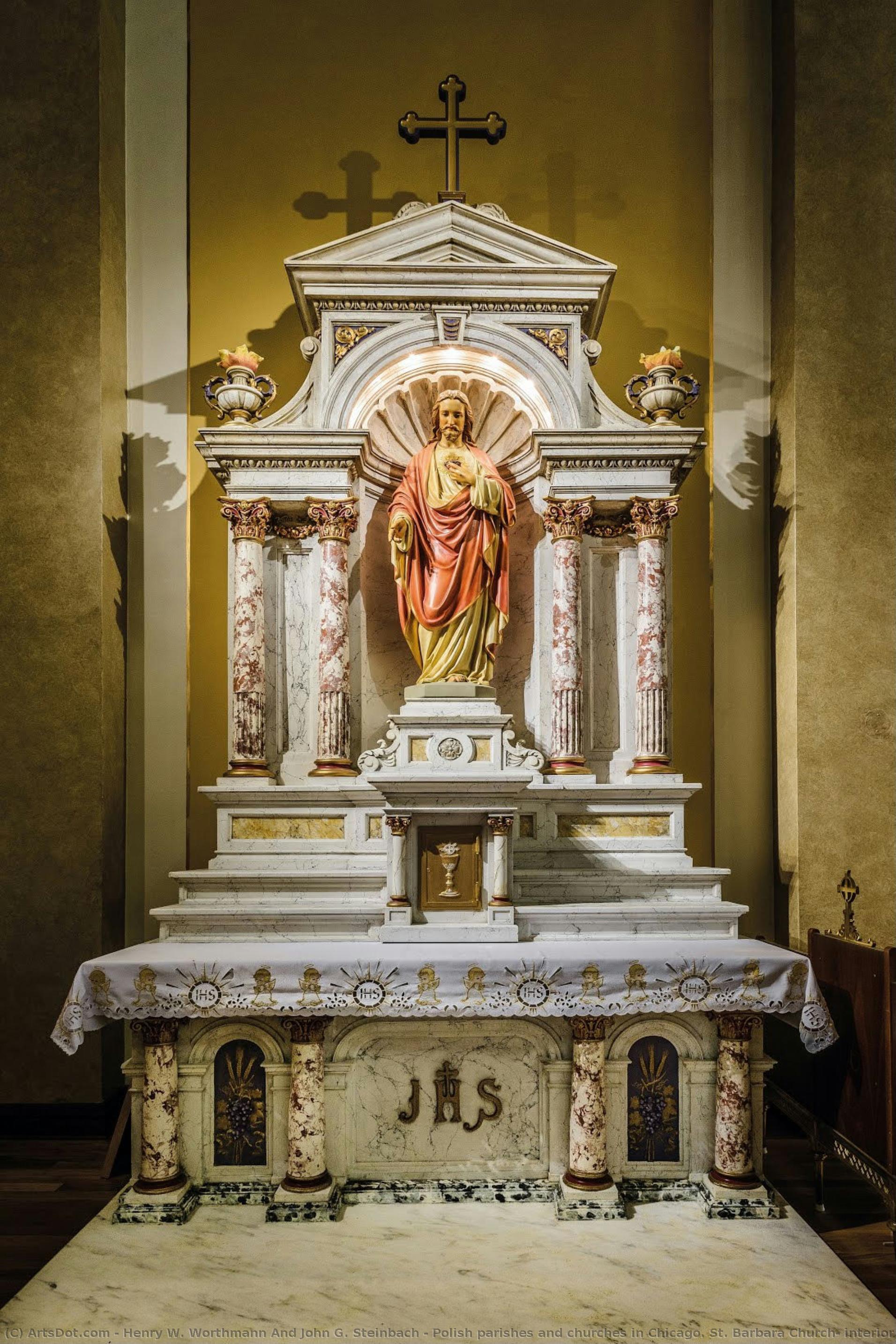
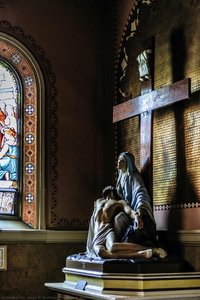
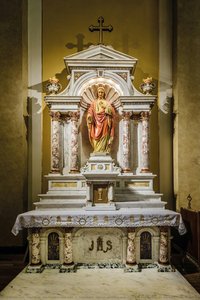
Polish parishes and churches in Chicago. St. Barbara Church, interior decoration


 Read More
Hand Made Oil Reproduction
Hand-painted oil on canvas in your size and frame, made to order by our artists. ( Buy Print Buy Image)




































Pick from our preset sizes that match the artwork's original proportions.

You may enter your own dimensions to fit a specific frame or space. If your selected size does not match the original image's proportions, we will either crop the artwork or extend the painting with additional hand-painted elements. A digital mockup will be sent for your approval before production begins.
Please note that the on-screen preview does not reflect the actual cropping or extension. Only the mockup will accurately show the final composition.
While custom sizes are available, we recommend selecting a dimension from the predefined list to preserve the original proportions.
After order, ArtsDot.com team will email client for instructions and provide a mockup preview
Worldwide Delivery () in 3/4 weeks instead of standard 5 weeks. (16 August). No compromise on quality.

Free Worldwide Express Shipping

High-Quality Linen Canvas

Full Shipping Insurance

Customs Tax Refund Guarantee

True Color Matching Guarantee

60-Day Return Policy (Defects Only)

100% Money-Back Guarantee

Bulk Discount Offer
 Glass option is only available in size under 110 CM

Polish parishes and churches in Chicago. St. Barbara Church, interior decoration
Reproduction Medium
Reproduction Size
-


Total Price
$ 263
Related Artworks
Artist Biography
Paul Gauguin: A Rebel’s Palette
Paul Gauguin, a name synonymous with revolution in the art world, was more than just an artist; he was a provocateur, a wanderer, and a relentless seeker of authenticity. Born Eugène Henri Paul Gauguin in 1848 amidst the tumultuous backdrop of Europe's revolutionary year, his life unfolded as a dramatic tapestry woven with artistic experimentation, personal struggles, and a profound desire to escape the constraints of Western civilization. His journey, spanning from the bustling streets of Paris to the exotic shores of Tahiti, ultimately shaped an oeuvre that continues to captivate and challenge viewers today.- Early Life & Education: Gauguin’s childhood in Peru, born into a family of Portuguese descent, instilled in him a sense of displacement and wanderlust – qualities that would profoundly influence his artistic vision. Returning to France, he received a conventional education but found himself increasingly drawn to the burgeoning art scene. Initially working as a stockbroker, he pursued painting as a pastime, absorbing influences from Impressionism through connections with artists like Camille Pissarro. However, Gauguin’s restless spirit and dissatisfaction with academic constraints quickly propelled him beyond the confines of traditional artistic practice.
- The Seeds of Rebellion: Unlike many of his contemporaries, Gauguin eschewed formal art training, relying instead on observation, intuition, and a deep engagement with the world around him. His early works reflected an Impressionistic sensibility, but he soon began to develop a distinctive style characterized by bold colors, simplified forms, and a focus on depicting native life and landscapes. This marked a deliberate departure from the prevailing artistic norms of his time.
Tahitian Visions: A New World, a New Style
In 1891, Gauguin embarked on what would become his most transformative journey – to Tahiti, then a French colony in the South Pacific. This move represented more than just a geographical relocation; it was a deliberate attempt to sever ties with European society and forge an entirely new artistic identity. He sought refuge from the perceived corruption of Western civilization, believing that by immersing himself in the simplicity and spirituality of Polynesian culture, he could rediscover a primal authenticity.- The Language of Color: During his time in Tahiti, Gauguin developed a radically simplified visual language, dominated by intense, non-naturalistic colors. He employed complementary color combinations to create vibrant, pulsating surfaces that seemed to vibrate with energy. This approach, often referred to as “Synthetist,” moved beyond mere representation and aimed to express the emotional essence of his subjects.
- Symbolic Narratives: Gauguin’s Tahitian paintings are rich in symbolism, drawing upon Polynesian mythology, religious beliefs, and personal experiences. He depicted scenes of daily life – women bathing, fishing, or preparing food – but imbued them with a sense of mystery and spiritual significance. His use of flattened perspective, simplified forms, and bold color palettes created an atmosphere of dreamlike intensity.
Influences & Artistic Development
Gauguin’s artistic development was shaped by a diverse range of influences, both traditional and contemporary. He initially admired the works of Dutch masters like Rembrandt and Vermeer for their masterful use of light and shadow, as well as Spanish Baroque painters such as Velázquez. However, he also drew inspiration from Impressionist artists like Pissarro and Seurat, adapting their techniques while rejecting their emphasis on realistic representation.- Symbolism & Primitivism: Gauguin’s work is often associated with the Symbolist movement, which sought to express inner emotions and ideas through evocative imagery. He was also deeply influenced by the concept of “primitivism,” a fascination with non-Western cultures and their perceived simplicity and authenticity.
- Woodcuts & Printmaking: Beyond painting, Gauguin explored various artistic mediums, including woodcut and printmaking. These works often served as visual explorations of his ideas and themes, providing a supplementary dimension to his paintings.
Legacy & Historical Significance
Despite facing initial skepticism from the art establishment, Paul Gauguin’s radical approach ultimately revolutionized the course of modern art. His bold experimentation with color, form, and symbolism paved the way for subsequent movements such as Fauvism and Expressionism. He challenged conventional notions of beauty and representation, advocating for a more subjective and emotionally driven artistic practice.- A Maverick Artist: Gauguin’s life and work continue to fascinate and inspire artists today. His relentless pursuit of authenticity, his willingness to defy convention, and his profound engagement with the world around him make him one of the most enduring figures in art history.
- Enduring Influence: Gauguin's legacy extends beyond his individual paintings; he fundamentally altered the way artists approached their craft, encouraging them to explore new possibilities and challenge established norms. His influence can be seen in countless works of art created throughout the 20th and 21st centuries.
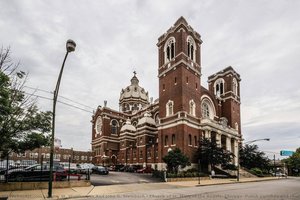
henry w. worthmann and john g. steinbach
1903 - 1928 , United States of America
Quick Facts
- Artistic Movement Or Style:
- Post-Impressionism
- Symbolism
- Artists Or Movements Influenced By This Artist:
- Fauvism
- Expressionism
- Artists Who Influenced This Artist:
- Camille Pissarro
- Paul Cézanne
- Date Of Birth: 7 June 1848
- Date Of Death: 8 May 1903
- Full Name: Eugène Henri Paul Gauguin
- Nationality: French
- Notable Artworks:
- Vision of the Sermon
- Iahona and Her Brother
- The Vision After the Sermon
- Place Of Birth: Paris, France
![All Saints Polish National Catholic Cathedral, Chicago [Polish parishes and churches in Chicago]](/media/artworks/images/thumbnails/96/f0/96f0f475c12f4bab9391a573dc7557ed.jpg)
![St. Hyacinth Basilica in Chicago, interior decoration [Polish parishes and churches in Chicago]](/media/artworks/images/thumbnails/f4/be/f4bef9b62b6b4ac2976bf677a0bbe88f.jpg)
![Church of St. Mary of the Angels, Chicago [Polish parishes and churches in Chicago]](/media/artworks/images/thumbnails/91/a9/91a94292cd8f41df9f03016191adcb57.jpg)
![St. Casimir Church in Chicago, statue of Angel [Polish parishes and churches in Chicago]](/media/artworks/images/thumbnails/cd/9a/cd9acf10d21f47979866918ab58ced93.jpg)
![Church of St. Mary of the Angels, Chicago, the dome [Polish parishes and churches in Chicago]](/media/artworks/images/thumbnails/d7/d1/d7d16d7bbf914791bd9795f83ef6f3d9.jpg)
![Holy Innocents Church in Chcago, inside view [Polish parishes and churches in Chicago]](/media/artworks/images/thumbnails/a8/02/a8020fffcc7e44e6966845ba62071d36.jpg)
![Cicero, St. Mary of Czestochowa Church, sculpture [Polish parishes and churches in Chicago]](/media/artworks/images/thumbnails/18/68/18681ea95f1f471298f7ba9336aed765.jpg)

