

 Preview
 Send
Send Share
Share
 Details

 Download
 Similars
 X-Ray
X-Ray Diaporama
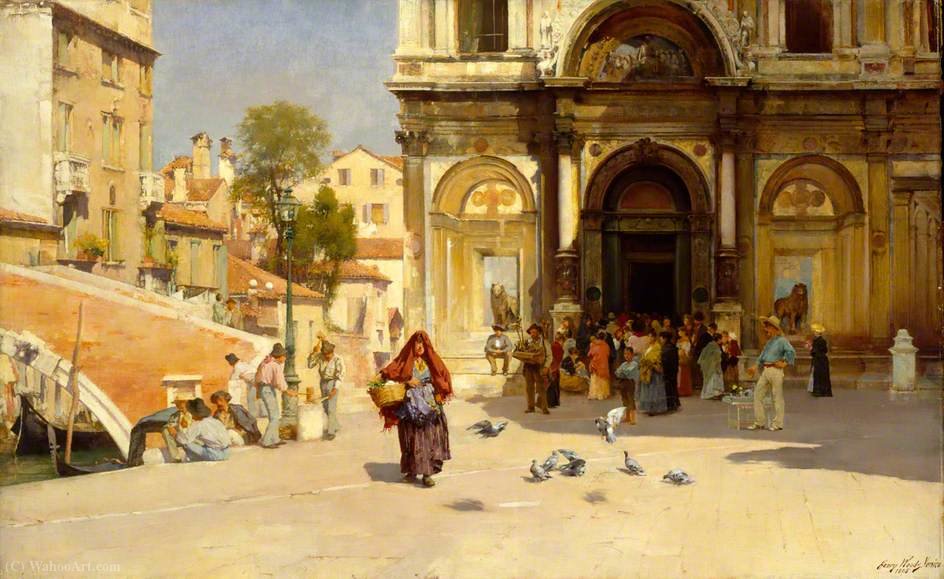
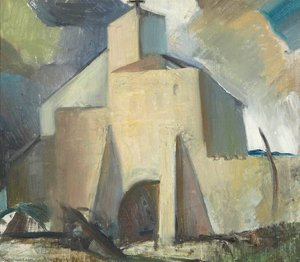
The SS Giovanni e Paolo, Venice
 Read More
Purchase a high-resolution, enhanced digital image, far superior to the online preview.
Each file is meticulously prepared by our in-house specialists using advanced tools and expert manual retouching. We ensure every image has exceptional clarity, precise color accuracy, and fine detail.
The final file is delivered via email within 72 hours, optimized for immediate use in professional, editorial, and print environments. This is the same quality trusted by top-tier design studios, publishers, and galleries.
Digital Image
Download a high-resolution file for personal display, printing, and creative projects. ( Buy Print Buy Hand Made Painting)
Included in Every Digital Image Order
Expert Digital Delivery, Guaranteed
When you choose ArtsDot.com, you're not just getting an image - you're receiving a professionally enhanced digital artwork, crafted with precision and backed by a satisfaction guarantee. Here's everything that comes with your order, automatically:

Fast Email Delivery
Your high-resolution digital image file will be emailed to you within 72 hours of ordering - ready for immediate use.

AI-Enhanced Digital File
Your artwork is professionally optimized using advanced AI tools and manual editing, ensuring maximum detail, clarity, and color accuracy.

Free Lifetime Re-Delivery
Accidentally deleted or lost your file? No worries - we'll resend it to you anytime, free of charge.

No Import Fees - Ever
Enjoy your artwork instantly with zero customs, duties, or delivery fees - digital downloads are always tax-free.

Color Accuracy Guarantee
We ensure your digital image reflects the original colors as closely as possible using professional tools and color management.

60-Day Satisfaction Guarantee
If you're not satisfied with your digital image, we'll revise it or refund 100% within 60 days - no questions asked.

100% Money-Back Guarantee
Not satisfied? Get a full refund within 60 days of receiving your digital file - no questions asked.

Bulk Order Discounts
Buy 3 images, save 10% - Buy 5, save 15% - Buy 10+, save 20%. Great for creative projects, galleries, and agencies.
Related Artworks






Artist Biography
Early Life and Artistic Foundations
Henry Woods, born in Warrington, England, on April 22nd, 1846, emerged from a comfortably middle-class background that nonetheless fostered an early passion for art. His father, William Woods, was a pawnbroker and local councillor, while his mother, Fanny, managed their shop; this environment instilled a sense of practicality alongside the budding artistic inclinations of her eldest son. Woods’s formal training began at Warrington School of Art, where he distinguished himself enough to earn a Department of Science and Art bronze medal and, crucially, a scholarship to South Kensington School of Art in London. This move in 1865 marked a pivotal moment, as it brought him into contact with fellow student Samuel Luke Fildes, a friendship that would profoundly shape his artistic journey. The two artists became inseparable confidants, supporting each other’s development and sharing a common ambition.
London proved to be a fertile ground for Woods's early career. He quickly found employment as an illustrator for The Graphic, a prestigious newspaper renowned for its high-quality illustrations and association with prominent artists like John Everett Millais, Hubert von Herkomer, and Frank Holl. This experience honed his draughtsmanship and compositional skills, providing valuable exposure to the demands of commercial art while simultaneously immersing him in a vibrant artistic milieu. Woods began exhibiting at the Royal Academy in 1869, demonstrating an early style influenced by Carl van Haanen and Eugene de Blaas—a foreshadowing of his later Venetian focus.
The Allure of Venice: A Transformative Journey
Despite a promising start in London, it was Woods’s journey to Italy in 1876 that irrevocably altered the course of his artistic life. On the recommendation of Luke Fildes, he travelled to Venice and found himself captivated by the city's unique atmosphere—its light, its colors, and its vibrant street life. He described the sunset over La Serenissima as a scene of “glory and splendour of light and ineffable colour,” a moment that sparked an enduring fascination. Within a year, Woods made the momentous decision to relocate permanently to Venice, establishing himself within a thriving community of artists drawn by the same irresistible allure.
Woods wasn’t merely a visitor; he immersed himself in Venetian culture, learning the language and engaging with the everyday rhythms of life along the canals. This intimate understanding is palpable in his work, which captures not just the picturesque beauty of Venice but also the vitality and character of its people. He became part of a notable artists' colony that included August von Pettenkofen, Ludwig Passini, Cecil van Haanen, and Eugene de Blaas—a group collectively known as the Neo-Venetian School.
A Master of Social Realism and Venetian Scenes
Woods’s artistic output centered on scenes of everyday life in Venice. He depicted gondoliers navigating the canals, bustling markets filled with locals, and intimate moments within domestic settings. His paintings are characterized by a remarkable precision of detail combined with a vibrant color palette that evokes the warmth and luminosity of the Italian sun. He skillfully balanced realism with an underlying sense of romanticism, capturing both the beauty and the hardships of Venetian life.
His work often reflects a Victorian sensibility—a keen observation of social dynamics and a concern for portraying the lives of ordinary people. This blend of social realism and picturesque charm resonated with British collectors eager to acquire scenes of Venice during the 1880s, a period fueled by the influence of John Ruskin’s writings on Venetian art and architecture. Woods's paintings offered a glimpse into a world both exotic and relatable, appealing to a growing middle-class audience.
Recognition and Legacy
Henry Woods steadily gained recognition throughout his career, culminating in his election as an Associate of the Royal Academy (ARA) in 1882. He continued to exhibit regularly at the Royal Academy until his death, solidifying his position within the British art establishment. His paintings were sought after by collectors and critics alike, praised for their technical skill, atmospheric quality, and insightful portrayal of Venetian life.
Woods’s historical significance lies in his ability to bridge the gap between Victorian social realism and the vibrant artistic traditions of Venice. He captured a specific moment in time—the 19th-century Venetian experience—with both sensitivity and skill. While perhaps not as widely celebrated as some of his contemporaries, Woods remains an important figure in British art history, representing a unique fusion of cultural influences and a dedication to portraying the beauty and complexity of everyday life.
- Key Influences: Carl van Haanen, Eugene de Blaas, John Everett Millais, Luke Fildes
- Major Themes: Venetian street scenes, daily life in Venice, social realism, atmospheric landscapes.
- Notable Achievements: Election as ARA (1882), consistent exhibition at the Royal Academy, establishment of a successful career in Venice.
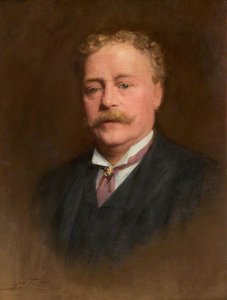
henry woods
1846 - 1921 , United Kingdom
Quick Facts
- Artistic Movement Or Style: Social Realism, Neo-Venetian
- Artists Who Influenced This Artist:
- Carl van Haanen
- Eugene de Blaas
- Date Of Birth: April 22, 1846
- Date Of Death: October 27, 1921
- Full Name: Henry Woods
- Nationality: British
- Place Of Birth: Warrington, UK

